Post-Op Priorities (PACU → Floor)
Airway → breathing → circulation → pain → nausea → output.
- Lesson 2 of 2
- 5 min read
Side by side
Wound Dehiscence vs Evisceration
- Partial or complete separation of wound edges.
- Abdominal organs protrude through the incision.
- Cover and notify surgeon.
- Cover, stay with patient, call emergency surgical team.
- Low Fowler or supine with knees flexed if abdominal incision.
- Supine with knees flexed to reduce abdominal tension.
- Sterile saline-soaked gauze.
- Sterile saline-soaked gauze over protruding bowel.
Overview
The first hours focus on anesthetic recovery and respiratory depression; later priorities shift toward atelectasis, ileus, DVT/PE, wound infection, and wound separation.
PACU Aldrete Score
Score >= 9 is generally required for discharge from PACU, along with stable airway, pain/nausea control, and no active bleeding or acute complication.
 ACTIVITYRESPIRATIONCIRCULATIONCONSCIOUSNESSSpO₂
| Parameter | 0 | 1 | 2 |
|---|---|---|---|
| Activity | No movement | Moves 2 extremities | Moves 4 extremities |
| Respiration | Apneic | Dyspneic or shallow/limited | Breathes/coughs normally |
| Circulation | BP differs >=50% from pre-op | BP within 20-49% of pre-op | BP within 20% of pre-op |
| Consciousness | Unresponsive | Arousable | Fully awake |
| SpO2 | <90% even with O2 | Needs O2 to keep >90% | >92% on room air |
Post-op Complications by Time
Post-op complications follow predictable time patterns, but airway and circulation always come first.
| Time | Complication | Signs | Intervention |
|---|---|---|---|
| 0-4 hrs | Respiratory depression or airway obstruction | Low RR, snoring, stridor, low SpO2, excess sedation | Open airway, stimulate, oxygen, reverse opioid if ordered, call anesthesia/rapid response. |
| 4-24 hrs | Atelectasis or paralytic ileus | Low fever, crackles, shallow breathing; absent bowel sounds, distention, nausea | IS/cough/deep breathe/turn; ambulate, NPO/NG if ordered, treat nausea. |
| 24-72 hrs | DVT/PE, UTI, wound infection | Calf swelling/pain, dyspnea/chest pain; dysuria; fever, redness/drainage | Ambulate, anticoagulants/SCDs, oxygen/rapid response for PE signs, cultures/antibiotics as ordered. |
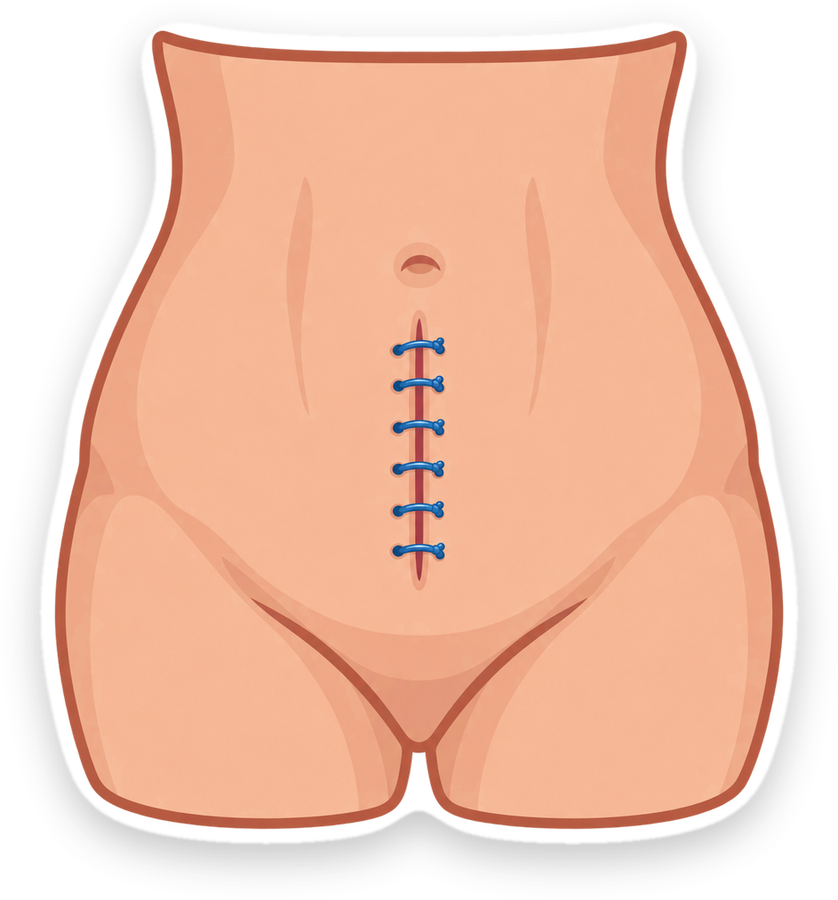
| Day 5 | Dehiscence | Sudden pulling, increased serosanguineous drainage, wound edges separate | Cover with sterile saline gauze, position to reduce tension, notify surgeon. |
| Day 7-10 | Pulmonary embolism | Sudden dyspnea, tachycardia, pleuritic pain, anxiety, low SpO2 | High Fowler, oxygen, stay with patient, rapid response/provider notification. |
Malignant Hyperthermia
Notify anesthesia, bring the MH cart/dantrolene, cool aggressively, monitor potassium/acidosis/rhabdomyolysis, and prepare for ICU transfer.
Wound Dehiscence vs Evisceration
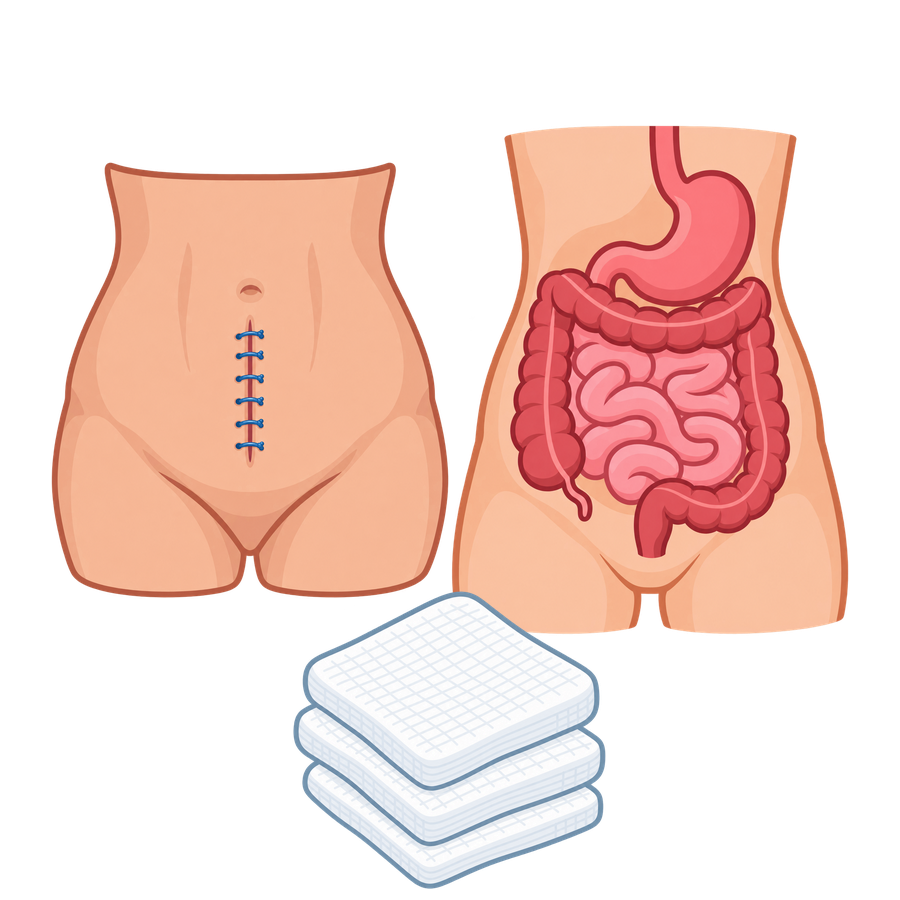
Never push organs back in. Reduce tension, keep the patient calm, and escalate immediately when bowel protrudes.
Wound Dehiscence vs Evisceration
| Dehiscence (wound separation) | Evisceration (bowel protrusion) | |
|---|---|---|
| Definition | Partial or complete separation of wound edges. | Abdominal organs protrude through the incision. |
| What to do | Cover and notify surgeon. | Cover, stay with patient, call emergency surgical team. |
| Position | Low Fowler or supine with knees flexed if abdominal incision. | Supine with knees flexed to reduce abdominal tension. |
| Dressing | Sterile saline-soaked gauze. | Sterile saline-soaked gauze over protruding bowel. |
| Emergency? | Urgent surgeon notification. | Yes - surgical emergency. |
Nursing priorities
- 1. Pain assessment: multimodal approach; avoid over-sedation with opioids. — Excess opioids can cause respiratory depression, while uncontrolled pain prevents coughing and mobility.
- 2. Incentive spirometry 10x per hour while awake - start in PACU. — Lung expansion prevents atelectasis and post-op pneumonia.
- 3. Early ambulation: dangle POD0, then ambulate once if possible. — Mobility decreases DVT, PE, atelectasis, and ileus risk.
Key nursing points
- PACU discharge commonly requires Aldrete score 9 or higher plus stable airway and vitals.
- Rising end-tidal CO2 is the earliest malignant hyperthermia clue.
- Incentive spirometry 10 times per hour while awake prevents atelectasis.
- Early ambulation reduces DVT, PE, ileus, and pneumonia risk.
- Evisceration is a surgical emergency: cover with sterile saline gauze and call for help.
Test yourself

Pick your answer first, then open the rationale. Guessing teaches nothing.
Airway → breathing → circulation → pain → nausea → output.
— 2 —