ABG Interpretation
ABG interpretation uses pH, PaCO2, HCO3, and PaO2 to identify oxygenation, ventilation, and acid-base problems.
- Lesson 2 of 4
- 7 min read
4 steps
- 1pH tells acidemia or alkalemia.
- 2compare PaCO2 to pH for respiratory cause.
- 3compare HCO3 to pH for metabolic cause.
- 4evaluate compensation and oxygenation using PaO2/SpO2.
Overview
Always interpret ABGs with the patient's respiratory status, oxygen delivery, vital signs, and clinical picture.
Pathophysiology
The lungs regulate carbon dioxide, and the kidneys regulate bicarbonate.
Signs & Symptoms
ABG symptoms often reflect the organ being stressed: acidosis depresses the brain and heart, alkalosis increases neuromuscular irritability, and hypoxemia causes restlessness before late cyanosis.
- Acidosis: confusion, lethargy, dysrhythmias, hypotension, and respiratory compensation.
- Alkalosis: lightheadedness, paresthesias, muscle cramps, tetany, anxiety, and dysrhythmias.
- Hypoxemia: restlessness, tachycardia, cyanosis, dyspnea, and declining SpO2.

Diagnosis
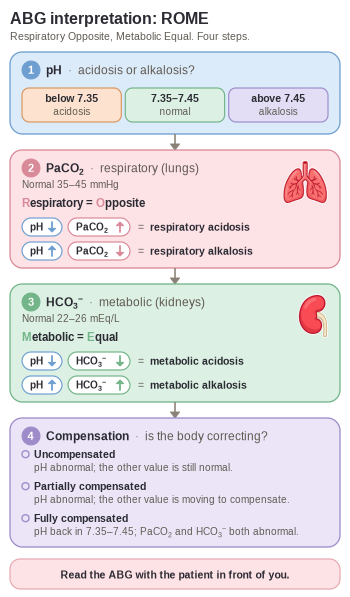
Use the same sequence every time: read pH first, apply ROME to PaCO2 and HCO3, then decide whether compensation fits.

Treatment
ABG treatment is cause specific.
- Treat the cause: oxygenation/ventilation support, bronchodilators, fluids, insulin for DKA, dialysis for renal failure, or antiemetics for vomiting.
- Adjust oxygen or ventilator settings only per order/protocol.
- Severe derangements require rapid provider notification and continuous monitoring.


Nursing Priorities
Confirm the oxygen device and recent changes, assess work of breathing and mental status, hold pressure after arterial puncture, and report dangerous patterns such as rising PaCO2 with somnolence or low PaO2 despite oxygen.
- Before ABG: verify order, explain arterial puncture, and assess circulation if radial artery used.
- After ABG: apply firm pressure, reassess distal circulation, and monitor bleeding risk.
- Report critical pH, PaCO2 retention with declining LOC, or PaO2 inconsistent with patient needs.
- Correlate ABG results with respiratory rate, work of breathing, SpO2, oxygen device, and mental status.

Patient Teaching
Explain ABG collection as an arterial sample that can hurt more and bleed longer than venipuncture.
- The sample is arterial and may hurt more than a venipuncture.
- Keep pressure on the site as directed and report numbness, bleeding, swelling, or severe pain.
- Use breathing techniques for anxiety-related hyperventilation only after medical causes are assessed.
Complications
ABG complications come from both the puncture and the disorder being measured.
- Bleeding, hematoma, arterial spasm, infection, pain, impaired distal perfusion, and inaccurate interpretation if oxygen changes are not considered.
- Untreated acid-base disorders can cause dysrhythmias, shock, seizures, respiratory failure, or death.
Key nursing points
- Normal pH: 7.35-7.45; PaCO2: 35-45 mmHg; HCO3: 22-28 mEq/L; PaO2: 75-100 mmHg.
- Respiratory Opposite: pH and PaCO2 move in opposite directions.
- Metabolic Equal: pH and HCO3 move in the same direction.
- Respiratory acidosis: low pH, high PaCO2; think hypoventilation, COPD, oversedation.
- Respiratory alkalosis: high pH, low PaCO2; think hyperventilation, anxiety, pain, sepsis, pregnancy.
- After radial puncture, hold pressure and monitor for bleeding, hematoma, perfusion, and pain.
Test yourself

Pick your answer first, then open the rationale. Guessing teaches nothing.
ABG interpretation uses pH, PaCO2, HCO3, and PaO2 to identify oxygenation, ventilation, and acid-base problems.
— 2 —