CDC Childhood Vaccine Schedule
Birth → 6 yrs. Memorize: 2- and 6-mo doses are identical.
- Lesson 1 of 3
- 6 min read
Overview
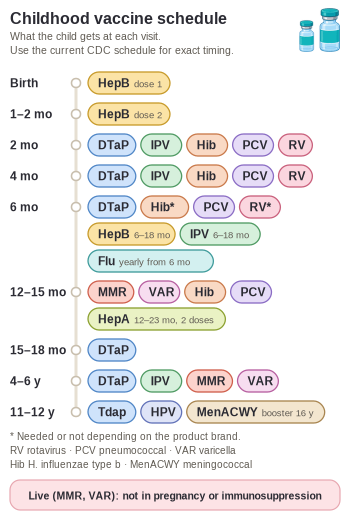
Same vaccines at 2 and 6 months. 4 months = same as 2 months minus Hep B.
Schedule Logic
The first year builds primary protection, the second year adds live vaccines and boosters, and school-age/adolescent visits restore waning immunity.
- Birth: Hepatitis B before discharge unless contraindicated by policy.
- 2 months: multiple primary series begin, including DTaP, Hib, IPV, pneumococcal, rotavirus, and HepB timing depending on series.
- 4 months: repeat many 2-month vaccines; HepB is commonly not the pattern focus at this visit.
- 12 months and older: MMR and varicella become appropriate because live vaccine response is reliable.
- Annual influenza starts at 6 months of age.
Live Vaccine Safety
EXAM TRAPWatch outMMR and varicella are live vaccines: avoid during pregnancy and severe immunocompromise.
- Screen for severe immunosuppression, pregnancy, prior serious allergic reaction, and recent blood products when relevant.
- MMR and varicella are not given before 12 months for routine immunization.
- Rotavirus is oral and has strict age windows; do not restart outside the allowed age range.
- Mild illness without high fever is not automatically a reason to skip vaccination.

Caregiver Teaching
- Use the vaccine information statement and explain expected effects such as mild fever, soreness, sleepiness, or fussiness.
- Teach when to seek care: trouble breathing, facial swelling, persistent inconsolable crying, seizure, or signs of severe allergic reaction.
- Keep a written or electronic immunization record and bring it to all visits.
- Delayed series are usually continued, not restarted, using catch-up guidance.
NCLEX Traps
NCLEX tipDTaP is for young children; Tdap is the booster for adolescents, adults, and each pregnancy.
- Do not choose a live vaccine for a pregnant patient.
- Do not delay all vaccines for mild cold symptoms if the child is otherwise stable.
- Do not restart a vaccine series because a child is late.
- Do not confuse pneumococcal conjugate childhood vaccine with adult risk-based pneumococcal products.
Key nursing points
- Birth: Hep B.
- 2 mo: Hep B, DTaP, Hib, IPV, PCV13, RV.
- 4 mo: DTaP, Hib, IPV, PCV13, RV.
- 6 mo: same as 2 mo + influenza yearly.
- 12–18 mo: DTaP, Hib, PCV13, MMR, varicella, Hep A, flu.
- 4–6 yr: DTaP, IPV, MMR, varicella, flu.
EXAM TRAPCommon exam trapLive vaccines (MMR, varicella, LAIV, rotavirus) are contraindicated in pregnancy and severe immunocompromise (including HIV with CD4 <200). DTaP is for children under 7 — the adult booster is Tdap. The 2-month and 6-month vaccine visits are identical (both have 6 vaccines); 4 months drops HepB.
Test yourself

Pick your answer first, then open the rationale. Guessing teaches nothing.
In one line
Birth → 6 yrs. Memorize: 2- and 6-mo doses are identical.
— 1 —