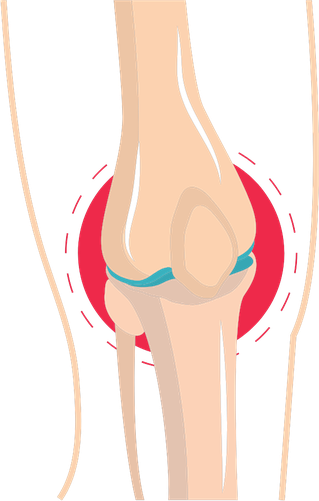
Pressure builds inside a closed fascial compartment → ischemia → necrosis. Pain out of proportion to injury is the earliest sign. Fasciotomy within 6 hours.
Lesson 6 of 6
5 min read
Overview?
Overview
Without fasciotomy within 6 hours, permanent damage — muscle necrosis, contracture, and nerve injury — is unavoidable.
Pain out of proportion is the earliest clue because nerves are being starved before pulses disappear.
Increased pressure inside a rigid fascial compartment compresses capillaries, stopping perfusion. Muscle and nerve ischemia begins within minutes; irreversible damage occurs within 6 hours.
Most common sites: anterior compartment of the leg (tibial fractures) and volar compartment of the forearm.
Causes?
2
Causes
Chronic exertional compartment syndrome is different and usually improves with rest, while acute compartment syndrome is a surgical emergency.
Fractures (especially tibial and forearm)Crush injuriesTight casts or circumferential dressingsProlonged external compressionReperfusion after vascular repairBurnsBleeding disorders
Assessment — 5 P's?
3
Assessment — 5 P's
The 5 P's are not equal in timing.
Pain on passive stretch of the fingers, unrelieved by opioids, is the earliest sign. Pulselessness is the last one — waiting for it costs the limb.
Sign
Description
Timing
Pain
Severe, disproportionate to injury; not relieved by opioids or position change
EARLIEST — the key warning sign
Pressure
Tense, woody compartment on palpation
Early
Paresthesia
Tingling or numbness in the nerve distribution of the compartment
Early-intermediate
Pallor
Pale, mottled skin over the affected compartment
Intermediate
Pulselessness
Absent distal pulses
LATE — do not wait for this sign to act
Diagnostics?
4
Diagnostics
Compartment syndrome is primarily a clinical diagnosis.
Clinical diagnosis is primary. If equivocal, measure intracompartmental pressure with a needle manometer.
Compartment pressure ≥30 mmHg or delta pressure (diastolic BP − compartment pressure) ≤30 mmHg = fasciotomy indication.
Elevated CK/myoglobin if muscle necrosis has begun; monitor urine (myoglobinuria turns urine brown — risk of AKI).
Treatment?
5
Treatment
Loosen or remove external compression immediately while preparing for fasciotomy when acute compartment syndrome is suspected.
Emergency fasciotomy: surgical incision through fascia to release pressure. Must be done within 6 hours to prevent permanent damage.
Immediately remove or bivalve cast, splint, or circumferential dressings to reduce external compression.
Position limb at heart level — NOT elevated (elevation worsens ischemia by reducing arterial pressure to the compartment).
IV fluids, pain management, and continuous neurovascular monitoring.
Post-fasciotomy: wounds are left open, closed in stages, or covered with skin grafts. Risk of infection.
Nursing Priorities?
6
Nursing Priorities
After fasciotomy, infection prevention and wound monitoring become major priorities.
Perform neurovascular checks every 1–2 hours: color, warmth, capillary refill, pulses, sensation, and movement.
Report unrelieved pain or any new paresthesia immediately to the provider.
Remove or loosen constrictive dressings/casts as ordered or per protocol when compartment syndrome is suspected.
Do not elevate above heart level; position at heart level.
Monitor urine output and color (myoglobinuria → risk of renal failure; force fluids to protect kidneys).
Key nursing points
Pain disproportionate to injury that…
5 P's
Do NOT elevate the limb above heart…
Treatment
Compartment pressure ≥30 mmHg or…
Key nursing points
Pain disproportionate to injury that is not relieved by opioids = compartment syndrome until proven otherwise.
5 P's: Pain (earliest + most important), Pressure (tense compartment), Paresthesia, Pallor, Pulselessness (LATE sign — do not wait for it).
Do NOT elevate the limb above heart level — reduces arterial perfusion to the ischemic compartment.
Treatment: remove constrictive dressings/casts, fasciotomy within 6 hours.
Compartment pressure ≥30 mmHg or within 30 mmHg of diastolic BP = fasciotomy indication.
⚠EXAM TRAPCommon exam trapPain that is out of proportion to the injury and is NOT relieved by opioids or position change is compartment syndrome until proven otherwise. The limb should be positioned at HEART LEVEL — not elevated. Elevation reduces the arterial-compartment pressure gradient and worsens ischemia.
Test yourself?
Test yourself
Pick your answer first, then open the rationale. Guessing teaches nothing.
Question 1 of 5
A patient with a tibial fracture in a newly applied cast rates pain as 9 out of 10 and reports it is not relieved after IV morphine administration. The nurse notes pain is worsened when the toes are passively extended. What is the priority nursing action?
Answer: Contact the provider immediately and prepare to bivalve or remove the cast. Pain out of proportion to injury that is unrelieved by opioids and worsened by passive stretch is the earliest and most reliable sign of compartment syndrome — a surgical emergency requiring immediate cast removal and possible fasciotomy within 6 hours to prevent permanent neuromuscular damage. Elevating the limb above heart level is contraindicated because it lowers arterial perfusion pressure to the already-ischemic compartment.
Question 2 of 5
A nurse is educating a nursing student about compartment syndrome. The student asks, 'Should we wait until the pulse disappears before calling the provider?' What is the most accurate response?
Answer: 'No, pulselessness is a late sign; pain, paresthesia, and pressure are earlier warning signs that require immediate action.' Pulselessness is a very late and ominous sign indicating near-complete arterial occlusion; by the time pulses are absent, permanent muscle and nerve damage may already be irreversible. The earliest actionable warning signs — severe disproportionate pain, pain with passive stretch, and paresthesia — demand immediate escalation before pulses disappear.
Question 3 of 5
An emergency fasciotomy is performed on a patient with compartment syndrome of the right forearm. In the post-operative period, which assessment finding requires the most immediate nursing response?
Answer: New onset of confusion, fever, and purulent drainage at the fasciotomy site. New confusion, fever, and purulent wound drainage after fasciotomy are signs of infection or sepsis, which are serious complications in a patient with an open fasciotomy wound who may have had muscle necrosis; this requires immediate provider notification and assessment. Serosanguineous drainage and open wound edges are expected findings in the early post-fasciotomy period.
Question 4 of 5
A patient with a tibial fracture in a plaster cast reports increasing pain unrelieved by morphine and tingling in the toes. What is the priority nursing action?
Answer: Notify the provider immediately and prepare to bivalve the cast Increasing pain unrelieved by opioids and paresthesia (tingling) are early signs of compartment syndrome. The nurse must notify the provider immediately and be prepared to remove or bivalve the cast to reduce pressure.
Question 5 of 5
A patient is suspected of having compartment syndrome. How should the nurse position the affected limb?
Answer: At heart level Elevating the limb above heart level decreases arterial perfusion pressure to the already ischemic compartment, worsening ischemia. Positioning at heart level maintains the arterial-venous pressure gradient.
In one line
Pressure builds inside a closed fascial compartment → ischemia → necrosis. Pain out of proportion to injury is the earliest sign. Fasciotomy within 6 hours.
— 6 —
Finish lesson
Save your completion
Sign in to record progress, sync completion, and keep your study streak accurate.