Rheumatoid vs Osteoarthritis
RA = autoimmune, symmetric, morning stiffness >1h. OA = wear-and-tear, asymmetric.
- Lesson 2 of 6
- 5 min read
Side by side
Rheumatoid Arthritis vs Osteoarthritis
- Autoimmune synovial inflammation with systemic features and erosive joint destruction.
- Degenerative wear-and-tear cartilage loss from mechanical stress, age, injury, or obesity.
- Small joints, especially MCP/PIP, wrists, and feet; DIP is usually spared.
- Large weight-bearing joints plus hands; Heberden's nodes at DIP and Bouchard's nodes at PIP.
- Symmetric joint involvement is typical.
- Often asymmetric or localized to heavily used/weight-bearing joints.
- Prolonged morning stiffness, commonly > 1 hour.
- Brief morning stiffness, usually < 30 minutes, with pain worse after use.
Overview
RA: systemic autoimmune attack on synovium.
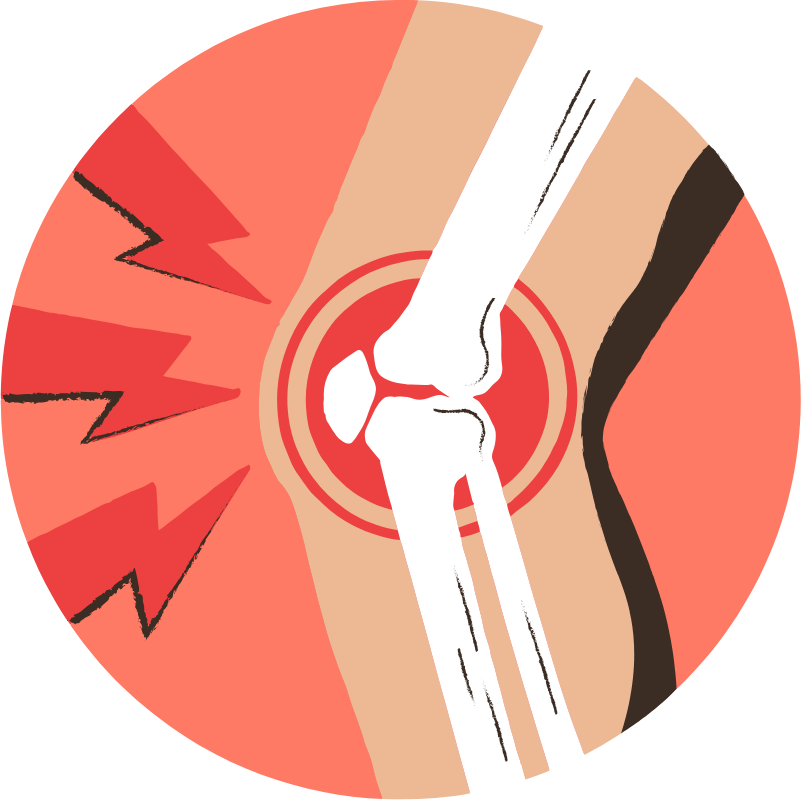
Overview
Rheumatoid arthritis is systemic autoimmune synovial inflammation. Osteoarthritis is degenerative cartilage loss from age, injury, obesity, and mechanical stress.
Assessment Findings
RA and OA are separated by inflammation pattern.
- RA: symmetric small-joint swelling, warmth, fatigue, low-grade fever, morning stiffness longer than one hour, and deformities.
- OA: asymmetric weight-bearing joint pain, crepitus, decreased range of motion, brief morning stiffness, and pain worse with use.
- Assess function, pain pattern, gait, hand strength, fatigue, medication effects, and ability to perform ADLs.

Diagnostics
Diagnostics support the clinical pattern and monitor medication risk.
- RA may show elevated ESR/CRP, rheumatoid factor, anti-CCP, anemia, and erosive joint changes.
- OA diagnosis is clinical with x-ray findings such as joint-space narrowing and osteophytes.
- Monitor CBC, LFTs, renal function, and infection risk with DMARDs, biologics, NSAIDs, or steroids.
Treatment
RA treatment targets immune inflammation early to prevent irreversible joint destruction, so DMARD adherence and biologic safety are central.
- RA treatment uses DMARDs such as methotrexate, biologics, short steroid courses, exercise, and joint protection.
- OA treatment emphasizes weight loss, low-impact exercise, PT/OT, acetaminophen or NSAIDs when safe, injections, and joint replacement when severe.
- Heat may reduce stiffness; cold can reduce acute inflammation and swelling.
Nursing Priorities
Nursing priorities balance mobility with protection.
- Balance rest with range-of-motion activity and protect inflamed joints.
- Screen for infection before biologic therapy and teach immunosuppression precautions.
- Watch for GI bleeding or renal injury with NSAIDs and hepatotoxicity or marrow suppression with methotrexate.
Patient Teaching
Patients should report fever, mouth sores, black stools, chest symptoms, or severe abdominal pain promptly.
- Methotrexate is usually weekly, not daily; use contraception and avoid pregnancy.
- Use assistive devices, pace activity, maintain ideal weight, and keep immunization follow-up before biologics.
- Report fever, mouth sores, black stools, severe abdominal pain, or new shortness of breath.
Complications
OA complications are often functional, including falls, immobility, chronic pain, and surgical risks if replacement is needed.
- RA can cause joint destruction, nodules, vasculitis, lung disease, cardiovascular risk, and medication-related infection.
- OA can cause falls, impaired mobility, chronic pain, and post-joint-replacement complications.
Rheumatoid Arthritis vs Osteoarthritis
| Rheumatoid Arthritis (RA) | Osteoarthritis (OA) | |
|---|---|---|
| Pathology | Autoimmune synovial inflammation with systemic features and erosive joint destruction. | Degenerative wear-and-tear cartilage loss from mechanical stress, age, injury, or obesity. |
| Joints affected | Small joints, especially MCP/PIP, wrists, and feet; DIP is usually spared. | Large weight-bearing joints plus hands; Heberden's nodes at DIP and Bouchard's nodes at PIP. |
| Symmetry | Symmetric joint involvement is typical. | Often asymmetric or localized to heavily used/weight-bearing joints. |
| Morning stiffness | Prolonged morning stiffness, commonly > 1 hour. | Brief morning stiffness, usually < 30 minutes, with pain worse after use. |
| Lab findings | Positive RF and anti-CCP may be present; ESR/CRP elevated during inflammation. | RF negative; ESR/CRP usually normal unless another process is present. |
| X-ray | Erosions, periarticular osteopenia, joint-space narrowing, and deformity. | Osteophytes, joint-space narrowing, subchondral sclerosis, and cysts. |
| Treatment | DMARDs such as methotrexate, biologics, short steroid courses, exercise, and joint protection. | NSAIDs or acetaminophen when safe, PT/OT, weight loss, injections, and joint replacement for severe disease. |
Key nursing points
- RA Tx: DMARDs (methotrexate), biologics (etanercept, infliximab), low-dose steroids.
- OA Tx: acetaminophen first, NSAIDs, weight loss, PT, joint replacement.
- Methotrexate: weekly dosing, folic acid supplementation, monitor LFTs, teratogenic.
Test yourself

Pick your answer first, then open the rationale. Guessing teaches nothing.
RA = autoimmune, symmetric, morning stiffness >1h. OA = wear-and-tear, asymmetric.
— 2 —