Sodium: Hyper / Hyponatremia
Normal Na+ 135–145 mEq/L. Tracks water balance; either extreme is a neuro emergency.
- Lesson 1 of 7
- 6 min read
Side by side
Hyponatremia vs Hypernatremia
Sodium problems are water problems: low sodium usually means too much water in the serum; high sodium usually means free-water loss.
- SIADH
- Heart failure or cirrhosis with water retention
- Excessive water intake
- +1 more below
- Dehydration or inadequate water intake
- Diabetes insipidus
- Profuse sweating, fever, diarrhea
- +1 more below
- Headache, nausea, lethargy
- Confusion, seizures, coma from cerebral edema
- Intense thirst, restlessness, irritability
- Altered mental status, seizures from cellular dehydration
- Fluid restriction for mild or chronic SIADH pattern
- 3% hypertonic saline for severe symptoms or seizures
- Loop diuretic if fluid overloaded
- Replace free water slowly
- Oral water if alert and safe
- IV D5W or 0.45% saline as ordered
- Correct slowly: usually max 8-10 mEq/L in 24 hr
- Too-fast correction can cause osmotic demyelination
- Correct slowly: usually max 8-10 mEq/L in 24 hr
- Too-fast correction can cause cerebral edema
Overview
Hyponatremia (<135): vomiting, diuretics, SIADH, excessive water intake → cerebral edema. Hypernatremia (>145): dehydration, DI, high salt intake → cellular shrinkage and altered mental status.
Pathophysiology
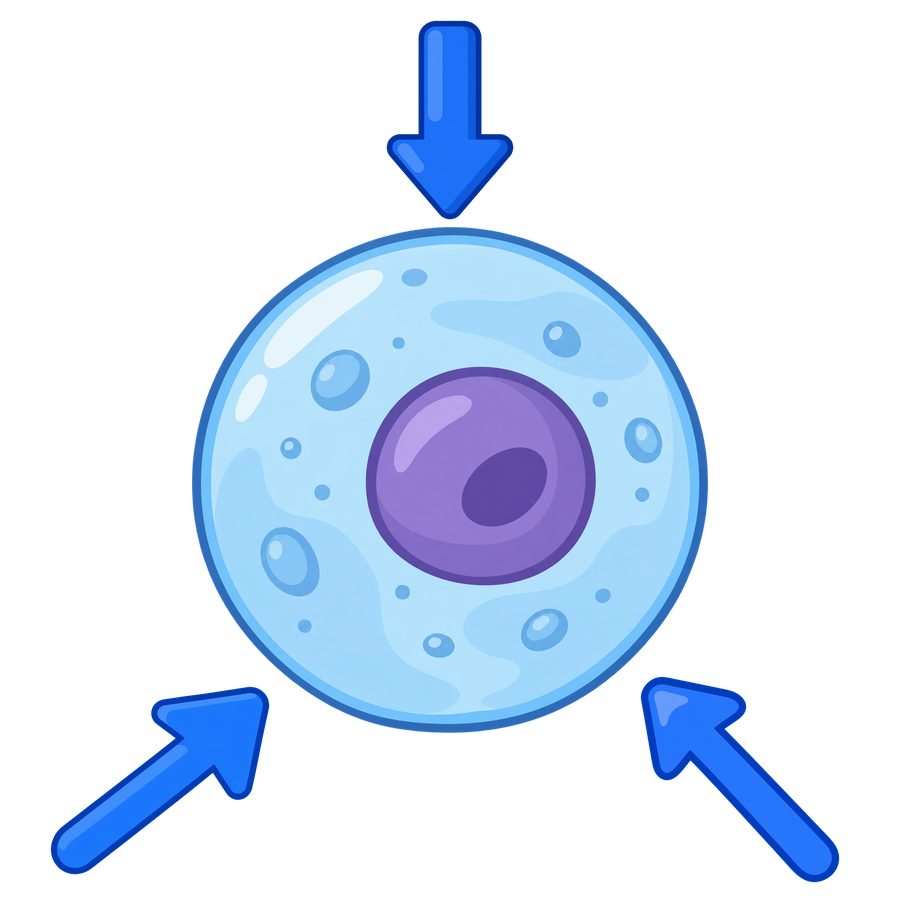
Hyponatremia is serum sodium below normal, but the clinical problem is often excess water relative to sodium.
- Common causes: SIADH, thiazide diuretics, vomiting, diarrhea, adrenal insufficiency, heart failure, cirrhosis, kidney disease, and excessive water intake.
- Acute drops are more dangerous than slow chronic changes because the brain has less time to adapt.
- Severe symptoms reflect brain swelling, not simple thirst.
Assessment Cues
Neurologic assessment is the priority.
- Assess orientation, headache, nausea/vomiting, seizure activity, gait, weakness, and level of consciousness.
- Track serum sodium trends, serum osmolality, urine sodium/osmolality when ordered, daily weight, and strict intake/output.
- Assess medication history, fluid intake, recent losses, heart/liver/kidney disease, and endocrine history.
Priority Interventions
Nursing priorities are seizure precautions, controlled fluid plan, frequent sodium monitoring, neurologic checks, and preventing overly rapid correction.
- Implement seizure precautions for symptomatic or severe hyponatremia.
- Follow ordered fluid restriction for dilutional causes such as SIADH.
- Anticipate hypertonic saline only for severe symptomatic cases in a closely monitored setting.
- Hold or question contributing medications as ordered, such as thiazides, and treat the underlying cause.
- Monitor for signs of osmotic demyelination during or after correction: dysarthria, dysphagia, confusion, weakness, or quadriparesis.


Teaching and NCLEX Traps
Patients may need fluid restriction skills, medication review, safe sports hydration, or when to report neurologic symptoms.
- Teach fluid-restricted patients to measure all fluids, including ice, gelatin, soups, and IV piggybacks when instructed.
- Teach patients on diuretics to report confusion, severe weakness, vomiting, or falls.
- NCLEX trap: correct sodium slowly; rapid correction of chronic hyponatremia can cause osmotic demyelination.
- NCLEX trap: SIADH is water excess, so increasing free water worsens the problem.
Hyponatremia vs Hypernatremia
| Hyponatremia (Na < 135) | Hypernatremia (Na > 145) | |
|---|---|---|
| Causes | SIADH • Heart failure or cirrhosis with water retention • Excessive water intake • Vomiting, diuretics, especially thiazides | Dehydration or inadequate water intake • Diabetes insipidus • Profuse sweating, fever, diarrhea • High sodium intake or hypertonic fluids |
| CNS Signs | Headache, nausea, lethargy • Confusion, seizures, coma from cerebral edema | Intense thirst, restlessness, irritability • Altered mental status, seizures from cellular dehydration |
| Treatment | Fluid restriction for mild or chronic SIADH pattern • 3% hypertonic saline for severe symptoms or seizures • Loop diuretic if fluid overloaded | Replace free water slowly • Oral water if alert and safe • IV D5W or 0.45% saline as ordered |
| Correction Rate Rule | Correct slowly: usually max 8-10 mEq/L in 24 hr • Too-fast correction can cause osmotic demyelination | Correct slowly: usually max 8-10 mEq/L in 24 hr • Too-fast correction can cause cerebral edema |
Key nursing points
- Hyponatremia → confusion, seizures, headache. Restrict water, hypertonic saline if severe.
- Hypernatremia → thirst, dry mucous membranes, restlessness. Replace free water slowly.
- Daily weights and strict I&O for both.
Test yourself

Pick your answer first, then open the rationale. Guessing teaches nothing.
Normal Na+ 135–145 mEq/L. Tracks water balance; either extreme is a neuro emergency.
— 1 —