Metric Conversions & Units
kg ↔ lb, mg ↔ g ↔ mcg, mL ↔ L — the foundation of every drug calc.
- Lesson 2 of 7
- 4 min read
Overview
Drug calculations require fluency with metric units before any formula is applied.
Core metric relationships
Medication calculations fail when units do not match.
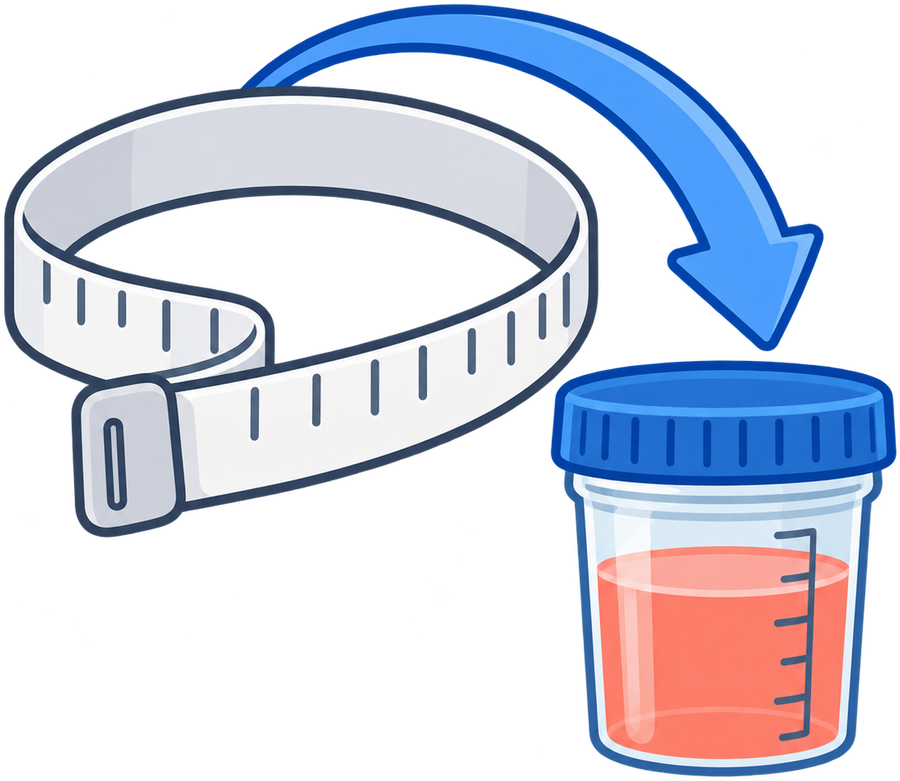
High-yield conversions
| Relationship | Use |
|---|---|
| 1 kg = 2.2 lb | Weight-based dosing |
| 1 g = 1000 mg | Tablet and IV medication strengths |
| 1 mg = 1000 mcg | Small-dose and high-alert drugs |
| 1 L = 1000 mL | IV fluids and intake/output |
| 1 tsp = 5 mL | Oral liquid teaching |
Move between large and small units
A larger unit contains many smaller units.
- g to mg: multiply by 1000.
- mg to g: divide by 1000.
- mg to mcg: multiply by 1000.
- mcg to mg: divide by 1000.
- L to mL: multiply by 1000.
Weight conversion safety
EXAM TRAPWatch outPounds must be converted to kilograms before mg/kg dosing. Using pounds in the formula can create a 2.2-fold overdose.
Weight is one of the most common sources of dosage error.
- Pounds to kilograms: divide by 2.2.
- Kilograms to pounds: multiply by 2.2.
- Do not round a child's weight so aggressively that it changes the dose meaningfully.
- Use the most recent clinically appropriate weight for current dosing.

Household measures and patient teaching
Household measures are useful for recognition but are less safe for administration.
- 1 tablespoon = 15 mL = 3 teaspoons.
- 1 ounce = 30 mL.
- 1 cup = 240 mL.
- Kitchen spoons vary and should not be used for medication dosing.
- Label discharge teaching in mL when liquid medication is prescribed.
Reasonableness check
After the math, ask whether the result makes clinical sense.
- Use leading zeros for doses less than 1, such as 0.5 mL.
- Avoid trailing zeros, such as 1.0 mg, because they can be read as 10 mg.
- Recheck answers that require more than a few tablets or an unusually large oral volume.
- For high-alert medications, follow independent double-check policy.
Key nursing points
- 1 kg = 2.2 lb.
- lb to kg: divide by 2.2.
- kg to lb: multiply by 2.2.
- 1 g = 1000 mg.
- 1 mg = 1000 mcg.
- 1 L = 1000 mL.
- 1 tsp = 5 mL.
- 1 tbsp = 15 mL = 3 tsp.
- 1 oz = 30 mL = 2 tbsp.
- 1 cup = 240 mL = 8 fl oz.
EXAM TRAPCommon exam trapThe most common dosage error on NCLEX is a decimal point error (10× overdose: 1.5 mg ordered, nurse gives 15 mg). Always verify: does the answer make clinical sense? More than 3 tablets or 2 vials of a single dose is unusual — double-check.
Test yourself

Pick your answer first, then open the rationale. Guessing teaches nothing.
In one line
kg ↔ lb, mg ↔ g ↔ mcg, mL ↔ L — the foundation of every drug calc.
— 2 —