COPD (Emphysema & Chronic Bronchitis)
Chronic airflow limitation with hypoxic drive — oxygenate carefully.
- Lesson 1 of 8
- 6 min read
Overview
Goal SpO₂ is 88–92% (NOT 95–100%).
COPD Exacerbation Management
A COPD exacerbation is an acute worsening of baseline dyspnea, cough, or sputum that often follows infection or irritant exposure.
- SABA such as albuterol nebulizer first for acute bronchospasm.
- Systemic corticosteroids such as prednisone 40 mg daily for 5 days are commonly used to shorten recovery.
- Antibiotics are considered when sputum is purulent or bacterial infection is suspected, often azithromycin or doxycycline depending on local guidance.
- Use controlled oxygen with target SpO2 88-92%.
- Use BiPAP for moderate-severe exacerbation with increased work of breathing, hypercapnia, or respiratory acidosis when appropriate.
- Intubation is a last resort when noninvasive support fails or airway protection is compromised.
GOLD Staging
Lower FEV1 means less ventilatory reserve, so infection, sedatives, excessive oxygen, or fatigue can tip the patient into hypercapnia or respiratory failure faster.
COPD airflow limitation
| Stage | FEV1 % predicted | Symptoms | Treatment |
|---|---|---|---|
| I | >=80% | Mild; may have chronic cough or sputum | Risk reduction, SABA/SAMA as needed, vaccines, smoking cessation |
| II | 50-79% | Moderate dyspnea or activity limitation | Long-acting bronchodilator and pulmonary rehab as indicated |
| III | 30-49% | Severe dyspnea, exacerbations, reduced exercise tolerance | LABA/LAMA, consider ICS for frequent exacerbations/eosinophilic pattern |
| IV | <30% | Very severe symptoms, respiratory failure risk | Maximal inhaled therapy, oxygen if criteria met, advanced-care planning |
Patient Education
Smoking cessation is the single most important intervention because it slows disease progression more than any inhaler.
- Stop smoking and avoid secondhand smoke, dust, fumes, and cold air when possible.
- Get annual influenza vaccine and recommended pneumococcal vaccination.
- Use pursed-lip breathing during dyspnea: inhale through nose, exhale slowly through pursed lips.
- Use tripod position during distress: high Fowler's, lean forward, elbows supported.
- Follow a written action plan for increased dyspnea, sputum change, fever, or rescue-inhaler overuse.
Overview
COPD is a chronic, progressive airflow limitation that includes emphysema and chronic bronchitis.
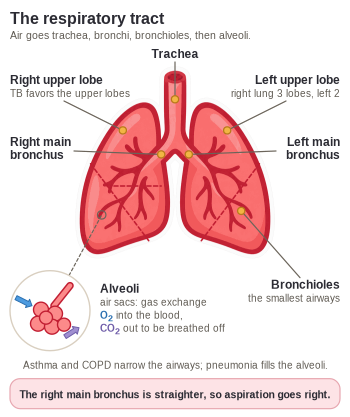
Assessment Findings
The hallmark COPD physical findings — barrel chest, prolonged expiration, and pursed-lip breathing — reflect years of air trapping and hyperinflation.
- Dyspnea, chronic cough, sputum, wheezing, prolonged expiration, barrel chest, tripod posture, pursed-lip breathing, fatigue, and decreased exercise tolerance.
- Severe disease may show cyanosis, morning headache, confusion, edema, weight loss, or frequent respiratory infections.
- Acute exacerbation signs include increased dyspnea, increased sputum volume or purulence, fever, and worsening hypoxemia.
Diagnostics
Spirometry is the definitive diagnostic tool for COPD — a post-bronchodilator FEV1/FVC ratio below 0.70 confirms fixed airflow obstruction.
- Spirometry confirms airflow limitation; FEV1/FVC is reduced.
- ABGs may show chronic CO2 retention, respiratory acidosis, or hypoxemia during exacerbations.
- Chest x-ray, pulse oximetry, sputum studies, CBC, and alpha-1 antitrypsin testing may be used based on presentation.
Treatment
COPD treatment follows a step-up approach based on symptom burden and exacerbation history.
- Bronchodilators, inhaled corticosteroids for selected patients, pulmonary rehab, smoking cessation, vaccines, and controlled oxygen therapy.
- Acute exacerbations may require short-acting bronchodilators, systemic steroids, antibiotics when bacterial signs are present, and noninvasive ventilation.
- Long-term oxygen is used when criteria are met, with careful titration to prescribed SpO2 targets.
Nursing Priorities
Titrate to the prescribed SpO2 target (typically 88–92%) and reassess frequently, not just at the start of therapy.
- Position high Fowler's or tripod and coach pursed-lip breathing.
- Titrate oxygen to the ordered target, commonly 88-92% for CO2 retainers.
- Assess respiratory effort, mental status, lung sounds, sputum, ABGs, and response to bronchodilators.
Patient Teaching
Smoking cessation is the only intervention proven to slow the rate of FEV1 decline — every other treatment manages symptoms or complications.
- Stop smoking, receive influenza and pneumococcal vaccines, use inhalers correctly, and follow the action plan for exacerbations.
- Use energy conservation, pulmonary rehab exercises, hydration if not restricted, and avoid respiratory irritants.
Complications
Long-term oxygen therapy, when indicated (resting SpO2 ≤ 88%), is the only pharmacological intervention proven to reduce mortality in COPD.
Emphysema vs Chronic Bronchitis
| Emphysema (Pink Puffer) | Chronic Bronchitis (Blue Bloater) | |
|---|---|---|
| Pathology | Alveolar wall destruction, loss of elastic recoil, air trapping. | Chronic bronchial inflammation, mucus hypersecretion, productive cough. |
| Primary symptom | Dyspnea and prolonged expiration. | Productive cough and recurrent infections. |
| Cough | Minimal or late. | Chronic cough for months/years. |
| Sputum | Scant. | Copious, thick, often purulent during exacerbation. |
| Barrel chest | Common from hyperinflation. | May occur later. |
| SpO2 | May be near normal until later disease. | Often lower with cyanosis and CO2 retention. |
| Body habitus | Thin/cachectic from increased work of breathing. | May be stockier with edema/cor pulmonale. |
| Hypoxic drive | Advanced patients may lose CO2 drive and rely more on hypoxic drive; use low-flow O2 1-2 L/NC and target 88-92%. | CO2 retention and hypoxic-drive concern are common in advanced disease; avoid chasing 98-100% saturation. |
Nursing priorities
- 1. Administer SABA before LABA before ICS. — Bronchodilating first opens airways so maintenance and steroid medications distribute better.
- 2. Maintain SpO2 88-92%, not 98-100%, when hypoxic-drive risk is present. — Excess oxygen can worsen CO2 retention in susceptible COPD patients.
- 3. Position high Fowler's to tripod with elbows supported. — This maximizes diaphragm excursion and reduces work of breathing.
Key nursing points
- Target SpO₂ 88–92% — high O₂ can knock out the hypoxic drive.
- Barrel chest, clubbing, prolonged expiration are classic findings.
- Pursed-lip breathing keeps alveoli open longer; tripod position eases work of breathing.
- Pneumococcal + annual flu vaccines are mandatory.
- Avoid sedatives and opioids — they blunt respiratory drive.
Test yourself

Pick your answer first, then open the rationale. Guessing teaches nothing.
Chronic airflow limitation with hypoxic drive — oxygenate carefully.
— 1 —