Sudden Infant Death Syndrome (SIDS)
SIDS is the leading cause of death in infants 1–12 months — Safe Sleep (Back to Sleep) is the cornerstone of prevention.
- Lesson 5 of 17
- 5 min read
Mnemonic · ABC
ABC
- AAlone
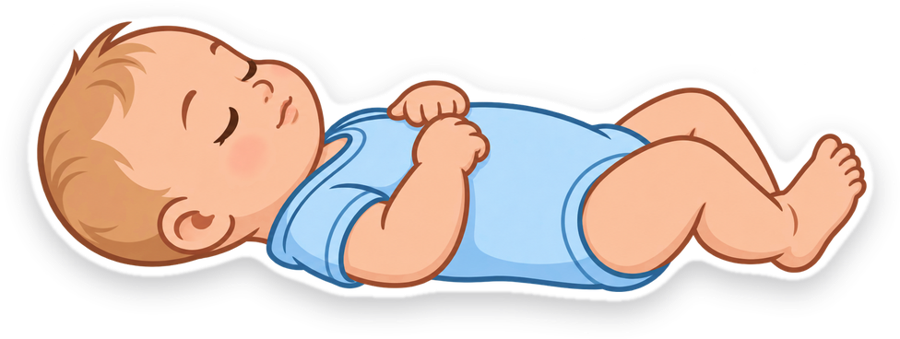
- BBack
- CCrib (firm, flat surface, no bumpers/pillows/loose blankets)
Overview
Sudden infant death syndrome is the sudden, unexplained death of an apparently healthy infant younger than 1 year, usually during sleep.
What Is SIDS?
SIDS is diagnosed only after the death remains unexplained after investigation, autopsy, and review of the clinical history.
It is rare in the first month of life and becomes much less common after 6 months as arousal, rolling, and respiratory control mature.
SIDS is a leading cause of death in infants from 1 month to 1 year.
Risk Factors
SIDS teaching focuses on modifiable sleep risks because nurses cannot predict which infant will be affected.
- Prone sleeping position or side-lying sleep. Supine sleep is the expected answer for prevention questions.
- Soft bedding, pillows, bumper pads, blankets, stuffed animals, or sleep surfaces that are not firm and flat.
- Overheating from heavy clothing, hats indoors, extra blankets, or a warm room.
- Maternal smoking during pregnancy, secondhand smoke exposure, or caregiver tobacco exposure after birth.
- Maternal alcohol or drug use, especially when combined with unsafe sleep environments.
- Prematurity and low birth weight because respiratory control and arousal responses are less mature.
- Male sex, which is associated with a slightly higher incidence.
- African American ethnicity and other groups affected by higher baseline risk and unequal access to safe sleep resources.
- Co-sleeping or bed-sharing, especially on couches, recliners, soft mattresses, or with impaired caregivers.
Safe Sleep - ABC Rule
The ABC rule is the safest concise teaching phrase for families.
Room-sharing is protective, but bed-sharing is not.
Nursing / Parent Teaching
Safe sleep teaching must be specific enough for caregivers to picture the sleep space.
- Always place the infant supine for sleep, including naps. If the infant rolls independently, caregivers do not need to keep repositioning them all night.
- Use a safety-approved crib, bassinet, or portable play yard with a firm mattress and fitted sheet only.
- Do not use sleep positioners, wedges, weighted blankets, weighted sleepers, bumper pads, or loose blankets.
- Recommend room-sharing, not bed-sharing, for at least the first 6 months when feasible.
- Offer a pacifier at nap time and bedtime once breastfeeding is established; pacifier use during sleep is associated with lower SIDS risk.
- Avoid smoke exposure during pregnancy and after birth. Teach all household members that smoking outside still requires clean clothing and hand hygiene before infant care.
- Prevent overheating: dress the infant in one more layer than an adult would wear and keep the room comfortable.
- Encourage breastfeeding when possible and routine well-child care so growth, illness, and caregiver questions are addressed early.
Nursing priorities
- 1. Teach Back to Sleep before discharge. — Supine sleep is the highest-yield modifiable prevention measure and must be taught to every caregiver, not just the birth parent.
- 2. Assess the home environment for a safe sleep setup. — Families may understand the rule but lack a crib, bassinet, or safe alternative; referral for resources can remove the barrier.
- 3. Refer the family to grief counseling if a loss has occurred. — SIDS is sudden and traumatic. Families need bereavement support, clear communication, and follow-up resources.
Key nursing points
- Always place infants on their BACK to sleep — not prone, not side.
- Crib: firm mattress, NO pillows, bumpers, or loose bedding.
- Peak SIDS age: 2–4 months.
- Room share but do NOT bed share.
- Pacifier use is protective.
- Smoking exposure significantly increases risk.
Test yourself

Pick your answer first, then open the rationale. Guessing teaches nothing.
SIDS is the leading cause of death in infants 1–12 months — Safe Sleep (Back to Sleep) is the cornerstone of prevention.
— 5 —