Chemotherapy & Oncology Medications
Alkylating agents, antimetabolites, antibiotic chemo, targeted therapy — vesicant precautions.
- Lesson 17 of 23
- 6 min read
Overview
Key classes: alkylating agents (cyclophosphamide), antimetabolites (methotrexate, 5-FU), plant alkaloids (vincristine), antitumor antibiotics (doxorubicin), targeted therapy (imatinib, trastuzumab).
How Cancer Medications Work
Targeted therapies and immunotherapies are more specific but still can cause serious organ and immune toxicities.
- Alkylating agents damage DNA.
- Antimetabolites interfere with DNA/RNA synthesis.
- Plant alkaloids disrupt microtubules.
- Antitumor antibiotics such as anthracyclines interfere with DNA and enzymes.
- Targeted and immune therapies require toxicity monitoring specific to the agent.
Administration and Vesicant Safety
- Use hazardous-drug precautions: correct PPE, closed handling when used, and safe disposal per policy.
- Verify patient, regimen, dose, route, rate, labs, consent, and premedications according to oncology policy.
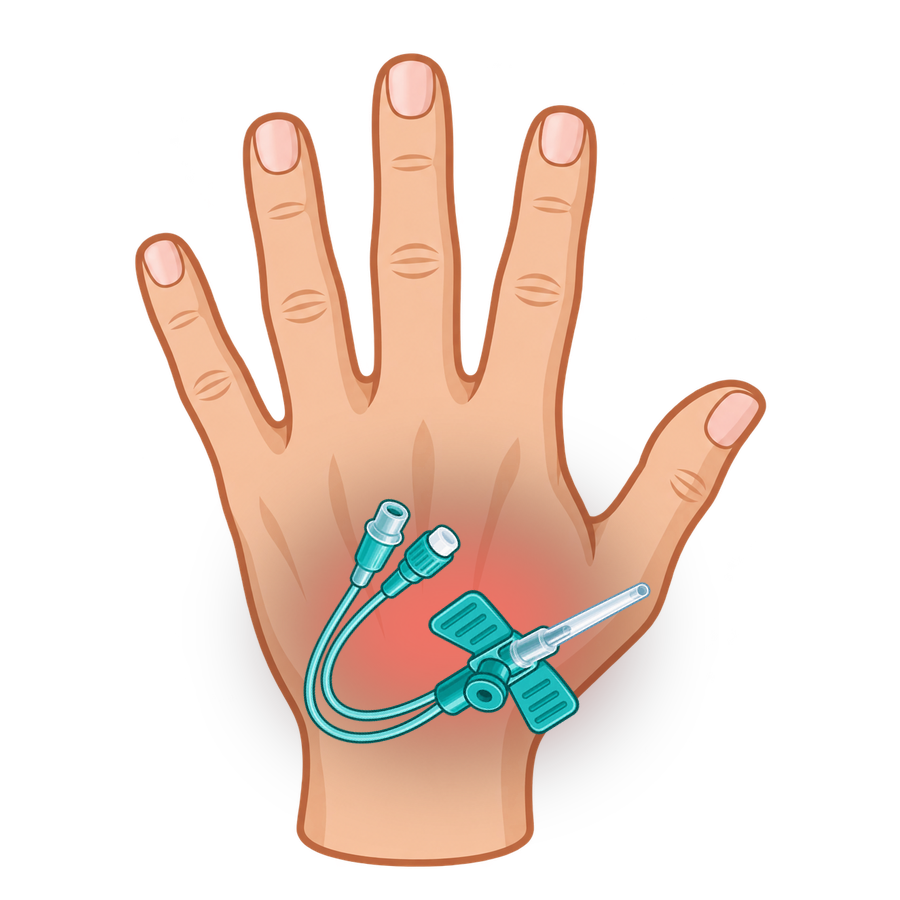
- Vesicants such as doxorubicin and vincristine can cause tissue necrosis if extravasated.
- If extravasation is suspected: stop infusion, leave catheter in place, aspirate if trained/ordered, notify immediately, and follow the drug-specific antidote/compress protocol.
Bone Marrow Suppression
Myelosuppression often reaches a nadir days after chemotherapy, so the patient may feel worst and be most vulnerable after leaving the infusion visit.
- Neutropenia: fever is an emergency; avoid crowds, sick contacts, fresh flowers, and unsafe foods when instructed.
- Thrombocytopenia: bleeding precautions, avoid aspirin/NSAIDs, use soft toothbrush and electric razor.
- Anemia: pace activity, monitor dyspnea, tachycardia, dizziness, and transfusion needs.
- Teach exactly which temperature threshold or symptoms require immediate call based on oncology instructions.

Oncologic Emergencies and Teaching
- Tumor lysis syndrome: high potassium, high phosphate, low calcium, high uric acid, renal injury, and dysrhythmia risk after rapid tumor cell death.
- Priority TLS care: aggressive ordered hydration, lab trending, cardiac monitoring, uric-acid lowering therapy, and renal protection.
- Anthracyclines can cause cardiotoxicity; monitor cumulative exposure and report dyspnea, edema, or chest symptoms.
- Teach contraception and fertility preservation discussions before therapy when relevant; many agents are teratogenic.
Chemotherapy Classes
cyclophosphamide · Alkylating agent
Use: Breast cancer, lymphomas, leukemias, autoimmune conditions.
Side effects: Hemorrhagic cystitis, myelosuppression, alopecia, SIADH, bladder cancer (long-term).
Contraindications: Severe bone marrow suppression, urinary outflow obstruction.
Nursing: Hydrate aggressively (2-3 L/day). Void frequently. Mesna may be co-administered to protect bladder. Monitor CBC.
methotrexate · Antimetabolite (folate antagonist)
Use: Acute lymphocytic leukemia, lymphomas, rheumatoid arthritis, psoriasis, ectopic pregnancy.
Side effects: Mucositis, myelosuppression, hepatotoxicity (fibrosis/cirrhosis), nephrotoxicity, teratogenic.
Contraindications: Pregnancy (Category X), severe renal/hepatic impairment, immunodeficiency.
Nursing: Leucovorin rescue 24 h after high-dose MTX. Hydrate and alkalinize urine. Monitor CBC, LFTs, Cr.
cisplatin · Platinum-based alkylating agent
Use: Testicular, ovarian, bladder, lung, head/neck cancers.
Side effects: Nephrotoxicity, peripheral neuropathy, ototoxicity, myelosuppression, severe nausea/vomiting.
Contraindications: Pre-existing renal failure, hearing loss, pregnancy.
Nursing: Pre-hydrate with IV NS 1-2 L before and after infusion. Monitor Cr, BUN, Mg2+, K+, CBC. Hearing assessment pre-treatment.
doxorubicin · Anthracycline antibiotic (topoisomerase II inhibitor)
Use: Breast, ovarian, and bladder cancers; leukemias, lymphomas.
Side effects: Cardiotoxicity (cardiomyopathy — cumulative dose-dependent), myelosuppression, alopecia, red urine (normal), vesicant.
Contraindications: Lifetime cumulative dose limit (~550 mg/m2). Severe HF or cardiomyopathy.
Nursing: Monitor LVEF (echo/MUGA). Red urine = normal (warn patient). Vesicant — verify IV patency before/during infusion.
ondansetron · 5-HT3 receptor antagonist (antiemetic)
Use: Chemotherapy-induced nausea/vomiting (CINV), radiation-induced N/V, post-op N/V.
Side effects: Constipation, headache, QT prolongation (high IV doses), serotonin syndrome (with serotonergic drugs).
Contraindications: Congenital long QT syndrome; caution with other QT-prolonging drugs.
Nursing: Give 30 min before chemotherapy. Monitor ECG with high-dose IV. Prevent constipation (opioid combination risk).
filgrastim (G-CSF) · Granulocyte colony-stimulating factor
Use: Post-chemotherapy neutropenia — stimulates neutrophil production.
Side effects: Bone pain (most common), splenomegaly, leukocytosis.
Contraindications: Do not administer 24 h before or after cytotoxic chemotherapy.
Nursing: Bone pain managed with acetaminophen. Monitor CBC. Do not shake vials. Refrigerate — bring to room temperature before use.
Key nursing points
- Vesicants (doxorubicin, vincristine): tissue necrosis on extravasation. Central line preferred.
- Bone marrow suppression nadir: 7–14 days post-chemo. Monitor CBC.
- Neutropenia: ANC < 500/µL → reverse isolation + avoid fresh produce, crowds, live vaccines.
- Thrombocytopenia: platelets < 20,000 → bleeding precautions. Transfuse if < 10,000.
- Oncologic emergencies: SIADH, tumor lysis syndrome (↑K, ↑phosphate, ↓calcium, ↑uric acid).
- PPE when handling chemo: gown, double-gloves, mask — chemotherapy is a hazardous material.
Test yourself

Pick your answer first, then open the rationale. Guessing teaches nothing.
Alkylating agents, antimetabolites, antibiotic chemo, targeted therapy — vesicant precautions.
— 17 —