Insulin: Types & Timing
Rapid · Short · Intermediate · Long — onset, peak, duration.
- Lesson 1 of 23
- 7 min read
Overview
Insulin replaces or supplements endogenous insulin when the pancreas cannot meet metabolic demand.
Insulin Types
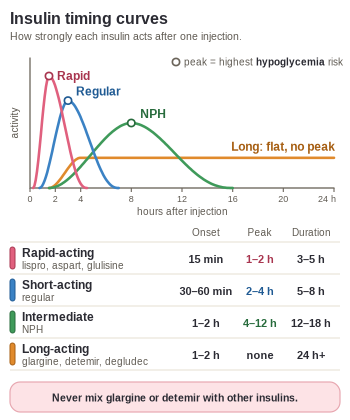
Use the insulin type to predict the patient safety window.
| Type | Example Drugs | Onset | Peak | Duration | Notes |
|---|---|---|---|---|---|
| Rapid-acting | Lispro, aspart, glulisine | 10-15 min | About 1 hr | 2-4 hr | Give with meals or immediately before food is available. |
| Short-acting | Regular | 30 min | 2-4 hr | 3-6 hr | Give 30-60 min before meals; only insulin commonly given IV. |
| Intermediate | NPH | 2-4 hr | 4-12 hr | 12-18 hr | Cloudy; roll gently. Peak creates higher hypoglycemia risk. |
| Long-acting | Glargine, detemir | 1-2 hr | No pronounced peak | Up to 24 hr | Basal coverage; give same time daily; do not mix. |
| Ultra-long | Degludec | About 1 hr | No pronounced peak | 36 hr or longer | Very steady basal effect; timing errors can stack over days. |
Insulin Peak Times Trick
Peak is when hypoglycemia is most likely, so timing matters more than memorizing names alone.
Hypoglycemia - Priority Assessment & Treatment
Hypoglycemia is an immediate brain-safety problem because the brain depends on circulating glucose.
- Blood glucose below 70 mg/dL is hypoglycemia and requires prompt treatment even if symptoms are mild.
- Use the 15-15 rule for an awake patient: give 15 g fast carbohydrate, then recheck blood glucose in 15 minutes.
- Repeat fast carbohydrate if still below target, then give a longer-acting snack or meal when stable.
- For an unconscious patient, do not give oral carbohydrates; give glucagon IM or D50W IV per protocol.
- Assess the cause: delayed meal, extra activity, wrong insulin, renal decline, alcohol intake, or illness.
Somogyi Effect vs Dawn Phenomenon
Both patterns show morning hyperglycemia, so the NCLEX priority is to check overnight blood glucose before increasing evening insulin.
Nursing Priorities
Safe insulin administration is a sequence: verify current glucose, verify meal access, choose the correct insulin, and reassess during the predicted peak.
- Check bedside blood glucose before administering insulin and verify meal status for rapid or short-acting doses.
- Never shake insulin; roll cloudy insulin gently to prevent bubbles and preserve dose accuracy.
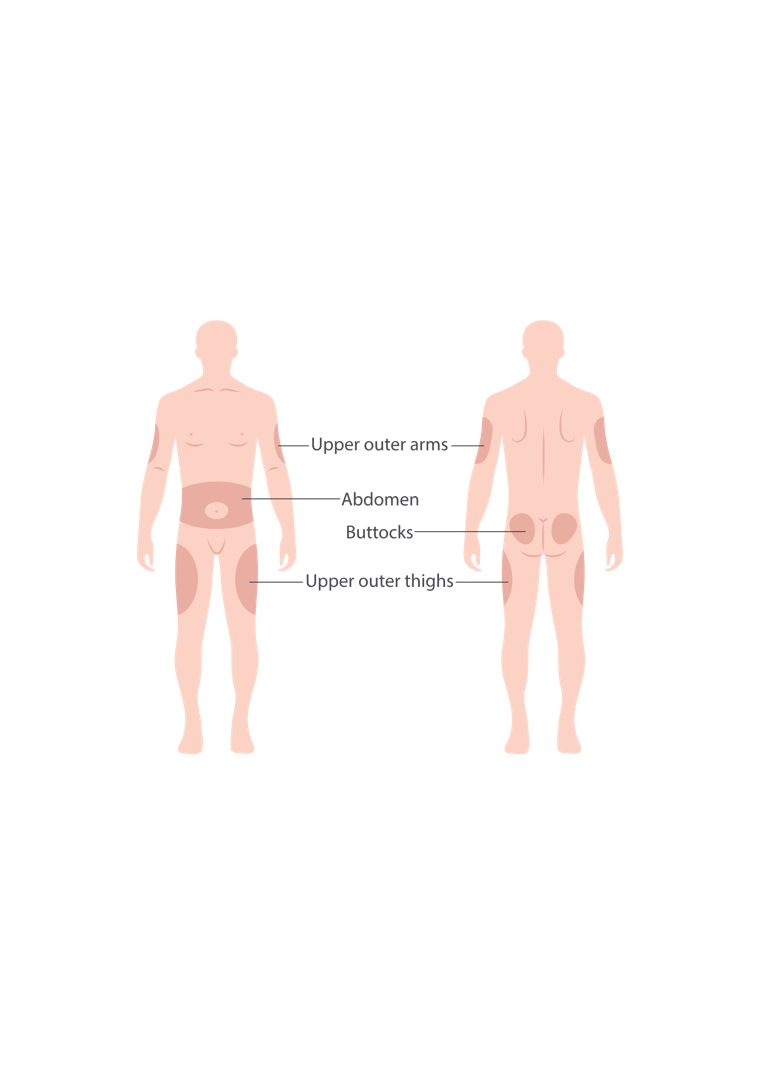
- Rotate injection sites within the same anatomic area to prevent lipodystrophy and variable absorption.
- Teach sick-day rules: monitor more often, maintain fluids/carbohydrates, check ketones when ordered, and call for persistent vomiting or high glucose.
Patient Teaching
Storage, site rotation, hypoglycemia supplies, sick-day rules, and medical ID reduce avoidable emergencies.
- Store unopened insulin in the refrigerator; most opened vials or pens may stay at room temperature for 28 days unless product instructions differ.
- Use an injection site diagram: abdomen, upper arm, thigh, and buttock; rotate at least 1 inch from the last site.
- Report hypoglycemia signs early: sweating, tremor, tachycardia, hunger, anxiety, confusion, or headache.
- Never skip insulin when sick without provider guidance; illness often raises glucose even when appetite is poor.
- Carry a fast carbohydrate source and medical identification, especially when using insulin away from home.
Somogyi Effect vs Dawn Phenomenon
| Somogyi Effect | Dawn Phenomenon | |
|---|---|---|
| Cause | Too much evening insulin or missed bedtime snack causes nocturnal hypoglycemia followed by rebound hormones. | Early morning cortisol, growth hormone, and catecholamines raise glucose before breakfast. |
| Blood glucose pattern | Low around 0200-0300, then high on waking. | Normal or high around 0200-0300, then high on waking. |
| Treatment | Decrease evening insulin or add bedtime snack after provider review. | Increase or retime basal insulin as prescribed. |
Nursing priorities
- 1. Check BG before administering. — Current glucose determines whether the ordered insulin dose is safe.
- 2. Never shake insulin - roll gently. — Shaking creates bubbles and can alter dose accuracy.
- 3. Rotate injection sites. — Rotation prevents lipodystrophy and erratic absorption.
- 4. Teach sick-day rules. — Illness can increase glucose and ketone risk even when intake is reduced.
Insulin Types & Timing
lispro / aspart (rapid-acting) · Rapid-acting insulin analog
Use: Mealtime glucose control; give within 15 min of eating.
Side effects: Hypoglycemia, injection-site lipodystrophy.
Contraindications: Hypoglycemia; do not use if meal is uncertain.
Nursing: Onset 15 min, peak 1-2 h, duration 3-5 h. Give with meal. Rotate injection sites.
regular insulin (short-acting) · Short-acting human insulin
Use: Mealtime dosing; ONLY insulin that can be given IV.
Side effects: Hypoglycemia, hypokalemia (IV use).
Contraindications: Hypoglycemia.
Nursing: Onset 30-60 min, peak 2-4 h, duration 6-8 h. Give 30 min before meal. Only form for IV drip.
NPH insulin (intermediate-acting) · Intermediate-acting insulin (isophane)
Use: Background insulin coverage; often dosed twice daily.
Side effects: Hypoglycemia, especially at peak (4-12 h).
Contraindications: Hypoglycemia.
Nursing: Onset 2-4 h, peak 4-12 h, duration 12-18 h. Cloudy — gently roll, do NOT shake. Draw NPH last when mixing.
glargine (long-acting) · Long-acting insulin analog (basal)
Use: Once-daily basal insulin coverage.
Side effects: Hypoglycemia (less pronounced — no peak).
Contraindications: Never mix with other insulins in the same syringe.
Nursing: Onset ~2 h, no peak, duration 20-24 h. Inject at same time daily. Clear solution — NEVER mix.
detemir (long-acting) · Long-acting insulin analog (basal)
Use: Once- or twice-daily basal coverage.
Side effects: Hypoglycemia, injection-site reactions.
Contraindications: Do not mix with other insulins.
Nursing: Duration ~20-24 h. Assess for hypoglycemia signs: shakiness, diaphoresis, confusion. Never shake vials.
Key nursing points
- Rapid-acting insulin is meal insulin: give when food is present and monitor closely around the peak.
- Regular insulin is short-acting and can be given IV when specifically ordered, such as in DKA protocols.
- NPH is cloudy intermediate insulin; roll gently to resuspend and expect a peak-related hypoglycemia risk.
- Long-acting and ultra-long insulins provide basal coverage and should not be mixed with other insulins.
- Hypoglycemia is a priority safety event: treat immediately, then identify the cause before the next dose.
Test yourself

Pick your answer first, then open the rationale. Guessing teaches nothing.
Rapid · Short · Intermediate · Long — onset, peak, duration.
— 1 —