Renal & Urinary Medications
Phosphate binders WITH meals. EPO needs iron and causes HTN. ACE-I reduces proteinuria — hold for K+ > 5.5 or Cr rise > 30%. Anticholinergics for OAB: dry, constipated, confused.
- Lesson 23 of 23
- 6 min read
4 terms
- Phosphate binders
- calcium carbonate (Tums), calcium acetate (PhosLo), sevelamer (Renvela), lanthanum carbonate. Given WITH meals (not between meals) to bind phosphate in food before absorption.
- Key nursing point
- if the patient cannot eat, hold the phosphate binder — there is no phosphate to bind.
- Cinacalcet (Sensipar)
- calcimimetic — reduces PTH secretion in secondary hyperparathyroidism. Monitor calcium (can cause hypocalcemia).
- Vitamin D analogs (calcitriol)
- CKD impairs Vitamin D activation; replacement reduces PTH. Monitor calcium.
Overview
Renal and urinary medications span diuretics, renal-protective drugs, anemia management, phosphate control, and bladder agents.
Medications for CKD — Anemia
CKD anemia develops because diseased kidneys make less erythropoietin, so the marrow receives less signal to produce RBCs.
- Erythropoiesis-stimulating agents (ESAs): epoetin alfa (Epogen) and darbepoetin alfa (Aranesp) — stimulate bone marrow to produce RBCs in CKD-associated anemia.
- Require adequate iron stores to function — check ferritin and TSAT before dosing; supplement iron if needed.
- Target Hgb: 10–12 g/dL in CKD (do not over-correct — Hgb > 13 increases stroke, MI, and clot risk).
- Major side effect: hypertension — monitor BP at every visit; manage with antihypertensives as needed.

Medications for CKD — Phosphate Control
Phosphate binders work inside the gut only when food phosphate is present, so giving them without meals misses the mechanism.
- CKD causes phosphate retention → hyperphosphatemia → secondary hyperparathyroidism → renal osteodystrophy.
- Phosphate binders: calcium carbonate (Tums), calcium acetate (PhosLo), sevelamer (Renvela), lanthanum carbonate. Given WITH meals (not between meals) to bind phosphate in food before absorption.
- Key nursing point: if the patient cannot eat, hold the phosphate binder — there is no phosphate to bind.
- Cinacalcet (Sensipar): calcimimetic — reduces PTH secretion in secondary hyperparathyroidism. Monitor calcium (can cause hypocalcemia).
- Vitamin D analogs (calcitriol): CKD impairs Vitamin D activation; replacement reduces PTH. Monitor calcium.
ACE Inhibitors & ARBs — Renal Protection
RAAS blockade lowers intraglomerular pressure by relaxing the efferent arteriole.
- Mechanism: dilate efferent arteriole → reduce intraglomerular pressure → reduce proteinuria → slow CKD progression.
- Lisinopril, enalapril (ACE-I); losartan, valsartan (ARBs). First-line for CKD with diabetes or proteinuria.
- Monitor: serum creatinine (expected mild rise up to 30% from baseline — acceptable) and serum potassium (hyperkalemia risk).
- Hold and notify provider: K+ > 5.5 mEq/L, Cr rise > 30% from baseline, bilateral renal artery stenosis.
- ACE-I side effects: dry cough (switch to ARB if intolerable), angioedema (stop immediately — life-threatening).
- Contraindicated in pregnancy — teratogenic (VACTERL association).
Bladder Medications
Alpha blockers relax smooth muscle but can cause first-dose orthostasis.
| Drug Class | Example | Indication | Key Side Effects / Nursing |
|---|---|---|---|
| Anticholinergics | Oxybutynin (Ditropan), tolterodine (Detrol) | Overactive bladder, urge incontinence | Dry mouth, constipation, urinary retention, confusion in elderly. On Beers Criteria — avoid or use with caution in older adults |
| Beta-3 agonist | Mirabegron (Myrbetriq) | OAB (alternative to anticholinergics) | HTN — check BP; fewer anticholinergic side effects |
| Alpha-blocker | Tamsulosin (Flomax), alfuzosin | BPH (enlarged prostate), ureteral stone passage | Orthostatic hypotension — rise slowly; retrograde ejaculation; take at bedtime |
| 5-alpha reductase inhibitor | Finasteride (Proscar), dutasteride | BPH — shrinks prostate over months | Lowers PSA (affects cancer screening interpretation); teratogenic — pregnant women must not handle crushed tablets |
Diuretics in Renal Disease
Potassium effects must be anticipated before combining diuretics with ACE inhibitors, ARBs, or supplements.
- Loop diuretics (furosemide/Lasix): most potent; monitor K+ (hypokalemia), BUN/Cr (pre-renal AKI from overdiuresis), hearing (ototoxicity with rapid IV push).
- Potassium-sparing diuretics (spironolactone): retains K+ — do not supplement K+ routinely; avoid with ACE-I/ARBs (double risk of hyperkalemia).
- Thiazide diuretics: first-line for HTN; hypokalemia and hypercalcemia (opposite of loop diuretics). Less effective when GFR < 30 — switch to loop diuretics.
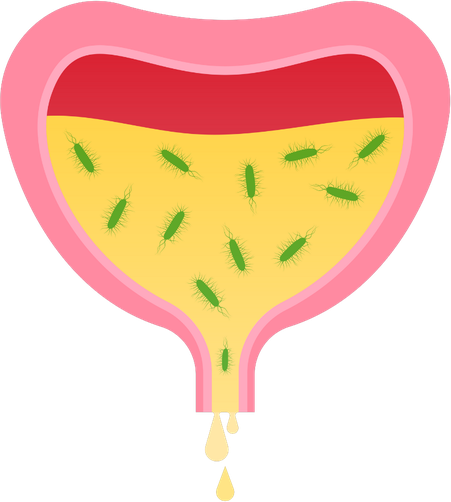
UTI Antibiotics
nitrofurantoin · Nitrofuran antibiotic
Use: Uncomplicated lower UTI (cystitis) caused by E. coli and susceptible organisms.
Side effects: Pulmonary toxicity (long-term use — fibrosis), peripheral neuropathy (long-term), GI upset; urine turns yellow-brown.
Contraindications: CrCl <30 mL/min (ineffective — inadequate urinary concentration), term pregnancy (neonatal hemolysis).
Nursing: Take with food (reduces GI side effects). Warn about urine discoloration — normal. Not effective for upper UTI/pyelonephritis.
trimethoprim-sulfamethoxazole (TMP-SMX) · Sulfonamide antibiotic combination
Use: Uncomplicated UTI, PCP pneumonia prophylaxis, MRSA skin infections (high-dose).
Side effects: Stevens-Johnson syndrome, bone marrow suppression (megaloblastic anemia), hyperkalemia, photosensitivity.
Contraindications: Sulfa allergy, G6PD deficiency, pregnancy (third trimester — kernicterus risk), severe renal failure.
Nursing: Monitor CBC and renal function. Sun protection. Increase fluid intake. Check sulfa allergy history.
ciprofloxacin · Fluoroquinolone
Use: Complicated UTI, pyelonephritis, prostatitis — reserve for resistant organisms.
Side effects: Tendon rupture, QT prolongation, photosensitivity, C. diff, CNS effects.
Contraindications: Children <18, pregnancy, myasthenia gravis.
Nursing: Avoid sun exposure. Take with full glass of water. Not first-line for uncomplicated UTI (resistance stewardship).
fosfomycin · Phosphonic acid antibiotic
Use: Uncomplicated UTI in women — single oral dose convenience.
Side effects: Diarrhea, nausea, headache.
Contraindications: Complicated UTI (not appropriate for upper tract).
Nursing: Single-dose oral regimen (3 g sachet mixed in water) — improves adherence. Not for pyelonephritis.
BPH, OAB & Renal Medications
tamsulosin · Alpha-1 adrenergic blocker (uroselective)
Use: Benign prostatic hyperplasia (BPH) — relaxes smooth muscle in prostate/bladder neck.
Side effects: Orthostatic hypotension, retrograde ejaculation, dizziness, rhinitis.
Contraindications: Concurrent PDE-5 inhibitors (severe hypotension), severe hepatic impairment.
Nursing: Rise slowly from sitting/lying. Give 30 min after same meal daily. Warn about retrograde ejaculation.
finasteride · 5-alpha reductase inhibitor
Use: BPH, male pattern baldness.
Side effects: Sexual dysfunction (decreased libido, erectile dysfunction), decreased PSA (may mask prostate cancer).
Contraindications: Women of childbearing potential should NOT handle crushed/broken tablets — teratogenic.
Nursing: 4-6 month course before full benefit. PSA baseline before starting. Pregnant women must not handle crushed tablets.
oxybutynin · Anticholinergic (muscarinic antagonist)
Use: Overactive bladder (OAB), urge incontinence.
Side effects: Dry mouth, constipation, urinary retention, blurred vision, confusion (elderly — use with caution).
Contraindications: Urinary retention, narrow-angle glaucoma, gastric retention.
Nursing: Use lowest effective dose in elderly (anticholinergic burden). Urinary retention risk — assess void pattern.
sevelamer · Phosphate binder (non-calcium based)
Use: Hyperphosphatemia in chronic kidney disease (CKD) patients on dialysis.
Side effects: GI upset, constipation, bowel obstruction (rare), reduced absorption of fat-soluble vitamins.
Contraindications: Bowel obstruction.
Nursing: Take WITH meals (binds dietary phosphate). Monitor phosphorus and calcium levels. May need vitamin D supplementation.
Key nursing points
- Phosphate binders (calcium carbonate, sevelamer): must be taken WITH meals to bind dietary phosphate in the gut.
- Erythropoietin (Epogen): stimulates RBC production; causes HTN — monitor BP. Needs adequate iron stores to work.
- ACE inhibitors/ARBs: reduce proteinuria and slow CKD — first-line in diabetic nephropathy. Monitor K+ and Cr.
- Anticholinergics (oxybutynin) for OAB: dry mouth, constipation, urinary retention — AVOID in elderly (Beers Criteria).
- Tamsulosin (alpha-blocker for BPH): orthostatic hypotension on standing; retrograde ejaculation.
Test yourself

Pick your answer first, then open the rationale. Guessing teaches nothing.
Phosphate binders WITH meals. EPO needs iron and causes HTN. ACE-I reduces proteinuria — hold for K+ > 5.5 or Cr rise > 30%. Anticholinergics for OAB: dry, constipated, confused.
— 23 —