Musculoskeletal Medications
Muscle relaxants, bisphosphonates, DMARDs, biologics — gout drugs, spasmolytics.
- Lesson 16 of 23
- 5 min read
3 nursing priorities
- 1Educate patient NSAIDs only mask pain - not disease-modifying.Inflammatory arthritis can progress without DMARD or biologic control.
- 2CBC/LFT every 4-8 weeks on methotrexate.Regular labs detect marrow suppression and hepatotoxicity early.
- 3Hold biologics 1-2 weeks before surgery.Perioperative immunosuppression increases infection and wound-healing risk; timing depends on agent and provider order.
Overview
Musculoskeletal medications include symptom relievers for pain and inflammation plus disease-modifying therapy for autoimmune joint disease.
NSAIDs - GI and Renal Risks
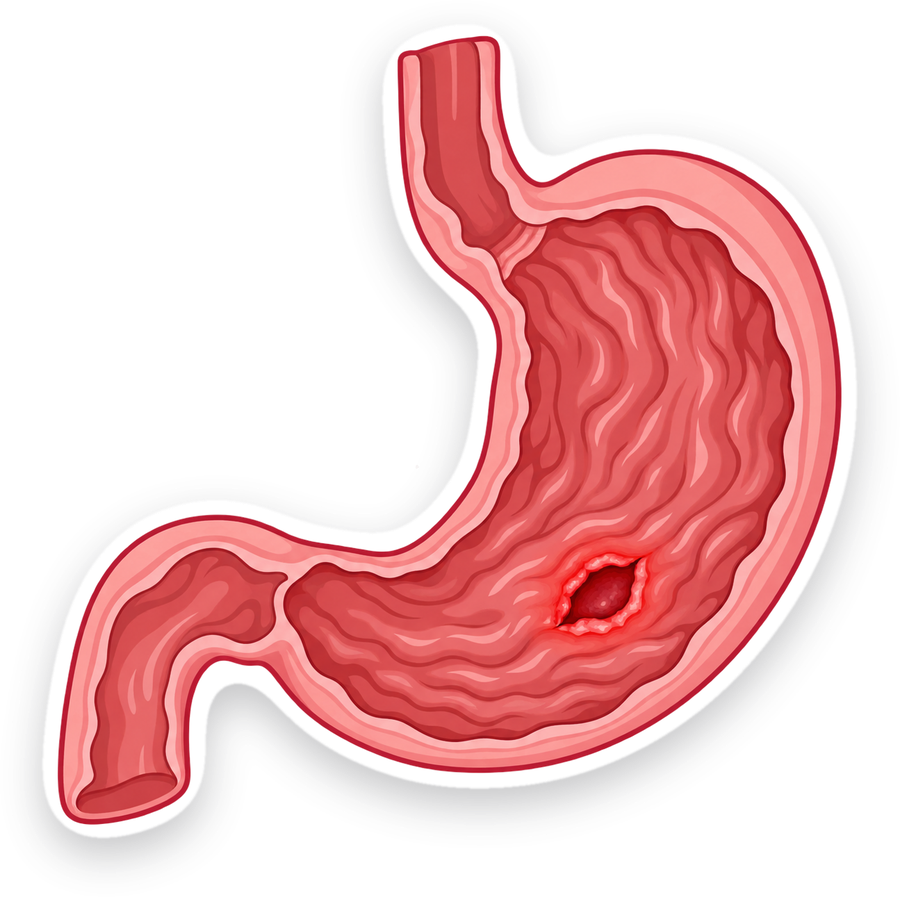
NSAIDs reduce prostaglandin-driven pain and inflammation, but prostaglandins also protect gastric mucosa, renal blood flow, platelets, and fluid balance.
- Take NSAIDs with food or milk to reduce dyspepsia and local gastric irritation.
- Avoid NSAIDs in active peptic ulcer disease or recent GI bleeding unless a provider specifically determines benefit outweighs risk.
- Monitor BUN/creatinine and urine output because prostaglandin blockade can reduce renal perfusion.
- Use PPI prophylaxis for long-term or high-risk NSAID use when ordered.
- Avoid NSAIDs in heart failure when possible because they can cause sodium/water retention and worsen edema or blood pressure.
- Avoid NSAIDs in the last trimester of pregnancy because fetal and bleeding complications can occur.
COX-2 Inhibitors (Celecoxib)
Celecoxib was designed to spare COX-1 mediated gastric protection more than nonselective NSAIDs, but COX-2 selectivity does not make it harmless.
- Celecoxib is more COX-2 selective, so it has less GI ulcer/bleeding risk than many nonselective NSAIDs.
- It has the same renal risk pattern as NSAIDs: monitor kidney function, hydration status, edema, and blood pressure.
- Cardiovascular risk is increased, especially in patients with CAD, stroke history, uncontrolled hypertension, or high doses.
- Avoid in sulfonamide allergy unless the prescriber has specifically evaluated the risk.
- Do not combine casually with other NSAIDs because toxicity stacks without improving disease control.
DMARDs - Methotrexate Monitoring
Methotrexate is disease-modifying rather than simply analgesic.
- Verify weekly dosing for rheumatoid arthritis; daily dosing errors can be fatal.
- Check CBC, LFTs, and creatinine at baseline and repeatedly during therapy.
- Teach folic acid use as prescribed, no alcohol, contraception, and immediate reporting of fever, mouth sores, dyspnea, bruising, or jaundice.
Biologics (TNF Inhibitors)
Screening for latent TB, avoiding live vaccines, and holding therapy during serious infection prevent predictable complications.
- Examples include adalimumab, etanercept, and infliximab.
- Screen for latent TB before starting because TNF inhibitors can reactivate tuberculosis.
- Live vaccines are contraindicated during therapy; give needed live vaccines before immunosuppression when possible.
- Teach the patient to report fever, cough, night sweats, wound drainage, dysuria, or other signs of infection promptly.
- Hold biologics during serious infection and around surgery according to provider or rheumatology instructions.
Diagnostic tests
| Test | Purpose | Normal | Abnormal | Nursing note |
|---|---|---|---|---|
| CBC + LFTs + Creatinine | Detect methotrexate toxicity | WBC > 3,500, ALT < 3x ULN | Pancytopenia or elevated LFTs -> hold and notify | Add folic acid to reduce side effects. Avoid alcohol. Teratogenic - contraception required. |
Nursing priorities
- 1. Educate patient NSAIDs only mask pain - not disease-modifying. — Inflammatory arthritis can progress without DMARD or biologic control.
- 2. CBC/LFT every 4-8 weeks on methotrexate. — Regular labs detect marrow suppression and hepatotoxicity early.
- 3. Hold biologics 1-2 weeks before surgery. — Perioperative immunosuppression increases infection and wound-healing risk; timing depends on agent and provider order.
Gout Medications
allopurinol · Xanthine oxidase inhibitor
Use: CHRONIC gout prevention — lowers uric acid. NOT for acute flares.
Side effects: Rash (including Stevens-Johnson syndrome), renal toxicity, hepatotoxicity, GI upset.
Contraindications: Acute gout attack (do NOT initiate during flare), azathioprine/mercaptopurine use.
Nursing: Do not start during acute attack. Increase fluid intake. Monitor uric acid levels. Rash = stop immediately.
colchicine · Anti-inflammatory (microtubule inhibitor)
Use: Acute gout flare treatment and prophylaxis during initiation of urate-lowering therapy.
Side effects: GI toxicity (diarrhea, nausea, vomiting — dose-limiting), myopathy with long-term use.
Contraindications: Severe renal/hepatic impairment (dose-limit or avoid); concurrent strong CYP3A4 inhibitors.
Nursing: Start at first sign of flare. GI side effects = reduce dose. Monitor for muscle weakness with long-term use.
indomethacin / NSAIDs · NSAID
Use: Acute gout flare treatment — effective anti-inflammatory.
Side effects: GI bleeding, renal impairment, fluid retention.
Contraindications: Peptic ulcer disease, renal failure, heart failure.
Nursing: Take with food. Use short-term only for acute flares. Avoid in elderly patients with GI/renal risk.
probenecid · Uricosuric agent
Use: Chronic gout — increases renal excretion of uric acid.
Side effects: Renal stones (urate), GI upset, rash.
Contraindications: Acute gout flare, renal impairment (eGFR <50), uric acid kidney stones.
Nursing: Increase fluid intake (2-3 L/day) to prevent urate stones. Avoid aspirin (antagonizes effect).
Bone & Muscle Medications
alendronate / risedronate · Bisphosphonate
Use: Osteoporosis prevention and treatment, Paget's disease.
Side effects: Esophageal erosion/ulceration, osteonecrosis of the jaw (ONJ), atypical femur fractures.
Contraindications: Inability to sit/stand upright for 30+ minutes, esophageal disorders, CrCl <35.
Nursing: Take with full 8 oz glass of water on empty stomach. Remain upright 30 min after. No food for 30-60 min. Report jaw pain.
dantrolene · Skeletal muscle relaxant (direct-acting)
Use: Malignant hyperthermia (treatment of choice), neuroleptic malignant syndrome (NMS), severe spasticity.
Side effects: Hepatotoxicity (monitor LFTs), muscle weakness, drowsiness.
Contraindications: Active hepatic disease; not recommended for spasticity needed for locomotion.
Nursing: Malignant hyperthermia emergency: give IV dantrolene ASAP, cooling measures, 100% O2. Prophylaxis before procedures in susceptible patients.
baclofen · GABA-B agonist (muscle relaxant)
Use: Spasticity (MS, spinal cord injury), muscle spasms.
Side effects: CNS depression (drowsiness, dizziness), hypotension, urinary retention.
Contraindications: Intrathecal overdose = emergency. Caution in renal impairment.
Nursing: Do NOT stop abruptly — risk of severe withdrawal (hallucinations, seizures, hyperthermia). Taper slowly. Fall risk.
Key nursing points
- NSAIDs decrease prostaglandins, which relieves inflammation but also removes stomach and kidney protection.
- Celecoxib has less GI toxicity than nonselective NSAIDs but still carries renal and cardiovascular risk.
- Methotrexate for rheumatoid arthritis is given weekly, not daily, and requires CBC, LFT, and creatinine monitoring.
- Folic acid reduces methotrexate side effects but does not remove teratogenic risk.
- TNF inhibitors increase infection risk; screen for TB before starting and avoid live vaccines.
Test yourself

Pick your answer first, then open the rationale. Guessing teaches nothing.
Muscle relaxants, bisphosphonates, DMARDs, biologics — gout drugs, spasmolytics.
— 16 —