PUD
Peptic ulcer disease is mucosal erosion in the stomach or duodenum, most often related to H. pylori or NSAID exposure.
- Lesson 6 of 7
- 7 min read
Side by side
Gastric vs Duodenal Ulcer
- Stomach mucosa, often lesser curvature or antrum.
- Duodenum, usually the proximal duodenal bulb.
- Pain often occurs soon after meals.
- Pain often occurs 2-3 hours after meals or at night.
- Common, but less dominant than in duodenal ulcers; NSAIDs are also common.
- Very commonly associated with H. pylori; PUD overall is often taught around 70% H. pylori related.
- Food may worsen pain, causing weight loss or food avoidance.
- Food or antacids may temporarily relieve pain; weight gain can occur.
Overview
PUD occurs when gastric defenses are overwhelmed by acid, pepsin, H. pylori infection, NSAIDs, smoking, or severe physiologic stress.
Pathophysiology
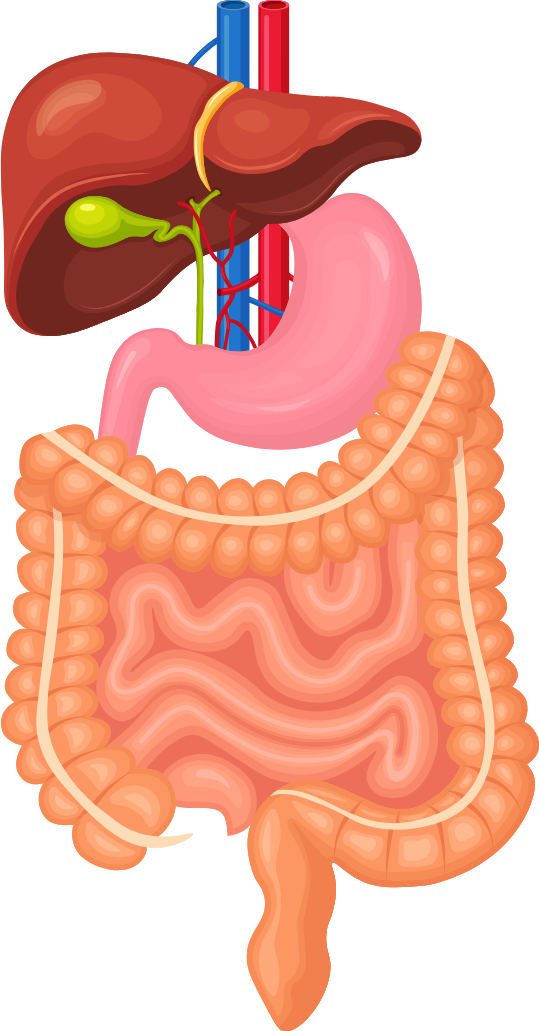
The mucosal barrier normally protects the stomach and duodenum from acid.
Signs & Symptoms
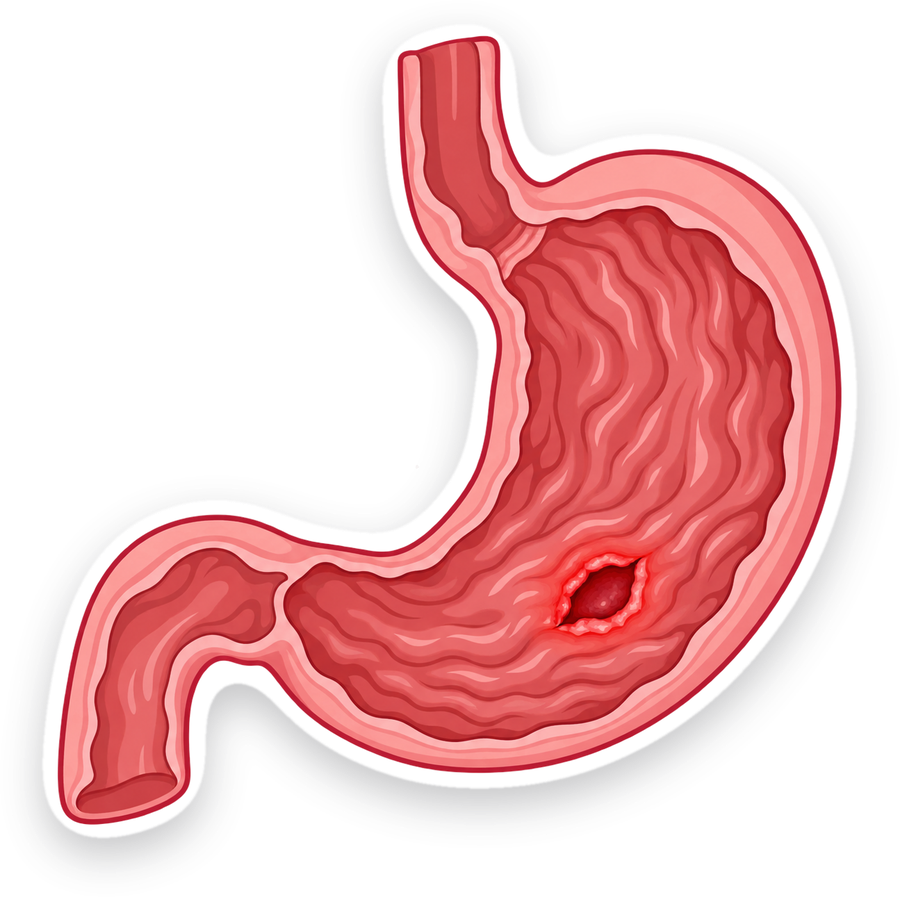
PUD symptoms depend on ulcer location and whether bleeding or perforation has developed.
- Burning or gnawing epigastric pain, bloating, nausea, early satiety, belching, or nocturnal pain.
- GI bleeding: black tarry stools, coffee-ground emesis, weakness, dizziness, and anemia.
- Perforation: sudden severe abdominal pain, board-like rigidity, rebound tenderness, and shock.
Diagnosis
Endoscopy is the most useful diagnostic and therapeutic tool when bleeding, alarm symptoms, or refractory disease are present.
- Endoscopy visualizes ulcers and can treat bleeding or obtain biopsy.
- H. pylori testing may include urea breath test, stool antigen, biopsy, or serology depending on setting.
- CBC, stool occult blood, BUN, and hemodynamics help assess bleeding severity.
Treatment
Active bleeding changes the priority to NPO status, IV access, resuscitation, endoscopic therapy, and blood products when needed.
- PPIs or H2 blockers reduce acid and promote healing.
- H. pylori eradication requires multiple medications; adherence is essential.
- Stop NSAIDs if possible; if unavoidable, use provider-directed gastroprotection.
- Bleeding ulcers may require endoscopic therapy, transfusion, IV PPI, or surgery.
Nursing Priorities
The nurse should separate stable dyspepsia from bleeding or perforation.
- Assess pain, stool/emesis for blood, orthostatic vitals, Hgb/Hct, and signs of shock.
- Maintain NPO, IV access, and type/crossmatch if active bleeding is suspected.
- Administer acid suppression and antibiotics exactly as ordered.
- Avoid giving NSAIDs unless explicitly ordered and safe.
Patient Teaching
Teaching should prevent recurrence.
- Complete all H. pylori antibiotics even if symptoms improve.
- Avoid NSAIDs, smoking, alcohol, and individual food triggers.
- Take PPIs before meals as directed.
- Seek emergency care for vomiting blood, black stools, fainting, or sudden severe abdominal pain.
Complications
The classic PUD complications are hemorrhage, perforation, penetration, and gastric outlet obstruction.
- Hemorrhage, perforation, peritonitis, gastric outlet obstruction, anemia, and recurrence.
- Untreated H. pylori can contribute to recurrent ulcers and gastric cancer risk.
Gastric vs Duodenal Ulcer
| Gastric Ulcer | Duodenal Ulcer | |
|---|---|---|
| Location | Stomach mucosa, often lesser curvature or antrum. | Duodenum, usually the proximal duodenal bulb. |
| Pain timing | Pain often occurs soon after meals. | Pain often occurs 2-3 hours after meals or at night. |
| H. pylori % | Common, but less dominant than in duodenal ulcers; NSAIDs are also common. | Very commonly associated with H. pylori; PUD overall is often taught around 70% H. pylori related. |
| Food effect | Food may worsen pain, causing weight loss or food avoidance. | Food or antacids may temporarily relieve pain; weight gain can occur. |
| Bleeding risk | Higher concern for bleeding and possible malignancy evaluation with biopsy. | Bleeding can occur, but perforation/obstruction patterns are also tested. |
| Treatment | PPI, stop NSAIDs, test/treat H. pylori, and endoscopic evaluation when indicated. | PPI plus H. pylori eradication when positive and avoidance of NSAIDs/smoking. |
Diagnostic tests
| Test | Purpose | Normal | Abnormal | Nursing note |
|---|---|---|---|---|
| H. pylori Testing | Diagnose H. pylori infection | Negative | Positive urea breath test or stool antigen or biopsy | Test off PPIs for 2 weeks (antibiotics and bismuth 4 weeks). First-line: bismuth quadruple therapy (PPI + bismuth + tetracycline + metronidazole) × 14 days; clarithromycin triple only where resistance is low. |
Key nursing points
- Common causes: H. pylori infection and NSAID use.
- Duodenal ulcer pain often improves with food; gastric ulcer pain may worsen with food.
- Bleeding signs: hematemesis, coffee-ground emesis, melena, falling Hgb/Hct, tachycardia, hypotension.
- H. pylori treatment uses combination antibiotics plus acid suppression; complete the full course.
- Avoid NSAIDs, smoking, alcohol, and foods that trigger symptoms.
- Sudden rigid abdomen with severe pain suggests perforation: emergency.
Test yourself

Pick your answer first, then open the rationale. Guessing teaches nothing.
Peptic ulcer disease is mucosal erosion in the stomach or duodenum, most often related to H. pylori or NSAID exposure.
— 6 —