Disseminated Intravascular Coagulation (DIC)
Clotting + bleeding simultaneously. Treat the cause. Labs: ↓platelets, ↓fibrinogen, ↑PT/PTT, ↑D-dimer.
- Lesson 7 of 8
- 5 min read
Overview
Triggered by sepsis, trauma, obstetric emergencies (abruptio placentae, amniotic fluid embolism), malignancy, or transfusion reactions.
Pathophysiology
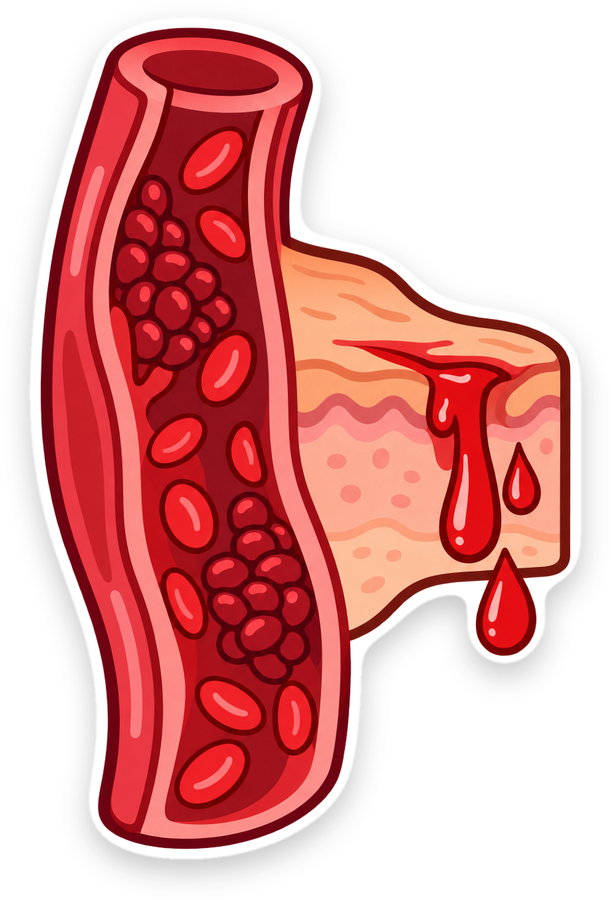
Disseminated intravascular coagulation is uncontrolled activation of the clotting cascade.
- Microclots can cause organ ischemia and failure.
- Consumed platelets and fibrinogen cause bleeding and oozing.
- Fibrinolysis raises D-dimer and fibrin degradation products.
Triggers and Assessment
- Common triggers: sepsis, severe trauma, obstetric emergencies, malignancy, pancreatitis, transfusion reaction, and shock.
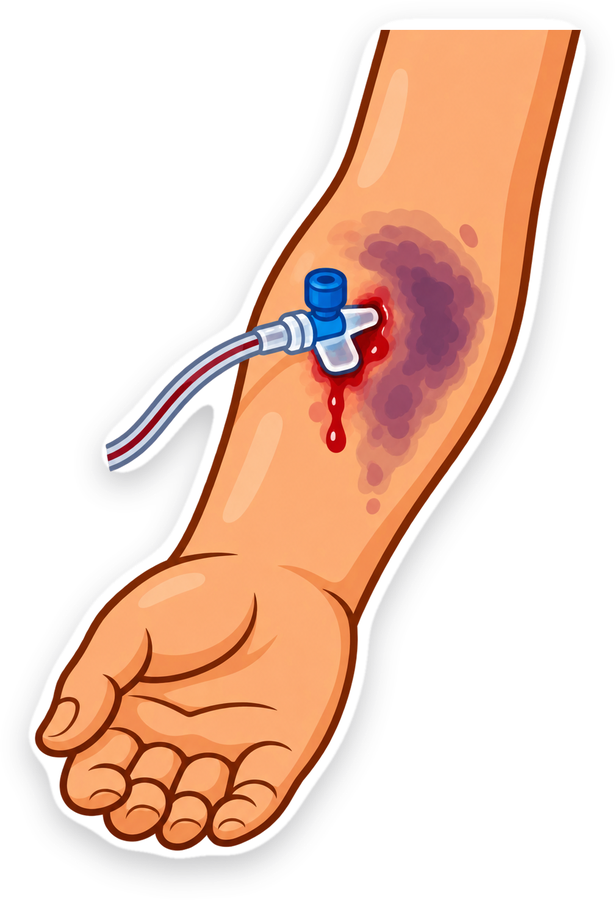
- Bleeding cues: petechiae, purpura, ecchymosis, mucosal bleeding, hematuria, GI bleeding, and oozing from IV or incision sites.
- Clotting cues: mottled skin, low urine output, respiratory distress, altered LOC, limb ischemia, and organ dysfunction.
- Assess vital signs, perfusion, mental status, urine output, skin, and all puncture sites frequently.
Lab Pattern and Replacement
Replacement depends on bleeding, labs, and cause.
| Lab | Expected DIC trend | Meaning |
|---|---|---|
| Platelets | Low | Consumed in widespread clotting. |
| PT and aPTT | Prolonged | Clotting factors are depleted. |
| Fibrinogen | Low | Used up to form clots. |
| D-dimer | High | Clot breakdown is increased. |
Priority Care and NCLEX Traps
NCLEX tipNCLEX trap: DIC is both clotting and bleeding. Do not choose only bleeding precautions and miss organ perfusion.
- Treat the underlying cause: antibiotics for sepsis, delivery or obstetric management when indicated, trauma control, or transfusion reaction response.
- Avoid unnecessary venipunctures, IM injections, rectal temps, and aspirin or NSAIDs.
- Apply prolonged pressure after procedures and monitor for compartment or organ ischemia.
- Escalate new bleeding, falling BP, declining urine output, worsening oxygenation, or acute confusion.
Key nursing points
- DIC = simultaneous clotting AND bleeding — 'using up' all clotting factors.
- Classic triggers: sepsis (most common), SIRS, obstetric emergencies, malignancy.
- Labs: ↓platelets, ↓fibrinogen, ↑PT, ↑aPTT, ↑D-dimer, ↓antithrombin III.
- Oozing from IV sites, petechiae, ecchymosis + thrombotic events (organ failure).
- Treatment: address underlying cause + replace what's consumed (FFP, cryoprecipitate, platelets).
- Heparin: controversial, used in CHRONIC DIC to interrupt the clotting cascade.
EXAM TRAPCommon exam trapDIC labs: ALL of the following are abnormal — ↑PT, ↑aPTT, ↓fibrinogen, ↓platelets, ↑D-dimer. Fibrinogen < 100 mg/dL is critical. On NCLEX: 'clotting and bleeding at the same time' = DIC. Never give aspirin or NSAIDs — worsens bleeding.
Test yourself

Pick your answer first, then open the rationale. Guessing teaches nothing.
In one line
Clotting + bleeding simultaneously. Treat the cause. Labs: ↓platelets, ↓fibrinogen, ↑PT/PTT, ↑D-dimer.
— 7 —