Sickle Cell Disease
Inherited HbS → sickled RBCs occlude small vessels → painful crisis.
- Lesson 3 of 8
- 6 min read
3 nursing priorities
- 1Assess pain at least every 2 hours during vaso-occlusive crisis.Under-treatment of sickle cell pain is a common and serious care error.
- 2Avoid cold temperatures and cold packs.Cold causes vasoconstriction and can worsen sickling and ischemic pain.
- 3Before elective surgery, anticipate exchange transfusion planning with target HbS < 30%.Reducing HbS lowers perioperative vaso-occlusive and acute chest risk.
Overview
Autosomal recessive disorder common in African descent.
Pathophysiology & Triggers
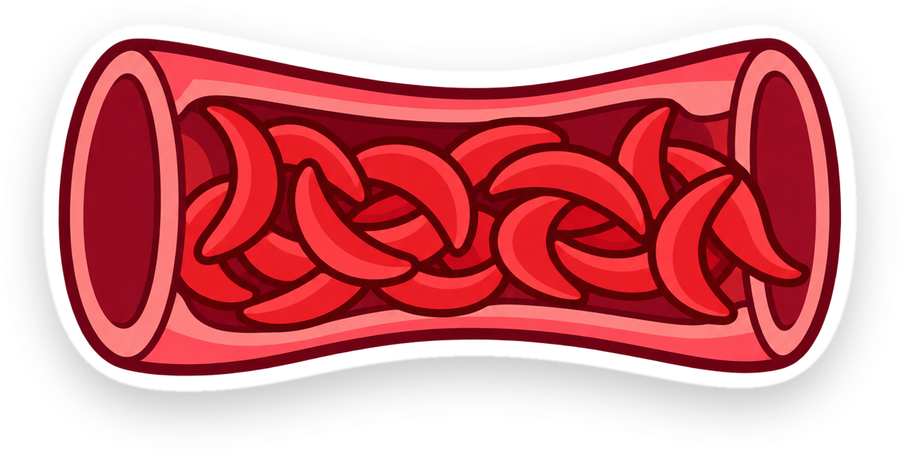
Sickled cells survive only 10-20 days compared with about 120 days for normal RBCs, producing chronic hemolytic anemia.
- Autosomal recessive — two copies of HbS gene. HbS polymerizes under low-oxygen conditions → sickle-shaped RBCs that are rigid, sticky, and fragile.
- Sickled cells: occlude small vessels (vaso-occlusion → ischemia and pain), hemolyze prematurely (6–20 days vs. 120 days for normal RBCs → chronic hemolytic anemia), and impair splenic function (functional asplenia by age 5).
- Crisis triggers (5 D's + others): Dehydration, Deoxygenation (high altitude, illness), cold temperature, stress, infection, and Drinking alcohol.

Complications
Sickle cell complications come from two mechanisms happening at the same time: vaso-occlusion blocks blood flow and hemolysis shortens RBC survival.
- Vaso-occlusive (pain) crisis: most common — sudden severe pain in bones, back, chest, joints.
- Acute Chest Syndrome: fever + respiratory symptoms + new pulmonary infiltrate — leading cause of death; treat with oxygen, IV fluids, exchange transfusion, antibiotics.
- Stroke: children 2–16 years most at risk — annual transcranial Doppler screening; chronic transfusion therapy prevents.
- Splenic sequestration: massive pooling of blood → hypovolemic shock; splenectomy for recurrent cases.
- Avascular necrosis of femoral head, retinopathy, priapism, renal failure, leg ulcers.
Treatment & Nursing Care
Crisis care targets the triggers that make sickling worse: dehydration, hypoxia, cold, infection, and uncontrolled pain.
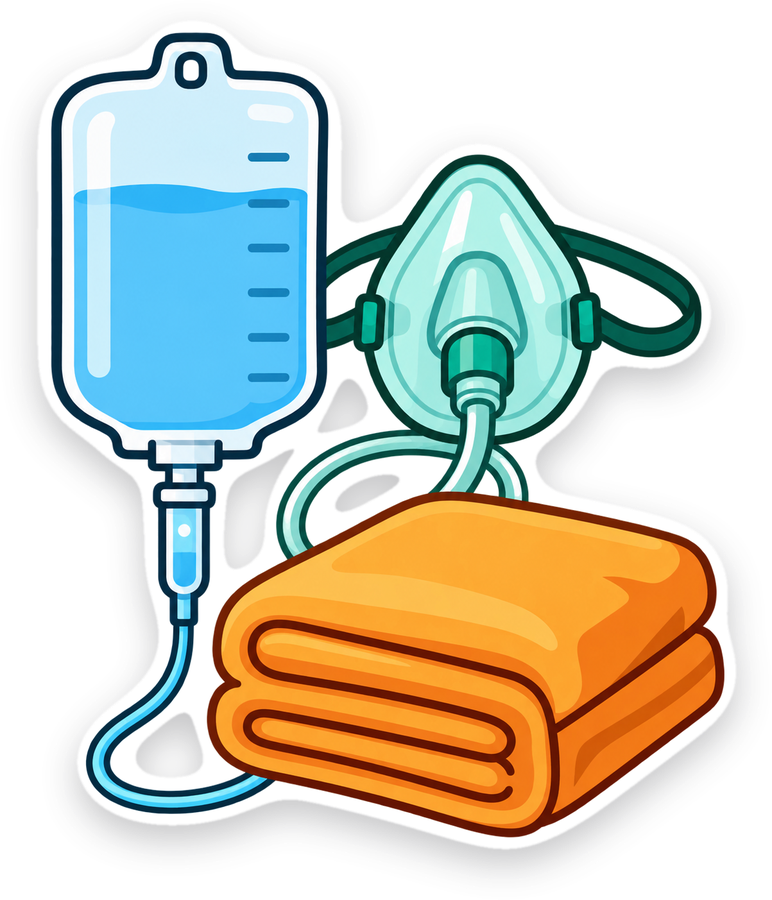
- Crisis management: HYDRATE aggressively (IV fluids reduce sickling), OXYGEN (correct hypoxia), OPIOIDS for pain (PCA morphine or hydromorphone — avoid meperidine), Warmth (heating pads), Rest.
- Hydroxyurea: increases HbF (fetal hemoglobin) production → reduces sickling frequency; monitor CBC (myelosuppression).
- Chronic transfusions: for stroke prevention in children with high TCD velocity.
- Prophylactic penicillin: all children with SCD from infancy (due to asplenia).
- Immunizations: pneumococcal (PCV13 + PPSV23), meningococcal, Hib, flu — critical due to functional asplenia.
- Bone marrow transplant is only cure — limited by donor matching and procedure risk.

Acute Chest Syndrome
Acute chest syndrome is sickling in the pulmonary circulation with infection, infarction, or atelectasis often overlapping.

Vaso-Occlusive Crisis Management
Vaso-occlusive crisis pain is ischemic tissue pain and should be believed and treated promptly.
- Hydration goal is 3-4 L/day when appropriate, using IV normal saline or oral fluids based on severity.
- Treat pain aggressively with PCA, scheduled plus PRN opioids, and heat packs; do not use ice.
- Give oxygen if SpO2 is < 95% or the patient is hypoxic from baseline.
- Monitor CBC and reticulocyte count to evaluate anemia severity and marrow response.
- Use incentive spirometry hourly while awake to reduce atelectasis and acute chest risk.

Sickle Cell Crisis Management
The HOT framework keeps priorities in order: hydrate to reduce viscosity, oxygenate if hypoxic, transfuse when severe anemia or acute chest/stroke risk requires it, and treat pain aggressively.
Hydroxyurea Therapy
Monitor CBC because myelosuppression can occur; hold and notify the provider for severe cytopenias such as WBC < 2500 or platelets < 80,000 per protocol. Hydroxyurea is teratogenic, so effective contraception is required during therapy.

Diagnostic tests
| Test | Purpose | Normal | Abnormal | Nursing note |
|---|---|---|---|---|
| Hemoglobin Electrophoresis | Gold standard test to identify hemoglobin S and distinguish sickle cell disease from trait. | Predominantly HbA in patients without sickle hemoglobinopathy | HbS predominance supports sickle cell disease; HbAS pattern indicates trait. | Newborn screening often detects disease early; confirmatory testing guides family education and genetic counseling. |
| CBC | Assesses chronic hemolytic anemia severity and infection clues. | Age-specific hemoglobin/hematocrit | Low hemoglobin/hematocrit with possible leukocytosis during infection or stress. | Trend hemoglobin against the patient's baseline; sudden drop may indicate aplastic crisis or splenic sequestration. |
| Reticulocyte Count | Shows bone marrow response to hemolysis. | About 0.5-2.5% | Elevated reticulocytes are expected with hemolysis; low reticulocytes during anemia suggests aplastic crisis. | A low retic count in a symptomatic child with SCD is urgent because marrow production has failed. |
| Peripheral Smear | Visualizes RBC morphology during chronic disease or crisis. | — | Sickled RBCs, target cells, Howell-Jolly bodies, and signs of hemolysis may be present. | Howell-Jolly bodies reflect functional asplenia and reinforce vaccine/infection teaching. |
Nursing priorities
- 1. Assess pain at least every 2 hours during vaso-occlusive crisis. — Under-treatment of sickle cell pain is a common and serious care error.
- 2. Avoid cold temperatures and cold packs. — Cold causes vasoconstriction and can worsen sickling and ischemic pain.
- 3. Before elective surgery, anticipate exchange transfusion planning with target HbS < 30%. — Reducing HbS lowers perioperative vaso-occlusive and acute chest risk.
Key nursing points
- Crisis triggers: dehydration, infection, hypoxia, cold, stress, high altitude.
- Treatment: HYDRATE (IV fluids), OXYGEN, OPIOIDS for pain, antibiotics if infection.
- Daily hydroxyurea reduces crisis frequency.
- Routine pneumococcal, meningococcal, flu vaccines — splenic dysfunction.
Test yourself

Pick your answer first, then open the rationale. Guessing teaches nothing.
Inherited HbS → sickled RBCs occlude small vessels → painful crisis.
— 3 —