Iron-Deficiency Anemia
Most common anemia worldwide — microcytic, hypochromic RBCs.
- Lesson 1 of 8
- 5 min read
3 nursing priorities
- 1Assess mucosal pallor in conjunctiva, nail beds, and palmar creases, plus fatigue and dyspnea on exertion.Subtle perfusion and oxygen-carrying symptoms often appear before severe instability.
- 2Trend hemoglobin response; expect a 1-2 g/dL rise per week with effective treatment.Failure to improve should trigger reassessment for ongoing bleeding, nonadherence, or malabsorption.
- 3Teach the patient to continue iron for 3-6 months after hemoglobin normalizes.Hemoglobin may correct before iron stores are fully replenished.
Overview
Caused by blood loss (menstruation, GI bleed), poor intake, malabsorption, or pregnancy.
Pathophysiology & Causes
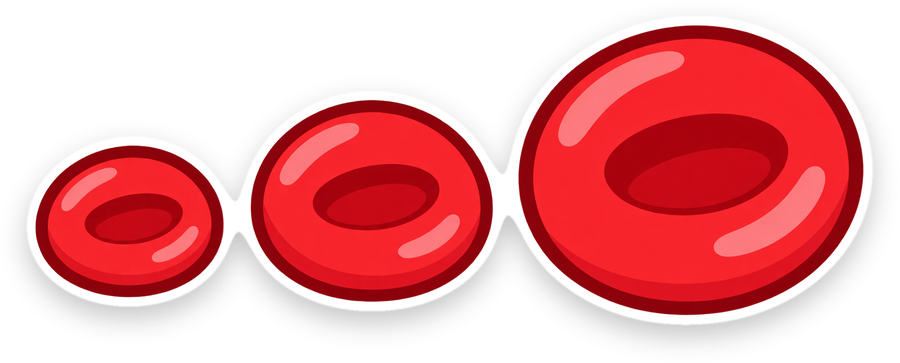
Iron deficiency lowers hemoglobin production, so each RBC carries less oxygen and becomes smaller and paler.
- Iron is required for hemoglobin synthesis. Deficiency → small (microcytic), pale (hypochromic) RBCs with reduced oxygen-carrying capacity.
- Most common cause worldwide: chronic blood loss — menorrhagia in women, GI bleed (ulcers, colorectal cancer) in men/older adults.
- Other causes: inadequate dietary intake, malabsorption (celiac disease, gastric bypass), increased demand (pregnancy, infancy).
- Labs: low Hgb/Hct, low MCV (<80 fL), low serum ferritin (best indicator of iron stores), low serum iron, high TIBC.
Symptoms & Physical Findings
Symptoms reflect reduced oxygen delivery and usually build gradually.
- Fatigue, pallor (conjunctival, palmar), exertional dyspnea, tachycardia, headache, dizziness.
- Pica: craving non-food substances (ice = pagophagia, dirt = geophagia) — classic sign.
- Koilonychia: spoon-shaped, brittle nails. Angular cheilitis (cracked corners of mouth). Glossitis.
- In children: cognitive impairment, developmental delay, behavioral changes.

Treatment & Patient Teaching
Treatment succeeds only if the patient can absorb iron and keeps taking it long enough to refill stores.
- Oral ferrous sulfate: take on empty stomach with 8 oz water + vitamin C source (orange juice) to maximize absorption. If GI distress, may take with small amount of food.
- Stools will be black and tarry — reassure this is expected and NOT a sign of GI bleeding.
- Use a straw for liquid preparations to prevent tooth staining.
- Dietary sources: heme iron (red meat, poultry, fish — best absorbed) and non-heme iron (spinach, lentils, fortified cereals — less absorbed).
- IV iron dextran: requires test dose 25 mg first — anaphylaxis risk. Keep epinephrine available.
- Monitor reticulocyte count at 1–2 weeks — rise indicates bone marrow response. Hemoglobin should normalize in 2 months; continue iron 4–6 months to replenish stores.
Types of Anemia Comparison
Always compare the CBC pattern with reticulocytes, iron studies, bleeding history, and neurologic findings.
| Type | MCV | Cause | Lab clue | Treatment |
|---|---|---|---|---|
| Iron deficiency | Low / microcytic | Blood loss, poor intake, malabsorption, pregnancy | Low ferritin, low serum iron, high TIBC | Oral or IV iron and treat bleeding source. |
| B12/folate deficiency | High / macrocytic | Poor intake, malabsorption, pernicious anemia, terminal ileum disease | High MCV; B12 deficiency may cause neurologic symptoms | Replace B12 or folate; never give folate alone if B12 deficiency is possible. |
| Aplastic anemia | Low or normocytic | Bone marrow failure | Pancytopenia with low reticulocytes | Remove cause, immunosuppression, transfusion support, stem cell transplant when eligible. |
| Hemolytic anemia | Variable | Premature RBC destruction | High reticulocytes, high indirect bilirubin, high LDH, low haptoglobin | Treat cause; transfuse or use immunotherapy when indicated. |
| Chronic disease | Normal / normocytic | Inflammation traps iron and blunts erythropoiesis | Normal/high ferritin with low serum iron | Treat underlying disease; EPO/iron in selected CKD or chronic illness. |
Oral Iron Teaching
Hemoglobin may rise before ferritin is repleted, so stopping early leads to recurrence.
- Take iron on an empty stomach for best absorption if tolerated.
- Take with vitamin C, such as orange juice, to enhance absorption.
- Avoid antacids, dairy, coffee, and tea within 1 hour of iron because they reduce absorption.
- Darkening of stools is expected and is not the same as GI bleeding.
- Constipation is common; increase fiber and fluids as allowed.
IV Iron vs Oral Iron
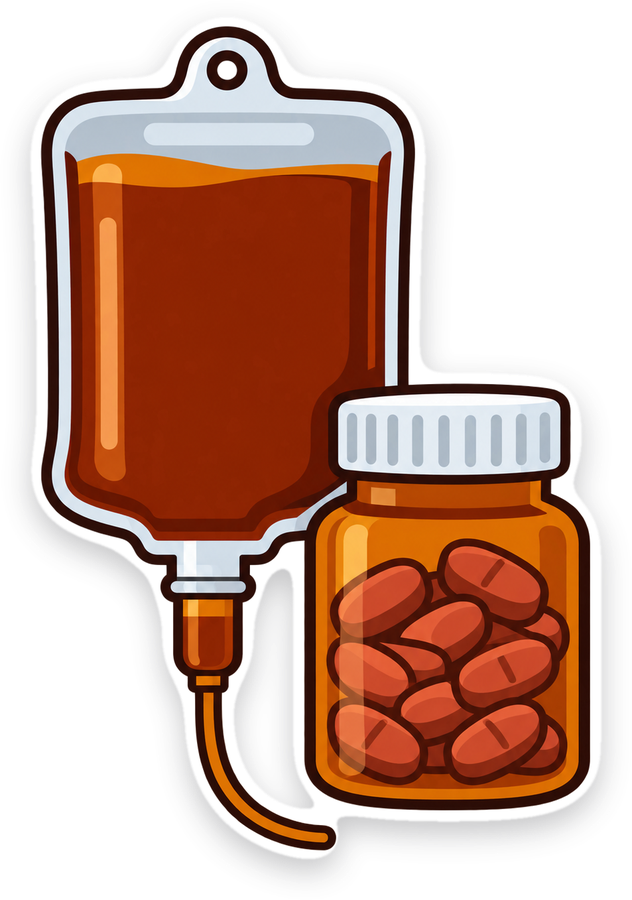
Monitor closely for anaphylaxis during IV iron administration: give any ordered test dose, keep epinephrine available, and observe the patient for at least 30 minutes after infusion.
Nursing priorities
- 1. Assess mucosal pallor in conjunctiva, nail beds, and palmar creases, plus fatigue and dyspnea on exertion. — Subtle perfusion and oxygen-carrying symptoms often appear before severe instability.
- 2. Trend hemoglobin response; expect a 1-2 g/dL rise per week with effective treatment. — Failure to improve should trigger reassessment for ongoing bleeding, nonadherence, or malabsorption.
- 3. Teach the patient to continue iron for 3-6 months after hemoglobin normalizes. — Hemoglobin may correct before iron stores are fully replenished.
Key nursing points
- Oral iron on empty stomach with vitamin C — improves absorption.
- Take with straw to prevent teeth staining; expect black tarry stools.
- IV iron (iron dextran) — test dose first; risk of anaphylaxis.
- Eat red meat, leafy greens, fortified cereals.
Test yourself

Pick your answer first, then open the rationale. Guessing teaches nothing.
Most common anemia worldwide — microcytic, hypochromic RBCs.
— 1 —