ARDS
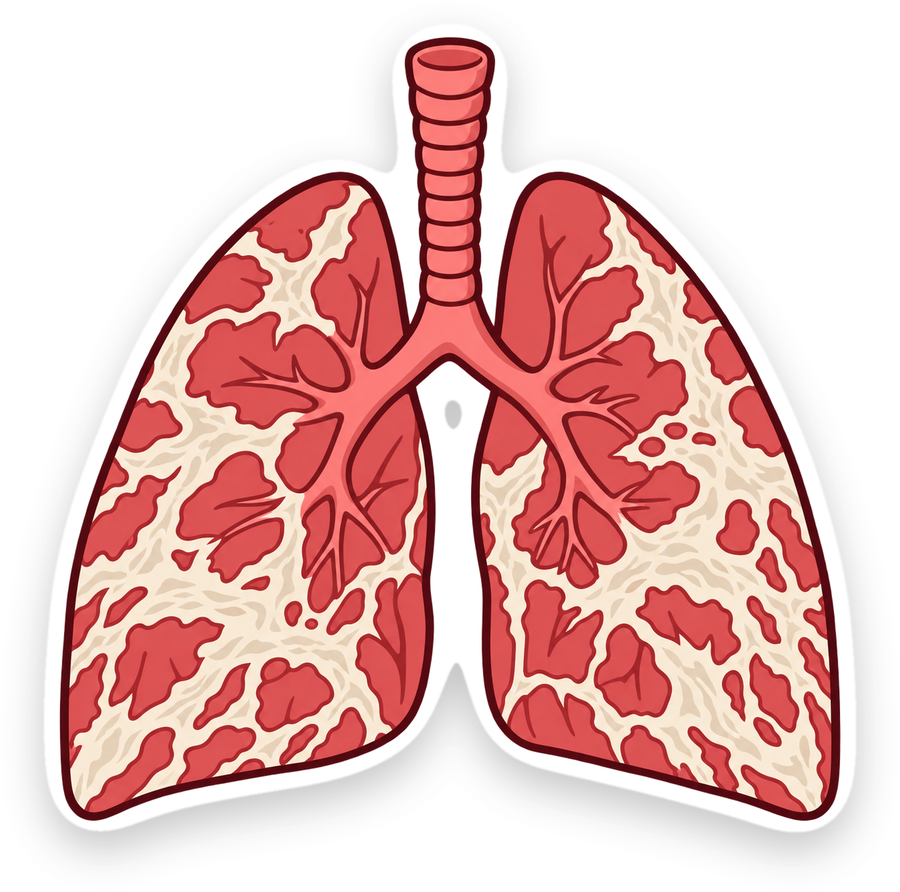
ARDS is acute inflammatory lung injury with noncardiogenic pulmonary edema, severe hypoxemia, and stiff lungs.
- Lesson 5 of 8
- 8 min read
Overview
Acute respiratory distress syndrome can follow sepsis, pneumonia, aspiration, trauma, pancreatitis, burns, transfusion, or shock.
Pathophysiology
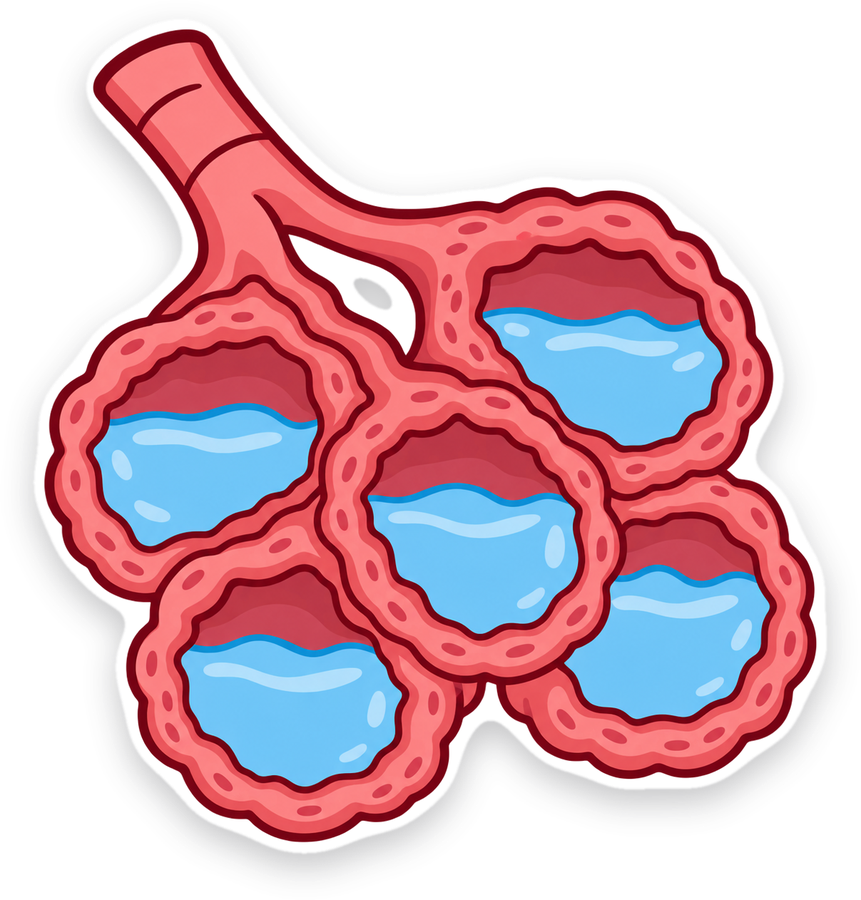
Inflammation damages the alveolar-capillary membrane, causing protein-rich fluid to enter alveoli.
Signs & Symptoms
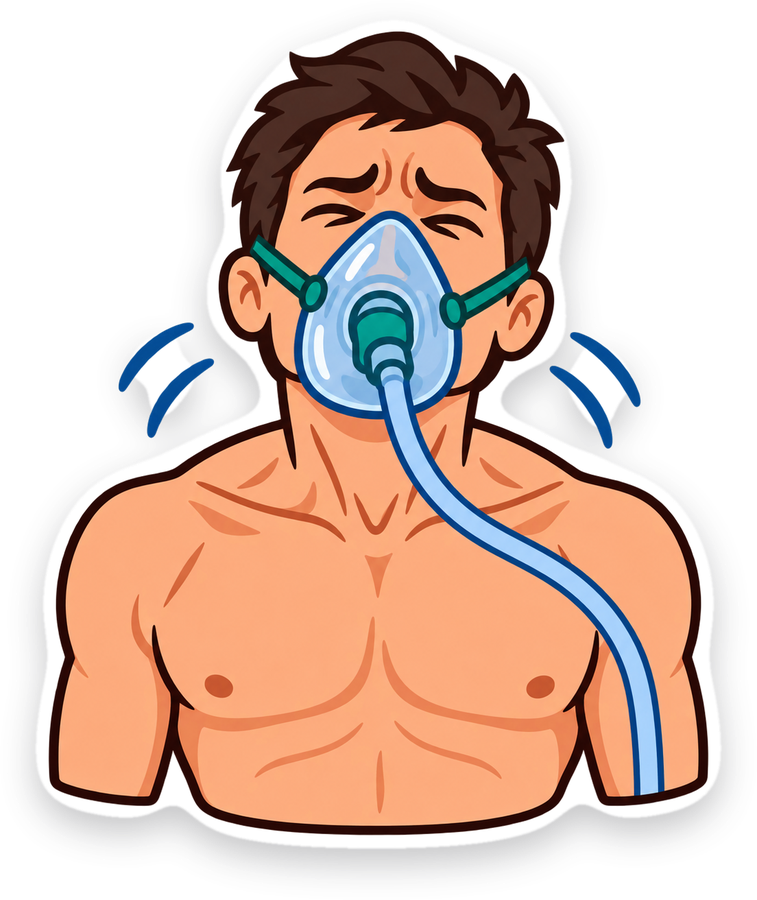
The warning pattern is refractory hypoxemia: SpO2 and PaO2 remain poor despite increasing oxygen support.
- Acute dyspnea, tachypnea, increased work of breathing, crackles, cyanosis, restlessness, and decreasing SpO2.
- ABG often shows early respiratory alkalosis from tachypnea, then respiratory acidosis as fatigue worsens.
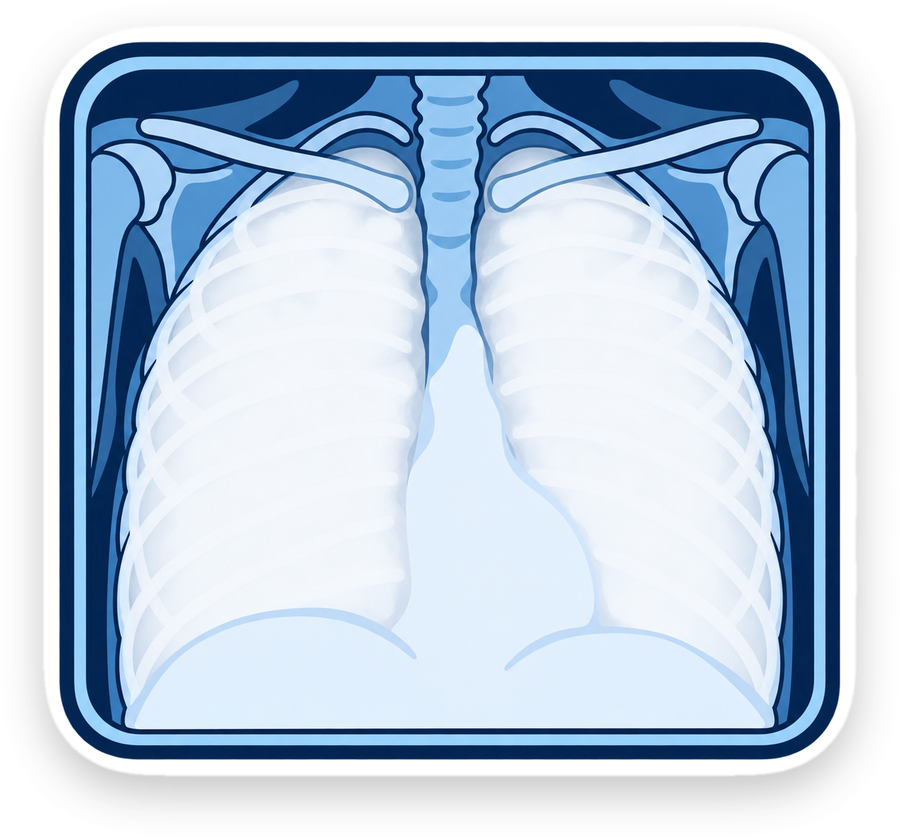
- Chest imaging commonly shows bilateral infiltrates not fully explained by heart failure.
Diagnosis
ARDS diagnosis ties imaging and oxygenation to the clinical timeline.
- Acute onset within 1 week of a known insult or new/worsening respiratory symptoms.
- Bilateral opacities on imaging and respiratory failure not primarily caused by cardiogenic fluid overload.
- Severity is graded by PaO2/FiO2 ratio while receiving PEEP or CPAP.
- Trend ABGs, SpO2, ventilator pressures, lactate, cultures, and hemodynamics.
Treatment
Treatment focuses on keeping alveoli open while avoiding ventilator-induced injury.
- Treat the trigger: antibiotics/source control for sepsis or pneumonia, aspiration management, trauma/burn care.
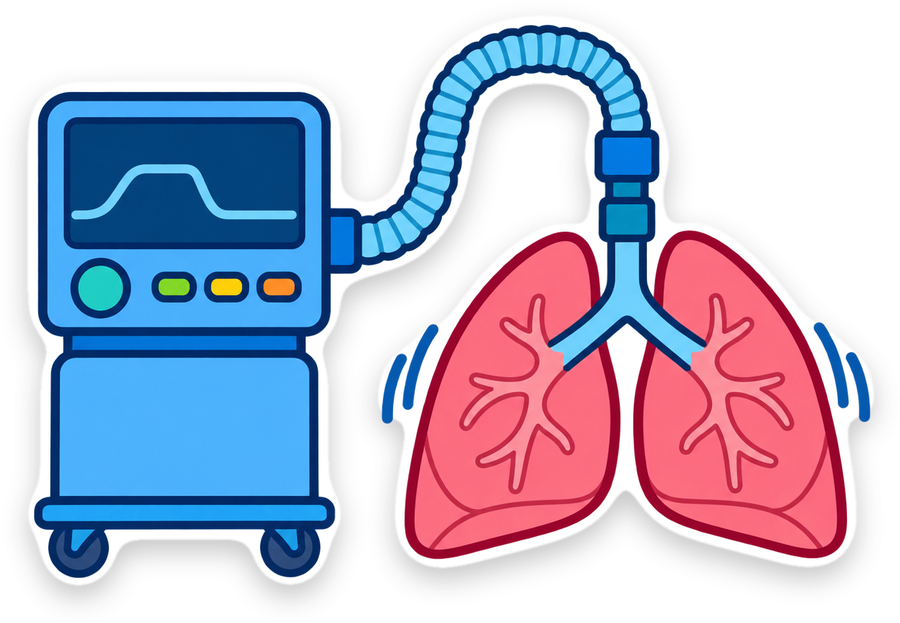
- Use lung-protective ventilation with low tidal volume and adequate PEEP as ordered.
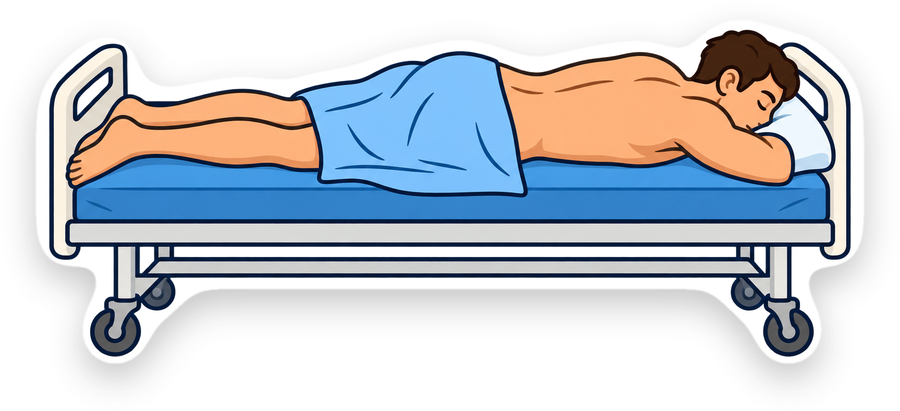
- Prone positioning, neuromuscular blockade, or ECMO may be used for severe refractory hypoxemia.
- Balance fluids carefully; use vasopressors for perfusion rather than excess fluid once resuscitated.
Nursing Priorities
ARDS patients can deteriorate quickly with suctioning, repositioning, ventilator dyssynchrony, or fluid overload.
- Monitor SpO2, ABGs, ventilator synchrony, plateau pressures, breath sounds, and signs of barotrauma.
- Cluster care to reduce oxygen demand and maintain adequate sedation/analgesia per protocol.
- Use VAP prevention: HOB 30-45 degrees, oral care, suctioning, sedation awakening, and mobility when safe.
- Prepare for rapid deterioration and communicate worsening oxygenation promptly.
Patient Teaching
Most ARDS teaching is directed to family early because the patient is often intubated and sedated.
- Explain ventilator support, proning, sedation, and family communication in simple terms when the patient or family can participate.
- After recovery, teach that weakness, fatigue, anxiety, and reduced endurance are common and require rehabilitation.
- Encourage vaccines, smoking cessation, and early care for infections to reduce future respiratory risk.
Complications
ARDS complications come from both the lung injury and the ICU support needed to survive it.
- Refractory hypoxemia, barotrauma, pneumothorax, VAP, sepsis, acute kidney injury, delirium, ICU-acquired weakness, and death.
- Long-term complications include reduced lung function, PTSD, depression, and physical deconditioning.
Key nursing points
- Classic finding: refractory hypoxemia that does not correct normally with supplemental oxygen.
- Risk factors include sepsis, pneumonia, aspiration, major trauma, pancreatitis, massive transfusion, and burns.
- Ventilator strategy: low tidal volume, appropriate PEEP, plateau pressure control, and permissive hypercapnia when ordered.
- Prone positioning can improve oxygenation in moderate-to-severe ARDS.
- Maintain conservative fluid balance once perfusion is adequate; excess fluid worsens pulmonary edema.
- Prevent ventilator-associated pneumonia with oral care, HOB elevation, sedation breaks, and readiness-to-extubate checks.
Test yourself

Pick your answer first, then open the rationale. Guessing teaches nothing.
ARDS is acute inflammatory lung injury with noncardiogenic pulmonary edema, severe hypoxemia, and stiff lungs.
— 5 —