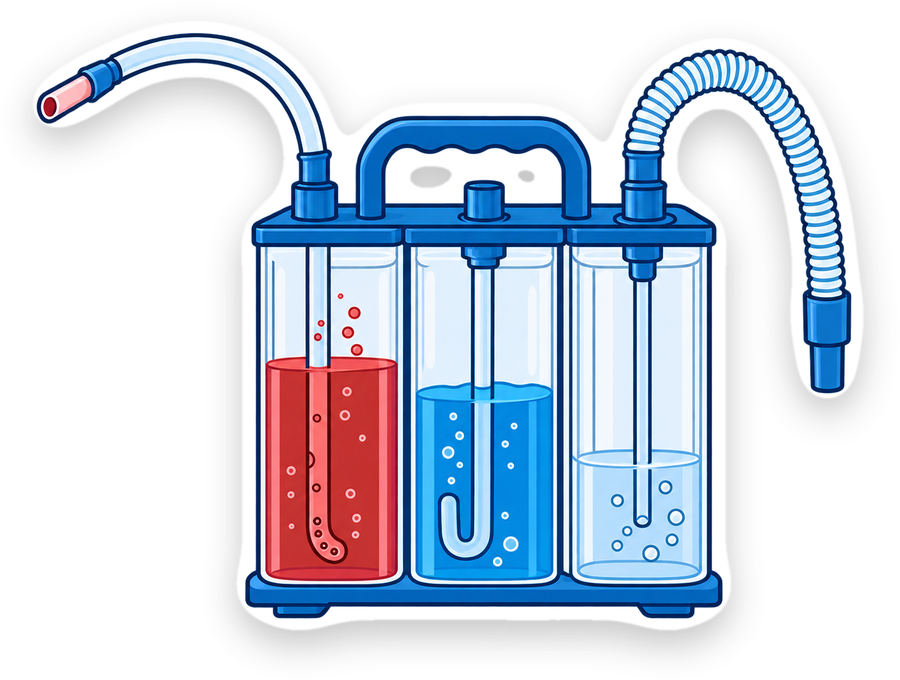
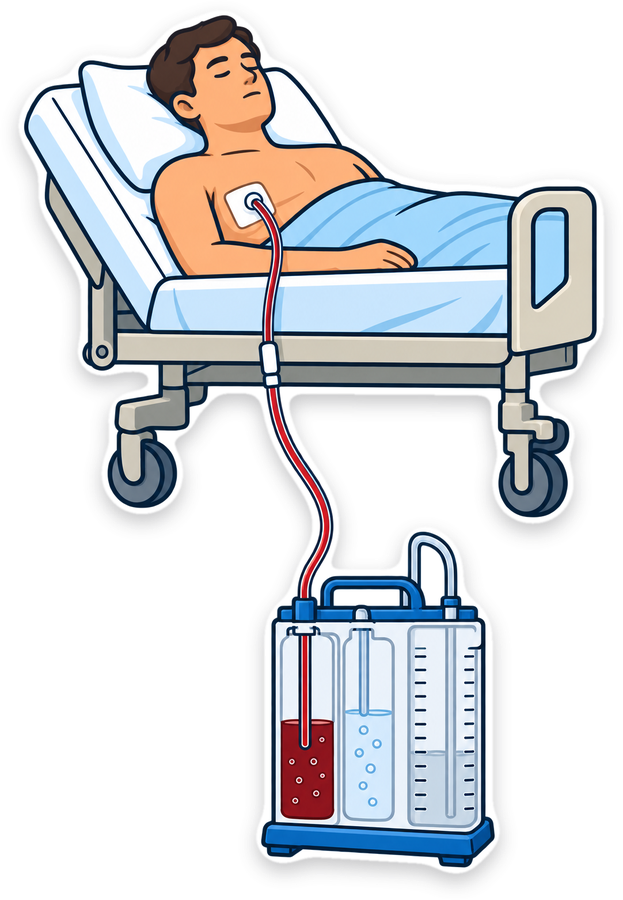
3-chamber water-seal system: collection, water seal, suction control. Tidaling = good; continuous water-seal bubbling = air leak.
Lesson 7 of 8
6 min read
Overview?
Overview
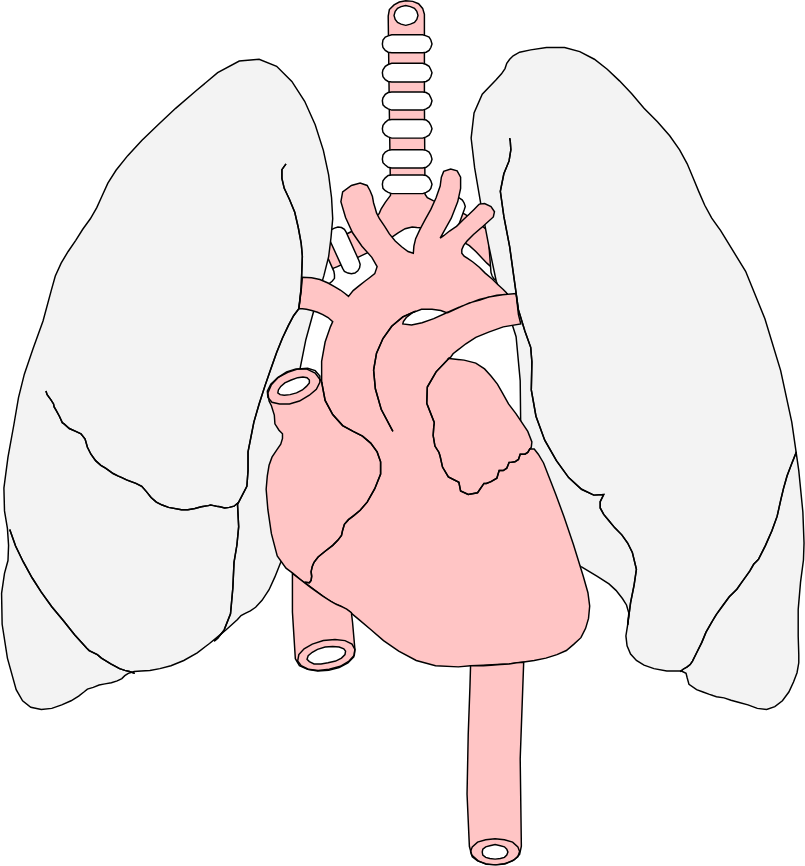
Chest tubes drain air (pneumothorax), blood (hemothorax), fluid (effusion), or pus (empyema) from the pleural space.
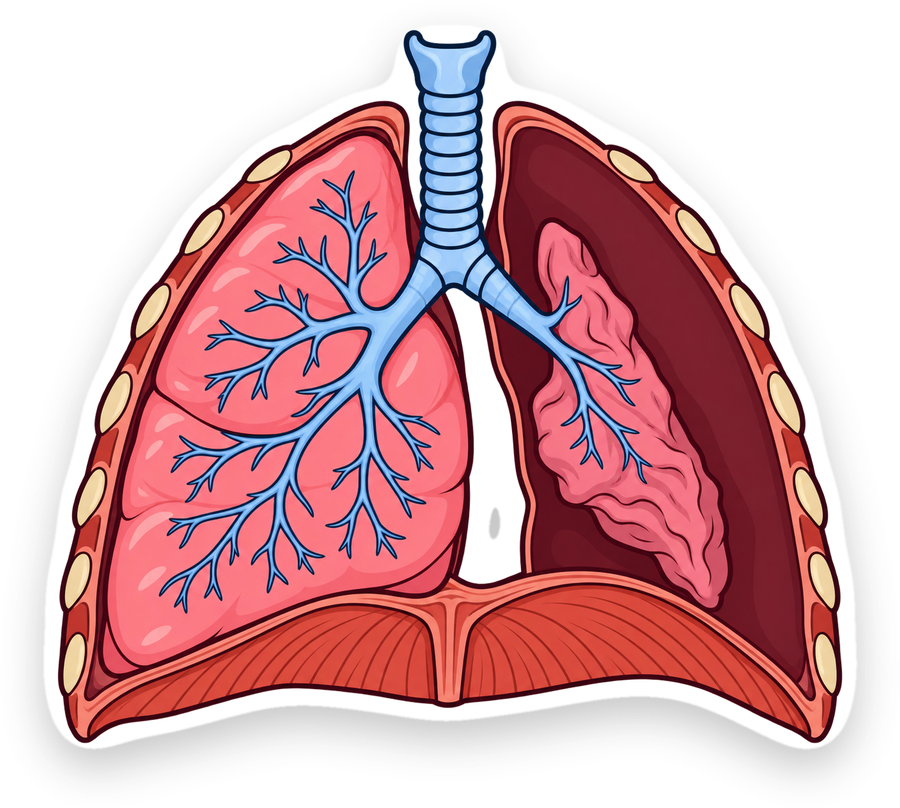
A chest tube drains air or fluid from the pleural space to re-expand a collapsed lung.
Indications?
1
Indications
The purpose is to restore negative intrapleural pressure and allow the lung to re-expand safely.
Pneumothorax (air in pleural space)Hemothorax (blood)Pleural effusion (fluid)Empyema (pus)Post-thoracic or cardiac surgery drainage
Air or fluid in the pleural space collapses the lung. The chest tube drains it and restores negative pressure so the lung can re-expand.
Water-Seal System — 3 Chambers?
2
Water-Seal System — 3 Chambers
The drainage system separates collection, one-way air control, and suction regulation.
Collection on one side, the water seal in the middle and suction control on the other. Gentle steady bubbling belongs in the suction chamber; bubbling in the water seal means an air leak.
Chamber
Purpose
Normal Finding
Collection chamber
Collects drainage
Measure and record output; mark level hourly; note color and character
Water-seal chamber
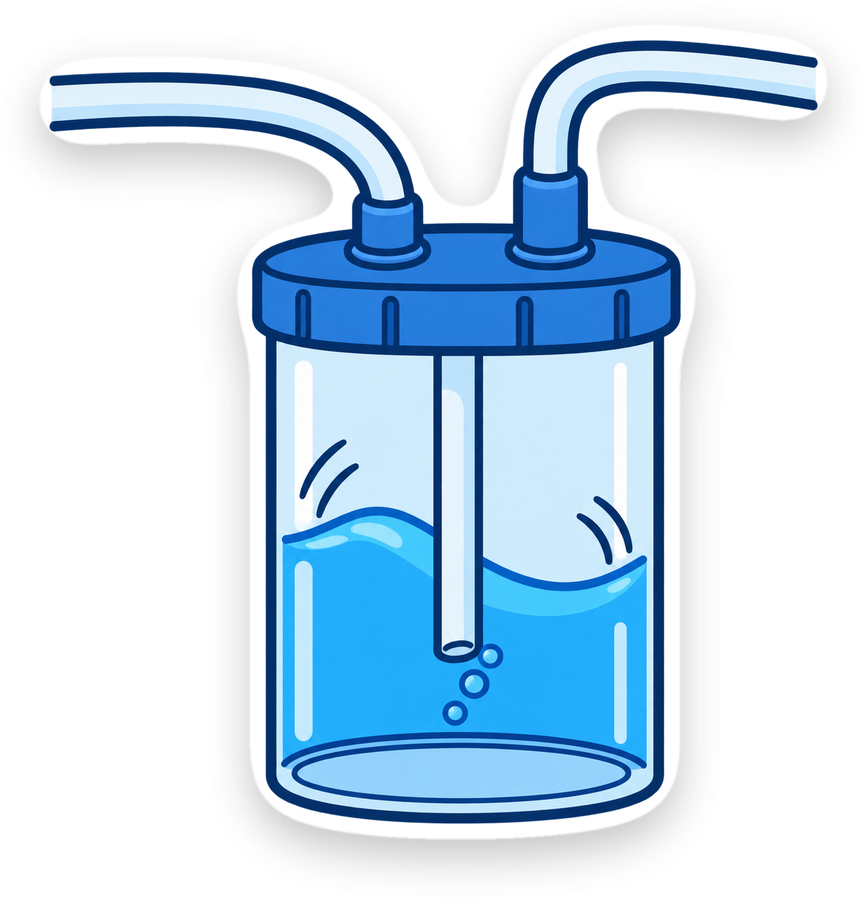
One-way valve — prevents air re-entry
Tidaling with breathing; NO continuous bubbling (that = air leak)
Suction-control chamber
Regulates suction level (usually −20 cmH₂O)
Gentle, continuous bubbling when suction is on
Assessment?
3
Assessment
Chest tube assessment always includes the patient and the system.
Tidaling: fluid in water-seal chamber rises with inspiration, falls with expiration (opposite for mechanically ventilated patients). Absent tidaling = obstruction or lung fully re-expanded.
Air leak: continuous bubbling in the water-seal chamber. Clamp tube briefly at insertion site — if bubbling stops, the leak is at or proximal to the insertion site. If bubbling continues, the leak is in the tubing or connections.
Drainage: document color, consistency, and volume every shift. Bright-red output >100 mL/hr = hemorrhage; notify provider.
Assess breath sounds, SpO₂, respiratory rate, pain, and insertion site for subcutaneous emphysema (crackling under skin).
The water-seal level should rise and fall with breathing. When tidaling stops, the lung has re-expanded or the tube is blocked, so check which.
Nursing Priorities?
4
Nursing Priorities
Keep the system below the chest, avoid dependent loops, secure connections, manage pain so the patient can breathe deeply, and never clamp unless specifically ordered.
Keep the drainage system upright, below chest level, and free of dependent loops.
Secure all connections with tape; do not kink or compress tubing.
Encourage deep breathing, coughing, and position changes to facilitate drainage.
Pre-medicate for pain before ambulation or dressing changes.
Document drainage amount, color, and water-seal tidaling every shift.
The drainage unit stays upright, below the chest, with no loops hanging down. Lifting it above the chest sends the fluid back in.
Emergency Situations?
5
Emergency Situations
Chest tube emergencies are airway and breathing problems until proven otherwise.
Never clamp a chest tube unless provider orders it (risk of tension pneumothorax).
⚠EXAM TRAPCommon exam trapContinuous bubbling in the WATER-SEAL chamber means an air leak — NOT expected. Gentle continuous bubbling in the SUCTION-CONTROL chamber IS expected when suction is on. These are commonly confused on NCLEX.
Test yourself?
Test yourself
Pick your answer first, then open the rationale. Guessing teaches nothing.
Question 1 of 8
A nurse is assessing a patient with a chest tube for pneumothorax. The water seal chamber shows continuous bubbling throughout both inspiration and expiration. Which interpretation is CORRECT?
Answer: Continuous bubbling in the water seal indicates an air leak in the system or patient. Tidaling (water level rises on inspiration, falls on expiration) is the normal finding in the water seal chamber; continuous bubbling throughout the respiratory cycle indicates an air leak — either from an incomplete lung seal (expected in pneumothorax until resolved) or from a system leak (loose connection, cracked drainage unit). The nurse should check all connections systematically from patient to the drainage system.
Question 2 of 8
A patient's chest tube accidentally dislodges and falls to the floor. What is the nurse's FIRST action?
Answer: Cover the insertion site immediately with a petroleum gauze (occlusive) dressing, taped on three sides, and notify the provider. When a chest tube is accidentally removed, immediate application of a petroleum gauze dressing creates an occlusive seal that prevents outside air from entering the pleural space and causing or worsening pneumothorax; taping three sides creates a flutter valve that allows air to escape on exhalation but prevents air from entering on inhalation. The provider must be notified immediately and emergency equipment must be at the bedside.
Question 3 of 8
A nurse is caring for a patient with a chest tube to water seal drainage. The provider has not written orders regarding clamping. Which situation represents a CORRECT indication to clamp the chest tube?
Answer: When the drainage chamber is full and needs to be replaced — clamping prevents air entry during the exchange. Chest tubes should never be routinely clamped as this can cause life-threatening tension pneumothorax from trapped air with no escape route; the only safe indication is briefly clamping during drainage system exchange or to check for air leak localization. The tube should be unclamped immediately after the exchange is complete, and the patient must be monitored closely for respiratory deterioration during any clamping.
Question 4 of 8
A trauma patient develops sudden worsening dyspnea, absent breath sounds on the left, tracheal deviation to the right, and hypotension. The nurse recognizes this as a tension pneumothorax. What is the immediate priority action?
Answer: Prepare for needle decompression at the second intercostal space, midclavicular line Tension pneumothorax is a clinical diagnosis requiring immediate needle decompression at the 2nd intercostal space, midclavicular line — delaying for imaging is contraindicated as the increasing intrathoracic pressure compresses the heart and great vessels, causing obstructive shock and cardiac arrest. While oxygen and fluids are adjuncts, they do not address the underlying mechanical compression.
Question 5 of 8
The nurse is monitoring a patient with a chest tube connected to a water-seal drainage system. The nurse observes gentle, rhythmic fluctuation (tidaling) in the water-seal chamber. How is this finding interpreted?
Answer: Expected finding indicating the system is patent and functioning Tidaling in the water-seal chamber (fluid rising with inspiration and falling with expiration) is a normal finding that confirms chest tube patency and the absence of obstruction. Cessation of tidaling indicates either lung re-expansion (normal) or tube obstruction (abnormal) — continuous bubbling in the water-seal chamber indicates an air leak.
Question 6 of 8
A patient with a left-sided pneumothorax and chest tube is being transported for a CT scan. During transport, the chest tube accidentally disconnects from the drainage system. What is the nurse's immediate action?
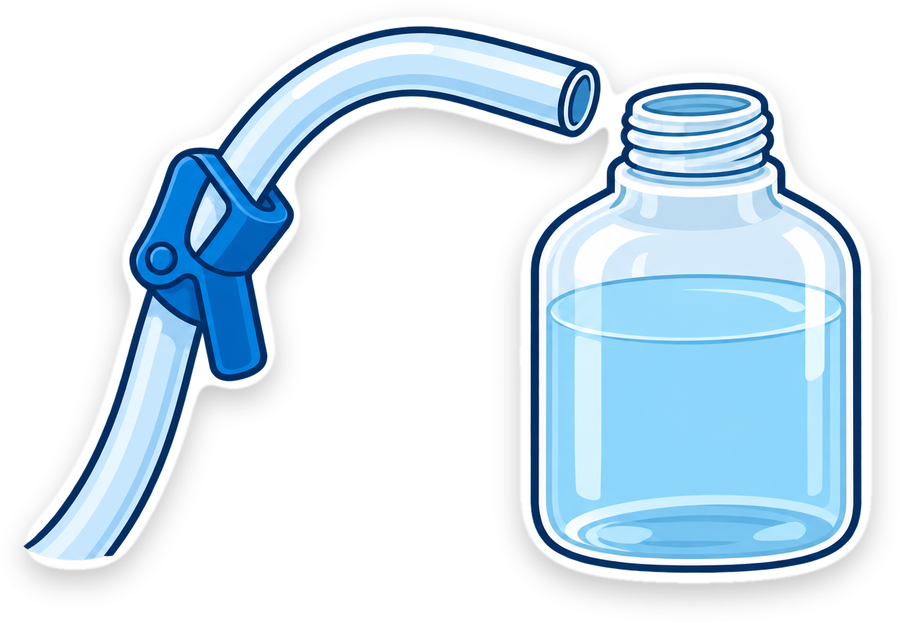
Answer: Submerge the disconnected tube end in sterile water until the system can be reconnected Submerging the chest tube end in sterile water recreates a water seal, preventing air from entering the pleural space while the drainage system is reconnected. Clamping the tube is dangerous in the presence of an active air leak because it can cause tension pneumothorax by preventing the escape of pleural air.
Question 7 of 8
A patient with a chest tube has continuous bubbling in the water-seal chamber. What should the nurse do first?
Answer: Check all connections from insertion site to drainage unit Continuous bubbling in the water-seal chamber indicates an air leak. The nurse clamps the tube briefly at the insertion site and progresses distally to locate the source.
Question 8 of 8
A chest tube accidentally falls out. What is the priority nursing action?
Answer: Cover with a petroleum gauze dressing taped on 3 sides A 3-sided occlusive dressing acts as a flutter valve — allows air to escape during expiration while preventing air from entering during inspiration, preventing tension pneumothorax.
In one line
3-chamber water-seal system: collection, water seal, suction control. Tidaling = good; continuous water-seal bubbling = air leak.
— 7 —
Finish lesson
Save your completion
Sign in to record progress, sync completion, and keep your study streak accurate.