Cushing Syndrome
Too much cortisol → moon face, buffalo hump, thin extremities, easy bruising.
- Lesson 1 of 7
- 7 min read
Overview
Most common cause: long-term glucocorticoid therapy. Diagnosis: 24-h urinary free cortisol, late-night salivary cortisol, low-dose dexamethasone suppression test.
Causes & Pathophysiology
Cushing syndrome is chronic exposure to too much cortisol.
Cortisol is a catabolic stress hormone.
- Cushing syndrome = excess cortisol from any source. Three types: (1) Exogenous — most common; chronic steroid therapy. (2) Endogenous pituitary: ACTH-secreting pituitary adenoma = 'Cushing disease'. (3) Endogenous adrenal: adrenal tumor or ectopic ACTH (small-cell lung, carcinoid).
- Cortisol excess effects: hyperglycemia (gluconeogenesis), immunosuppression, protein catabolism (muscle wasting, thin skin, poor healing), sodium retention (hypertension, edema), potassium wasting (hypokalemia), bone resorption (osteoporosis).
Clinical Features ('CUSHINGS' Mnemonic)
The CUSHINGS mnemonic captures a body-wide picture because cortisol touches almost every organ system.
Skin changes and immune suppression are two of the most exam-tested findings.
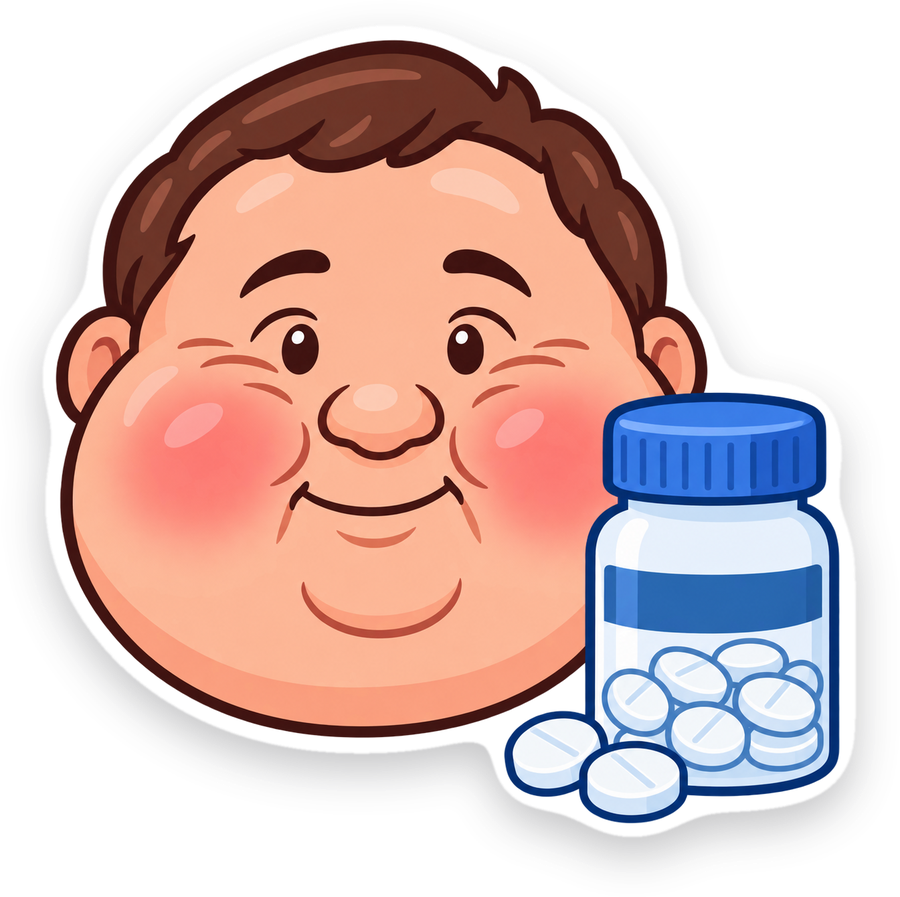
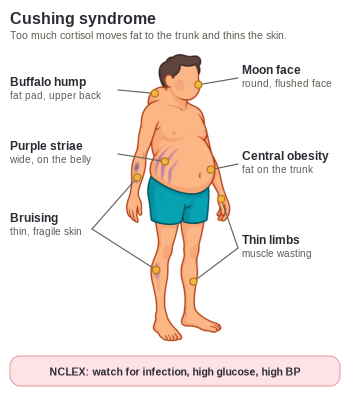
- Central obesity with thin extremities (muscle wasting), moon face, buffalo hump (cervical fat pad).
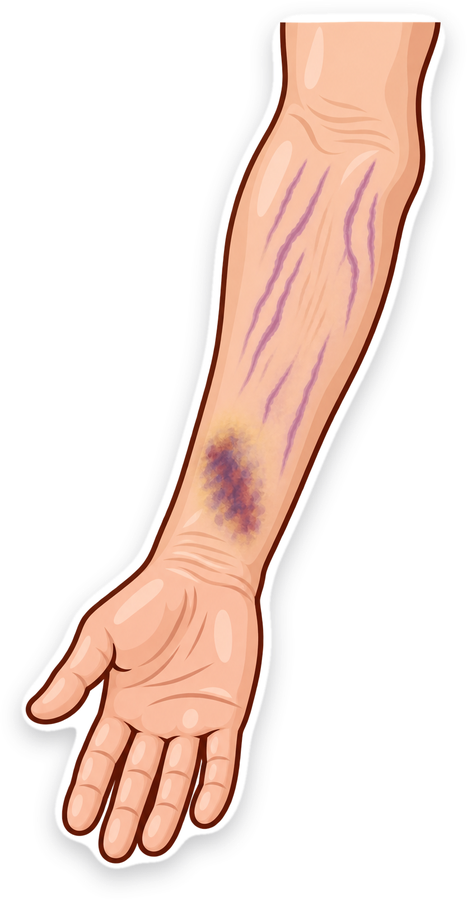
- Purple/violaceous striae on abdomen, thighs, breasts (stretched thin skin).
- Hyperglycemia (secondary diabetes), hypertension, hypokalemia.
- Osteoporosis, bone pain, compression fractures.
- Immunosuppression → frequent and opportunistic infections.
- Skin: easy bruising, poor wound healing, acne, hyperpigmentation (if high ACTH).
- Mood: depression, anxiety, psychosis (steroid psychosis).
- Diagnosis: 24-h urinary free cortisol, late-night salivary cortisol, dexamethasone suppression test.
Nursing Management
Nursing management for Cushing syndrome is largely about preventing the dangerous downstream effects of cortisol excess.
The nurse must reinforce the taper schedule and explain that fever, vomiting, surgery, or serious illness requires the provider to be called immediately.
- Monitor blood glucose frequently — insulin may be required.
- Fall precautions and bone protection — osteoporosis risk.
- Skin care: fragile skin tears easily; no tape on fragile skin; inspect all bony prominences.
- Infection control: patient is immunosuppressed — strict handwashing, isolation from sick contacts, monitor WBC.
- NEVER abruptly stop exogenous steroids — adrenal insufficiency (crisis) can occur. Taper per provider order.
- Surgical treatment (pituitary adenoma): transsphenoidal hypophysectomy. Post-op: monitor for DI (dilute urine, hypernatremia), cortisol replacement required until adrenal axis recovers.
Addisonian Crisis
Addisonian crisis is the opposite safety emergency from Cushing syndrome: the patient cannot produce enough cortisol for physiologic stress.
Do not wait for confirmatory testing before supporting circulation and administering ordered IV hydrocortisone.
Cushing's Syndrome vs Addison's Disease
| Cushing's Syndrome Signs | Addison's Disease Signs | |
|---|---|---|
| Cortisol level | High cortisol from exogenous steroids, pituitary ACTH, adrenal tumor, or ectopic ACTH. | Low cortisol from adrenal failure or inadequate ACTH stimulation. |
| ACTH | Variable: high with pituitary or ectopic ACTH; low with exogenous steroids or adrenal cortisol source. | High in primary Addison's disease; low or inappropriately normal in secondary adrenal insufficiency. |
| Skin | Thin fragile skin, easy bruising, poor wound healing, acne, purple striae. | Dry skin, weight loss appearance, and hyperpigmentation when ACTH is elevated. |
| Fat distribution | Moon face, buffalo hump, truncal obesity, and thin extremities from protein wasting. | Weight loss and muscle wasting without the centripetal fat pattern. |
| Blood sugar | Hyperglycemia or steroid-induced diabetes is common. | Hypoglycemia risk because cortisol is needed for glucose support during stress. |
| BP | Hypertension and fluid retention are common. | Hypotension, orthostasis, and shock risk in crisis. |
| Pigmentation | May occur when ACTH is high, but not the defining finding. | Bronze hyperpigmentation from elevated ACTH/MSH is a key primary Addison's finding. |
| Treatment | Taper exogenous steroids when possible; treat pituitary, adrenal, or ectopic source; manage glucose, BP, infection, skin, and bone risk. | Replace glucocorticoid/mineralocorticoid; Addisonian crisis requires IV hydrocortisone, normal saline, and dextrose. |
Diagnostic tests
| Test | Purpose | Normal | Abnormal | Nursing note |
|---|---|---|---|---|
| 24-hour Urine Free Cortisol | Screen for excess cortisol production over a full day. | Lab-specific; commonly <50 mcg/24 hr | Elevated urinary free cortisol supports Cushing syndrome and usually needs confirmatory testing. | Teach the patient to collect all urine for the full 24 hours and keep the specimen refrigerated if instructed. |
| Midnight Salivary Cortisol | Checks loss of the normal late-night cortisol nadir. | Low at midnight in normal circadian rhythm | Elevated late-night cortisol suggests hypercortisolism. | Avoid contamination with food, blood, tobacco, or steroid creams; follow collection timing exactly. |
| Low-dose Dexamethasone Suppression Test | Screening test to determine whether cortisol suppresses appropriately after dexamethasone. | Morning cortisol suppresses after dexamethasone | Failure to suppress suggests Cushing syndrome. | Review current steroid use, anticonvulsants, estrogen therapy, and adherence because they can affect interpretation. |
| High-dose Dexamethasone Suppression Test | Helps differentiate pituitary Cushing disease from ectopic ACTH or adrenal causes. | Pituitary ACTH sources may partially suppress | No suppression suggests ectopic ACTH production or adrenal tumor depending on ACTH level. | This is usually paired with ACTH results and imaging; do not interpret it in isolation. |
| Blood ACTH | Separates ACTH-dependent from ACTH-independent cortisol excess. | Lab-specific circadian range | Low ACTH suggests adrenal cortisol source; high or normal ACTH suggests pituitary or ectopic ACTH source. | Timing matters because ACTH is pulsatile; specimen handling is time-sensitive. |
| CT/MRI Pituitary or Adrenal Imaging | Localizes pituitary adenoma, adrenal tumor, or other structural source after biochemical diagnosis. | — | Pituitary adenoma, adrenal mass, or ectopic tumor source may be identified. | Biochemical confirmation comes first; incidental lesions can mislead diagnosis if labs do not match. |
Nursing priorities
- 1. Infection risk: avoid live vaccines and monitor for subtle infection signs. — Cortisol and prescribed steroids suppress immune response and can blunt fever, so wound changes, malaise, glucose elevation, or mild temperature change may be the first clue.
- 2. Teach never to abruptly stop steroids; taper exactly as prescribed. — Abrupt withdrawal can precipitate acute adrenal insufficiency because the hypothalamic-pituitary-adrenal axis may be suppressed.
- 3. Promote weight-bearing exercise plus calcium and vitamin D. — Cortisol accelerates bone loss and muscle wasting, increasing osteoporosis, fracture, and fall risk.
Key nursing points
- Moon face, buffalo hump, truncal obesity, thin extremities, purple striae.
- Hyperglycemia, hypertension, hypokalemia, osteoporosis, muscle weakness.
- Never abruptly stop steroids → adrenal crisis. Taper.
- Treat infections aggressively — immunosuppressed.
Test yourself

Pick your answer first, then open the rationale. Guessing teaches nothing.
Too much cortisol → moon face, buffalo hump, thin extremities, easy bruising.
— 1 —