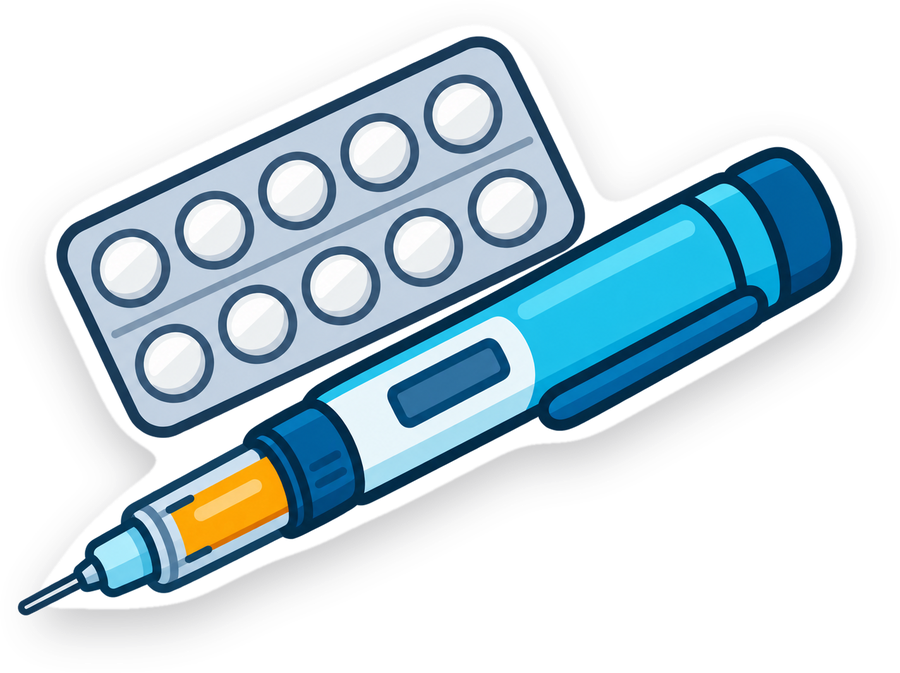
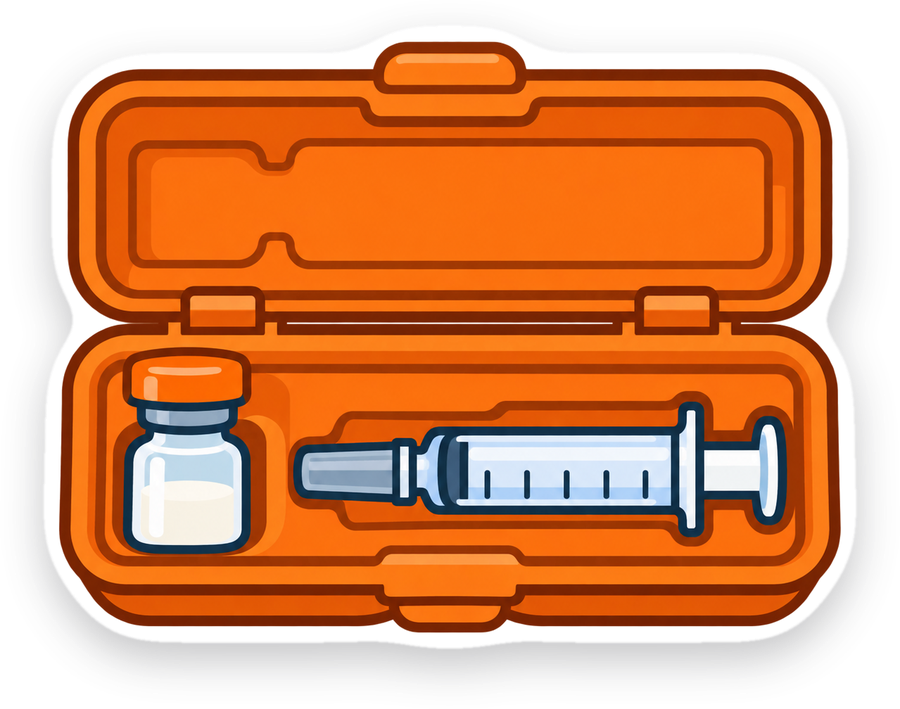
Insulin: required in T1DM. Multiple types (rapid, regular, intermediate, long-acting).
Insulin by pen and tablets by mouth. Metformin is the usual first tablet; insulin is required in type 1, and many type 2 patients need it later.
DKA Treatment Sequence?
2
DKA Treatment Sequence
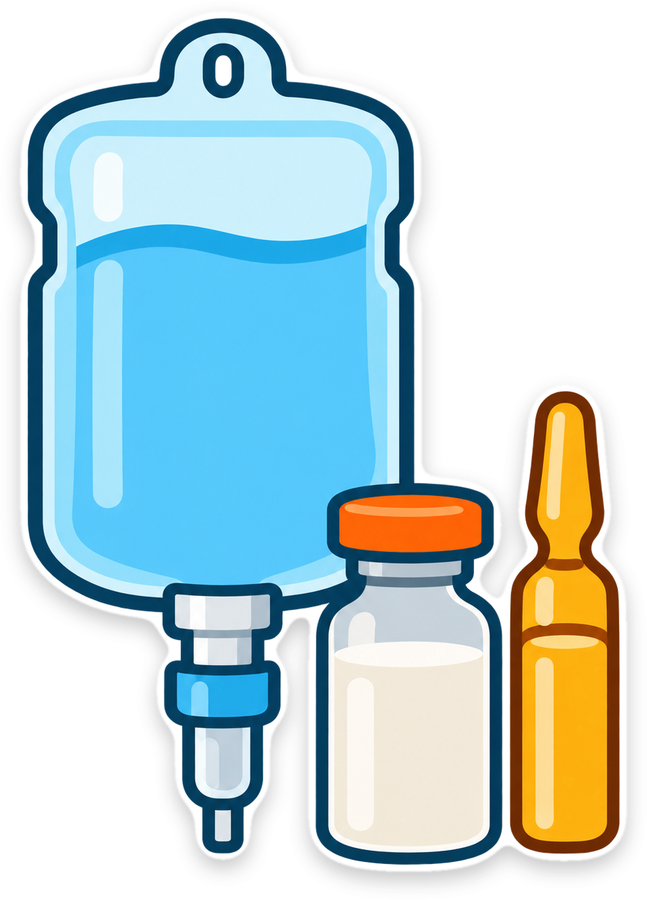
The initial priority is IV fluids, commonly 1 L of normal saline in the first hour, because dehydration and poor perfusion worsen acidosis and kidney clearance of glucose and ketones.
Start the insulin drip only after potassium is known to be at least 3.5 mEq/L.
Continue until the anion gap closes and ketosis resolves, then give the first subcutaneous insulin dose 1-2 hours before stopping the drip to prevent rebound ketosis.
In DKA, give the saline first, check potassium next, and start insulin only once potassium is at least 3.5. Insulin drives potassium into the cells.
Sick Day Rules?
3
Sick Day Rules
Key pointNever stop insulin when sick - illness increases cortisol -> increases glucose. Check BG q4h when ill. If unable to eat: sip sugary liquids + check ketones. Call provider if: BG > 300, moderate/large urine ketones, vomiting > 6 hrs.
Illness raises counter-regulatory hormones even when appetite is poor, so glucose and ketones can rise while the patient is eating less.
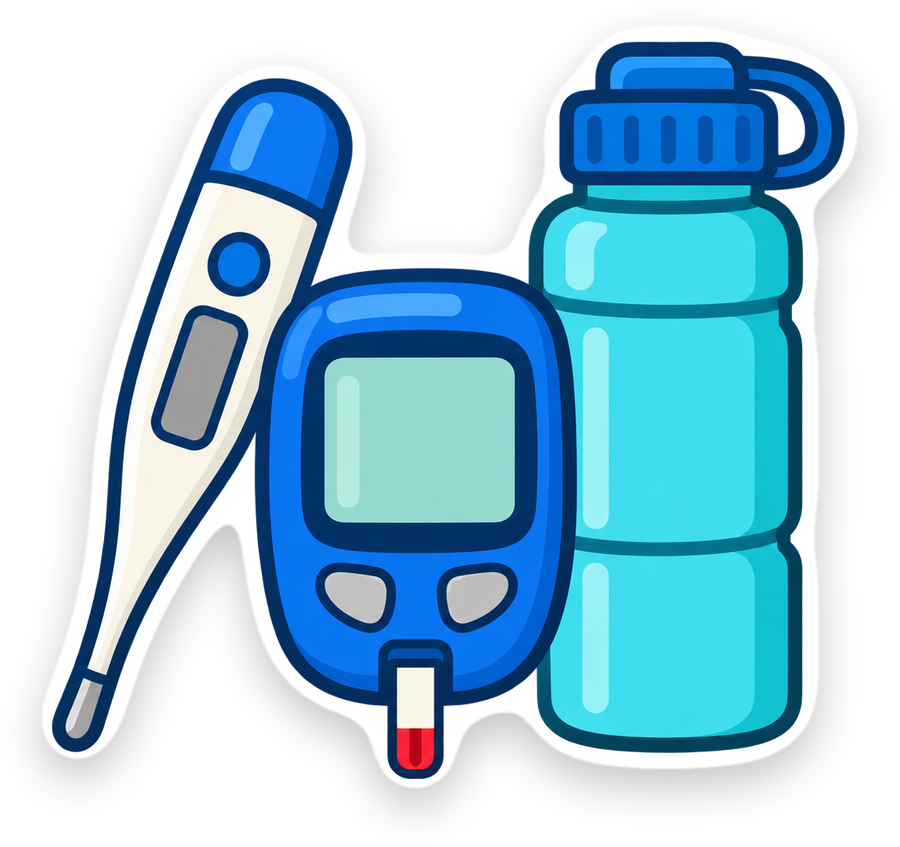
On a sick day: check the temperature, check glucose every four hours, and keep drinking. Never stop the basal insulin because the patient is not eating.
Hypoglycemia Management?
4
Hypoglycemia Management
Hypoglycemia is the most dangerous acute complication of insulin and sulfonylurea therapy.
Apply the 15-15 rule for a conscious patient: 15 grams of fast-acting carbohydrate, recheck glucose in 15 minutes, and repeat if still below 70.
Unconscious/NPO: D50W IV push (25–50 mL); or glucagon IM/SubQ if no IV access.
After treatment: give complex carb + protein snack if next meal > 1 h away.
For a patient who cannot swallow, glucagon is the answer, not juice. Turn them onto their side, because vomiting often follows the injection.
Diabetic Foot Care?
5
Diabetic Foot Care
Foot care teaching should be concrete and repeated at routine visits.
Teach daily inspection, including the plantar surface with a mirror; washing with lukewarm water; drying carefully between toes; never walking barefoot; trimming nails straight across; avoiding heating pads; wearing properly fitting shoes; and reporting any wound, blister, redness, drainage, or non-healing area immediately.
Inspect feet DAILY — look between toes for sores, blisters, redness.
Wash with lukewarm (not hot) water — neuropathy prevents sensing burn.
Wear well-fitting shoes and cotton socks. NEVER go barefoot.
Report any non-healing wound immediately — risk of infection and amputation.
Trim nails straight across and avoid cutting into corners.
Never use heating pads or hot water bottles on feet.
Use a mirror or caregiver assistance to inspect the plantar surface.
Neuropathy hides injuries. A daily look at the sole with a mirror catches a blister before it becomes an ulcer.
Type 1 vs Type 2 Diabetes Mellitus?
6
Type 1 vs Type 2 Diabetes Mellitus
Type 1 = immune destruction, ALWAYS needs insulin. Type 2 = resistant cells, starts with lifestyle + oral agents.
Type 1 DM — Insulin Deficient
Type 2 DM — Insulin Resistant
Pathophysiology
Autoimmune destruction of beta cells → absolute insulin deficiency • Body has NO insulin — relies entirely on exogenous insulin
Peripheral insulin resistance + progressive beta-cell failure • Body has insulin but cells cannot use it effectively
Typical onset
Childhood to young adulthood (any age possible) • Usually sudden onset
Adults > 40 yrs, but increasing in adolescents • Gradual, often asymptomatic for years
Body habitus
Usually lean or normal weight • Weight loss at presentation (catabolism)
Overweight or obese (80% of patients) • Central/abdominal adiposity
Insulin requirement
ALWAYS required — no insulin = DKA and death • Multiple daily injections or insulin pump
May not require insulin initially • Oral agents first; insulin added as disease progresses
pH normal or near-normal • No significant acidosis • Serum osmolality > 320 mOsm/kg (markedly elevated)
Onset
Hours (rapid progression) • Younger patient often presents in ER
Hours to days (slower onset) • Elderly, may present with altered mental status
Treatment priority
1. IV fluids (1L NS in first hour) • 2. Potassium replacement if K⁺ < 3.5 BEFORE insulin • 3. Insulin drip when K⁺ ≥ 3.5 • 4. Treat underlying cause (antibiotics if infection)
1. Aggressive IV fluid replacement (MOST important) • 2. Insulin after fluid started • 3. Electrolyte monitoring and replacement • 4. Treat underlying cause — often infection
Diagnostic tests?
8
Diagnostic tests
Test
Purpose
Normal
Abnormal
Nursing note
Fasting Plasma Glucose
Diagnoses diabetes using fasting serum glucose after no caloric intake.
<100 mg/dL fasting
Diabetes: >=126 mg/dL on confirmatory testing; prediabetes: 100-125 mg/dL.
Confirm fasting status and repeat abnormal screening results unless the patient is clearly symptomatic.
Hemoglobin A1c
Estimates average blood glucose over about 2-3 months.
<5.7%
Diabetes: >=6.5%; prediabetes: 5.7-6.4%.
May be inaccurate with anemia, recent transfusion, hemoglobin variants, pregnancy, or advanced kidney disease.
2-hour Oral Glucose Tolerance Test
Measures glucose handling after a standardized oral glucose load.
Used commonly in pregnancy screening pathways and when fasting/A1c results do not fit symptoms.
Random Glucose with Symptoms
Diagnoses diabetes in a symptomatic patient without waiting for fasting status.
No diagnostic random threshold in an asymptomatic patient
Classic symptoms plus random glucose >=200 mg/dL supports diabetes diagnosis.
Classic symptoms include polyuria, polydipsia, unexplained weight loss, blurry vision, and fatigue.
Nursing priorities?
9
Nursing priorities
1. Check blood glucose before every insulin administration.— The current glucose and meal status determine whether the ordered insulin dose is safe.
2. In DKA, confirm potassium is >= 3.5 before starting insulin drip.— Insulin shifts potassium intracellularly; starting it during hypokalemia can cause fatal dysrhythmias.
3. Monitor for hypoglycemia 2-4 hr after insulin administration.— Peak insulin action is the highest-risk window for falling blood glucose, especially with missed meals or increased activity.
Key nursing points
Type 1
Type 2
DKA (Type 1)
HHS (Type 2)
Somogyi effect
Key nursing points
Type 1: absolute insulin deficiency. DKA-prone. Requires insulin lifelong. Onset typically < 30 years.
Type 2: insulin resistance + relative deficiency. HHS if severe. First-line: metformin + lifestyle.
HHS (Type 2): BG > 600, hyperosmolarity, NO significant ketosis. Treat with IVF.
Somogyi effect: AM hyperglycemia from overnight hypoglycemia rebound. Decrease PM insulin.
Dawn phenomenon: AM hyperglycemia from cortisol/GH surge. Increase PM insulin.
⚠EXAM TRAPCommon exam trapDKA vs HHS: DKA is in Type 1, BG 250–800, significant ketones and acidosis. HHS is in Type 2, BG > 600, minimal ketones, extreme hyperosmolarity. Both are fluid emergencies — but DKA also needs insulin drip. Hold metformin before IV contrast (lactic acidosis risk) and resume 48 h after if renal function normal.
Test yourself?
Test yourself
Pick your answer first, then open the rationale. Guessing teaches nothing.
Question 1 of 9
A patient with type 1 diabetes develops a fever of 38.9°C and states they have not eaten all day due to nausea and vomiting. They ask if they should skip their insulin since they are not eating. Which response is MOST appropriate?
Answer: 'Never skip insulin during illness — illness increases stress hormones that raise blood glucose even without eating; check glucose every 2-4 hours and contact your provider.' During illness, counterregulatory hormones (cortisol, glucagon, epinephrine) cause hepatic glucose production and insulin resistance, elevating blood glucose even without oral intake; stopping insulin in type 1 diabetes can precipitate diabetic ketoacidosis. Sick day rules include never stopping insulin, increasing blood glucose monitoring, testing for urinary ketones, maintaining hydration, and contacting the provider if glucose exceeds 240 mg/dL or ketones are positive.
Question 2 of 9
A patient states their blood glucose is 58 mg/dL, they feel shaky, and they are alert and oriented. Which intervention follows the 15-15 rule?
Answer: Give 15 grams of fast-acting carbohydrate (e.g., 4 oz juice), wait 15 minutes, recheck glucose, and repeat if still below 70 mg/dL. The 15-15 rule for conscious hypoglycemia management involves giving 15 grams of rapid-acting carbohydrates, waiting 15 minutes, rechecking blood glucose, and repeating if glucose remains below 70 mg/dL. Once glucose normalizes, a snack with protein and complex carbohydrates prevents rebound hypoglycemia.
Question 3 of 9
A nurse is providing discharge teaching to a patient with type 2 diabetes about foot care. Which instruction has the HIGHEST priority for preventing complications?
Answer: 'Inspect your feet daily for cuts, blisters, or color changes and never walk barefoot.' Peripheral neuropathy and vascular disease in diabetes impair sensation and healing, making undetected minor wounds the leading pathway to infection, gangrene, and amputation; daily foot inspection is the cornerstone of prevention. Patients should never walk barefoot, and any wound that does not begin healing within 24 hours requires immediate medical attention.
Question 4 of 9
A patient with type 1 diabetes is brought to the ED with blood glucose of 498 mg/dL, pH 7.18, bicarbonate 10 mEq/L, and positive urinary ketones. Which intervention should the nurse initiate FIRST?
Answer: Administer 1 liter of 0.9% normal saline IV over the first hour. Volume resuscitation with 1 liter of isotonic normal saline in the first hour is the first priority in DKA treatment because severe dehydration (3–6 liters deficit) from osmotic diuresis causes hemodynamic compromise; rehydration alone begins to lower glucose and improve acidosis. Insulin infusion is initiated after the first fluid bolus, and potassium replacement must precede insulin if serum potassium is below 3.5 mEq/L.
Question 5 of 9
A patient in DKA has a serum potassium of 3.2 mEq/L, and the provider orders insulin infusion. What is the nurse's priority action?
Answer: Hold the insulin infusion and notify the provider — potassium must be replaced to at least 3.5 mEq/L first. Insulin drives potassium into cells, and starting insulin when serum potassium is already low (hypokalemia) can cause life-threatening hypokalemia, leading to fatal cardiac dysrhythmias; potassium must be replaced to at least 3.5 mEq/L before insulin is initiated. This is a critical safety principle in DKA management.
Question 6 of 9
A patient in DKA has the following labs: Na 138, Cl 98, HCO3 10 mEq/L. The nurse calculates the anion gap. What is the calculated anion gap, and what does it indicate?
Answer: Anion gap = 30 — elevated gap metabolic acidosis indicating accumulation of unmeasured anions (ketoacids). Anion gap = Na − (Cl + HCO3) = 138 − (98 + 10) = 30 mEq/L; a normal anion gap is 8–12 mEq/L, and an elevated anion gap indicates accumulation of unmeasured anions such as the ketoacids (beta-hydroxybutyrate, acetoacetate) produced in DKA. The anion gap is used to monitor treatment response — it should normalize as DKA resolves.
Question 7 of 9
A nurse is comparing two patients: a 68-year-old with type 2 diabetes, glucose 920 mg/dL, pH 7.36, and no ketones; and a 32-year-old with type 1 diabetes, glucose 490 mg/dL, pH 7.20, and large ketones. Which statement BEST differentiates these two conditions?
Answer: The older patient has HHS — more severe hyperglycemia, no ketosis, normal pH, common in older T2DM; the younger patient has DKA — ketoacidosis present. HHS (hyperosmolar hyperglycemic state) is characterized by extreme hyperglycemia (often >600 mg/dL), profound dehydration, minimal-to-no ketosis, normal pH, and occurs predominantly in older adults with type 2 diabetes; residual insulin prevents ketosis. DKA typically occurs in type 1 diabetes with moderate hyperglycemia, significant ketoacidosis, and lower pH.
Question 8 of 9
A patient with HHS has a serum glucose of 1,040 mg/dL, serum osmolality of 382 mOsm/kg, and is obtunded. Which fluid replacement principle is the HIGHEST priority?
Answer: Replace fluids gradually to prevent cerebral edema — avoid dropping glucose more than 50–75 mg/dL per hour. The extreme hyperosmolality in HHS has caused cellular adaptation; rapid correction causes a shift of fluid into brain cells (cerebral edema) which can cause herniation and death. Gradual fluid replacement targeting glucose reduction of no more than 50–75 mg/dL/hour over 24–48 hours is the safe approach.
Question 9 of 9
A patient with HHS is receiving IV fluids and insulin. After 4 hours, the blood glucose has dropped from 980 mg/dL to 630 mg/dL. The nurse calculates the rate of decline. Which assessment is MOST important based on this rate?
Answer: Assess neurological status and calculate the rate of glucose decline — greater than 75 mg/dL/hour is too rapid. The rate of glucose reduction in HHS must not exceed 50–75 mg/dL per hour; in this scenario, 350 mg/dL over 4 hours equals approximately 87.5 mg/dL/hour, exceeding the safe threshold and risking cerebral edema. Neurological assessment (including Glasgow Coma Scale) is critical to detect early signs of cerebral edema.
In one line
Type 1: autoimmune, no insulin. Type 2: insulin resistance. Both need BG monitoring and patient education.
— 6 —
Finish lesson
Save your completion
Sign in to record progress, sync completion, and keep your study streak accurate.