Hyper / Hypothyroidism
Two thyroid extremes — opposite metabolism, opposite vitals.
- Lesson 3 of 7
- 6 min read
Overview
Hyperthyroidism (Graves' disease most common): high T3/T4, low TSH → weight loss, heat intolerance, tachycardia, tremor, exophthalmos.
Hyperthyroidism — Graves' Disease
Thyroid-stimulating immunoglobulins bind and chronically activate TSH receptors, producing a steady unregulated surge of T3 and T4.
Exophthalmos in Graves' disease is caused by autoimmune inflammation of the orbital tissue, not by excess T3/T4 itself, and does not always resolve even after the thyroid is treated.
- Autoimmune — TSH receptor antibodies (TSI) overstimulate thyroid → excess T3/T4. Labs: ↓ TSH, ↑ T3, ↑ T4.
- Symptoms (everything is FAST/HIGH): tachycardia, hypertension, heat intolerance, sweating, weight LOSS (despite increased appetite), tremor, nervousness/anxiety, insomnia, diarrhea, exophthalmos (Graves').
- Treatment: propranolol (beta-blocker for symptoms), antithyroid drugs (methimazole first-line; PTU preferred in pregnancy), radioactive iodine (RAI — destroys thyroid tissue; eventually hypothyroid), or thyroidectomy.
- PTU: may cause agranulocytosis — teach to report fever, sore throat. Monitor WBC.

Thyroid Storm
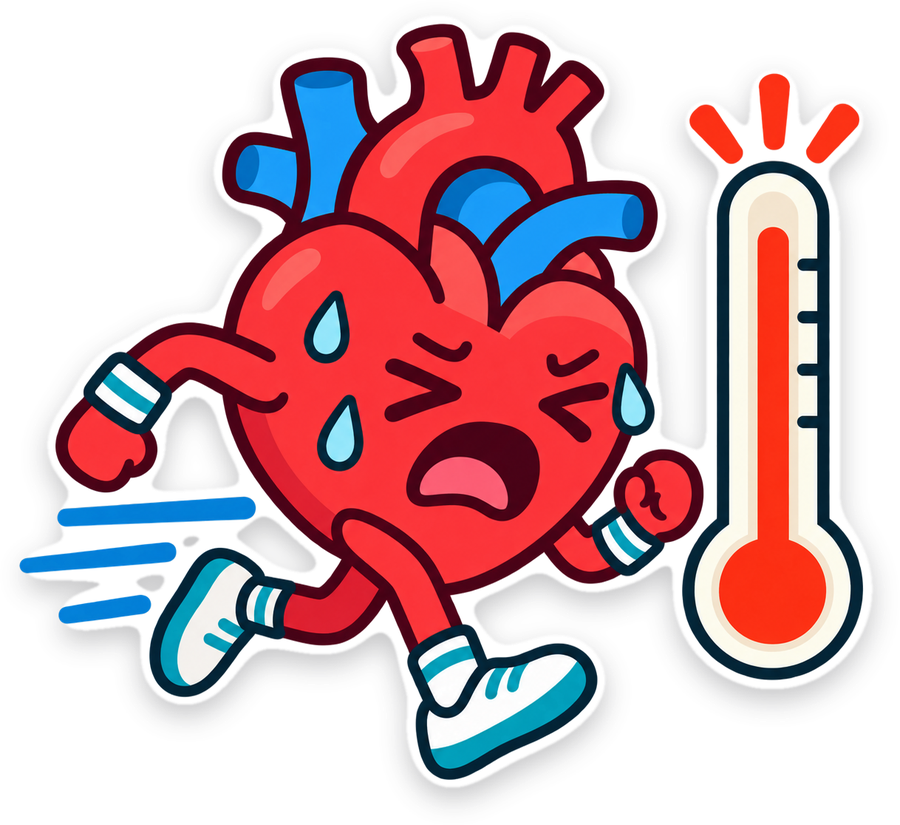
Thyroid storm, or thyrotoxic crisis, is a life-threatening surge of thyroid hormone effect.
Expect an extreme hypermetabolic picture: fever greater than 40 C, heart rate often greater than 140, hypertension early, agitation or delirium, vomiting or diarrhea, and possible heart failure.
- Life-threatening exaggerated hyperthyroidism: fever (>101°F), tachycardia (>140 bpm), agitation, delirium, vomiting/diarrhea, heart failure, coma.
- Triggers: infection, trauma, surgery, RAI therapy in uncontrolled patient.
- Treatment: immediate hospitalization — PTU + iodine (Lugol's solution, given 1 hr AFTER PTU) + beta-blockers (propranolol) + corticosteroids (dexamethasone) + cooling + IV fluids.
Antithyroid Drug Teaching
PTU and methimazole reduce thyroid hormone production, but they do not normalize hormone levels immediately because stored thyroid hormone must be depleted.
Teach the patient to report sore throat, fever, mouth ulcers, or other infection signs immediately and expect CBC monitoring.
- PTU/methimazole: monitor CBC because agranulocytosis can present as fever plus sore throat.
- Take at the same time daily and do not stop abruptly without provider direction.
- Therapeutic response can take 6-12 months; keep lab and dose-adjustment follow-up.
- Check pulse before each dose and report HR > 100 or worsening palpitations.
Hypothyroidism — Hashimoto's Thyroiditis
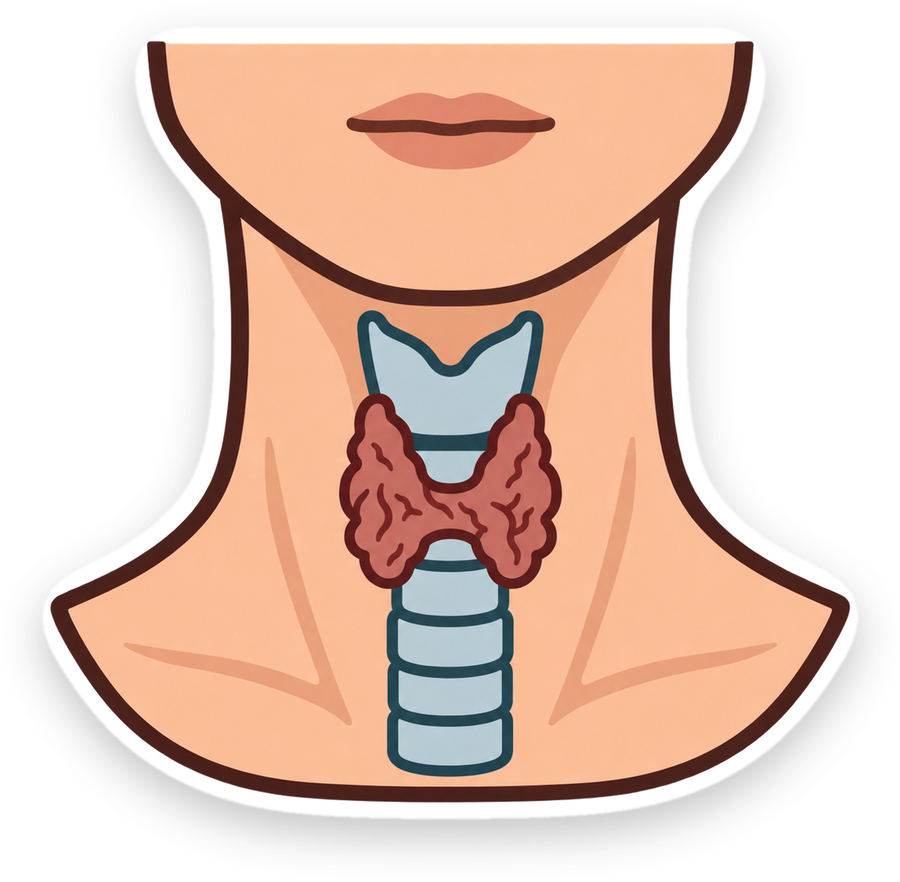
Hashimoto's thyroiditis is the most common primary cause of hypothyroidism in developed countries.
The clinical picture is the opposite of hyperthyroidism: a slowed metabolism.
- Autoimmune destruction of thyroid gland → insufficient T3/T4. Labs: ↑ TSH (pituitary compensates), ↓ T3/T4. Most common in women.
- Symptoms (everything is SLOW/LOW): bradycardia, hypotension, cold intolerance, weight GAIN, fatigue, constipation, dry skin, hair loss, puffy face, hoarse voice, depression, myxedema (non-pitting edema).
- Treatment: levothyroxine (T4) — taken on EMPTY stomach, 30–60 min before breakfast. Same time daily. Titrate to normalize TSH.
- Drug interactions: calcium, iron, antacids, cholestyramine → block absorption. Space 4 hours apart.
Myxedema Coma
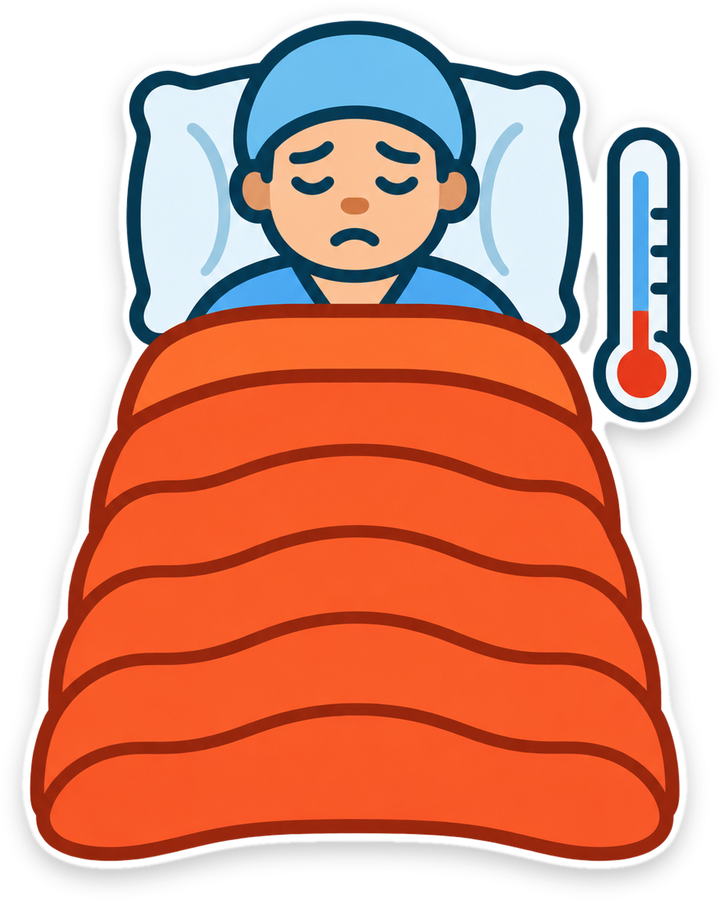
Myxedema coma is the extreme end of hypothyroidism decompensation.
The hallmarks are hypothermia, profound bradycardia, hypoventilation, hypotension, hyponatremia, and decreasing level of consciousness.
- Severe decompensated hypothyroidism: hypothermia, severe bradycardia, respiratory failure, hypotension, stupor → coma.
- Triggers: cold exposure, sedatives, infection in a known hypothyroid patient.
- Treatment: IV levothyroxine, hydrocortisone (concurrent adrenal insufficiency common), warming (passive — no active rewarming), airway management, fluid/vasopressors.
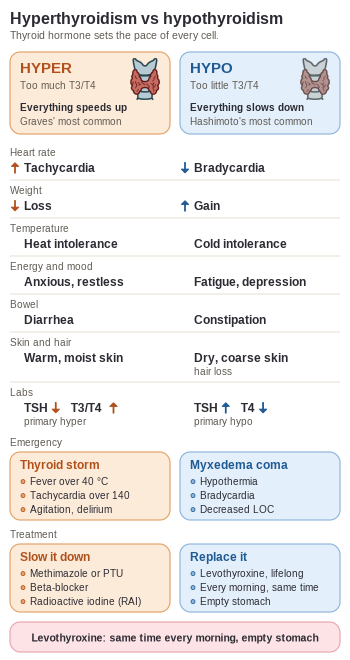
Hyperthyroidism vs Hypothyroidism
| Hyperthyroidism (Graves, Toxic Nodule) | Hypothyroidism (Hashimoto's, Post-ablation) | |
|---|---|---|
| Thyroid labs | TSH low (suppressed) • Free T3 and T4 elevated | TSH high (pituitary trying to stimulate) • Free T3 and T4 low |
| Metabolism / weight | Hypermetabolism — weight loss despite increased appetite • Heat intolerance, diaphoresis | Hypometabolism — weight gain despite poor appetite • Cold intolerance, dry skin |
| Cardiovascular | Tachycardia, palpitations, atrial fibrillation • Elevated systolic BP, widened pulse pressure | Bradycardia • Hypertension (diastolic) • Pericardial effusion in severe cases |
| Neurological / mental | Anxiety, tremors, irritability, insomnia • Exophthalmos in Graves' disease | Depression, lethargy, cognitive slowing • Delayed deep tendon reflexes ('hung' reflex) |
| GI / other | Increased bowel motility — diarrhea • Pretibial myxedema in Graves' • Muscle weakness | Constipation • Myxedema (non-pitting facial edema) • Periorbital puffiness, dry brittle hair |
| Crisis name | Thyroid storm — fever > 40°C, extreme tachycardia, agitation, HF • Treat: PTU → iodine (1 hr later) → propranolol → steroids | Myxedema coma — hypothermia, bradycardia, decreased LOC • Treat: IV levothyroxine + warming blankets + corticosteroids |
| Treatment | Methimazole (first line) or PTU (pregnancy) • Radioactive iodine ablation • Beta-blockers (symptom control) • Thyroidectomy | Levothyroxine (T4) once daily — lifelong • Start low, titrate q6–8 weeks by TSH • Avoid with calcium, iron, antacids (4 hr separation) |
Diagnostic tests
| Test | Purpose | Normal | Abnormal | Nursing note |
|---|---|---|---|---|
| TSH | Most sensitive initial screening test for thyroid hormone feedback. | About 0.4-4.0 mIU/L | Suppressed TSH is expected in primary hyperthyroidism. | A low TSH with high free T4/T3 supports hyperthyroidism; low TSH alone may need repeat or additional testing. |
| Free T4 | Measures active circulating thyroxine level. | Lab-specific; commonly about 0.8-1.8 ng/dL | Elevated free T4 supports overt hyperthyroidism. | Trend with symptoms and pulse; severe elevation with fever/tachycardia raises concern for thyroid storm. |
| T3 | Detects T3-predominant thyrotoxicosis when T4 is normal or only mildly elevated. | Lab-specific | Elevated T3 supports hyperthyroidism or T3 toxicosis. | T3 can be disproportionately high in Graves disease and toxic nodular goiter. |
| Radioactive Iodine Uptake | Differentiates increased hormone production from thyroid inflammation or exogenous hormone use. | Lab- and timing-specific uptake percentage | High diffuse uptake suggests Graves; focal uptake suggests toxic nodule; low uptake suggests thyroiditis or exogenous hormone. | Contraindicated in pregnancy and often avoided while breastfeeding; verify pregnancy status before testing. |
| Thyroid Antibodies | Identifies autoimmune thyroid disease. | Negative or low antibody titers | TSH receptor antibodies/TSI support Graves disease; TPO antibodies support autoimmune thyroid disease. | Antibody results help explain cause but do not replace vital-sign assessment for thyroid storm risk. |
Nursing priorities
- 1. Prioritize cardiac monitoring. — Atrial fibrillation and rapid tachydysrhythmias are common complications of excess thyroid hormone and can quickly reduce cardiac output.
- 2. Provide a cool, quiet environment and minimize stressors. — Heat intolerance and sympathetic overactivity worsen agitation, tachycardia, and metabolic demand.
- 3. Support a high-calorie, high-protein diet. — Hypermetabolism causes weight loss and muscle wasting even when appetite is increased.
Key nursing points
- Hyper → propranolol for symptoms, methimazole/PTU, radioactive iodine, thyroidectomy.
- Hypo → lifelong levothyroxine on empty stomach, 30–60 min before breakfast.
- Thyroid storm: extreme hyper → fever, tachycardia, AMS — medical emergency.
- Myxedema coma: extreme hypo → hypothermia, bradycardia, coma — medical emergency.
Test yourself

Pick your answer first, then open the rationale. Guessing teaches nothing.
Two thyroid extremes — opposite metabolism, opposite vitals.
— 3 —