Babinski Reflex & Neuro Reflexes
Babinski positive in adults = upper motor neuron lesion. Normal in infants under 2.
- Lesson 9 of 11
- 4 min read
Overview
Normal (negative) in adults: toes plantarflex (curl downward).
What Babinski Means
The Babinski sign is a plantar reflex response.
- Negative adult response: toes curl downward or no movement.
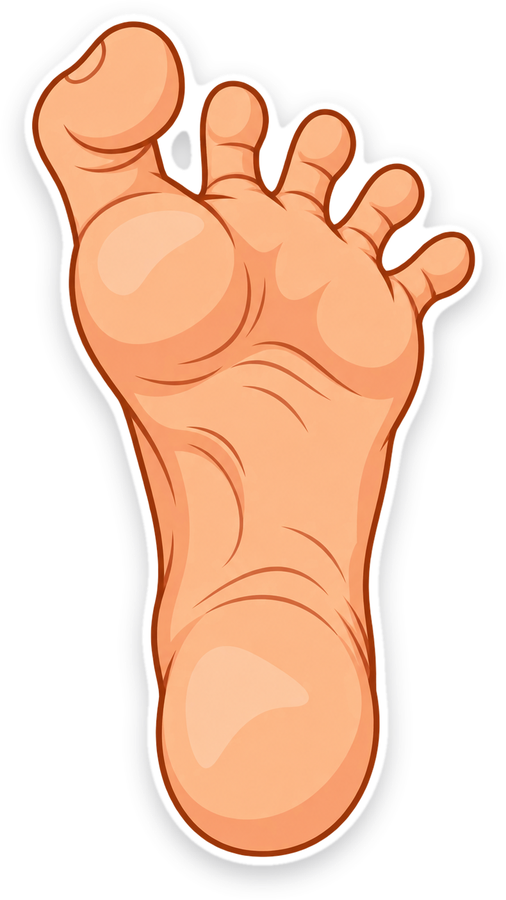
- Positive adult response: great toe dorsiflexes and other toes fan.
- Normal in many infants up to about 12 to 24 months.
- Abnormal after early childhood and should be interpreted with the full neurologic exam.
How to Test Safely
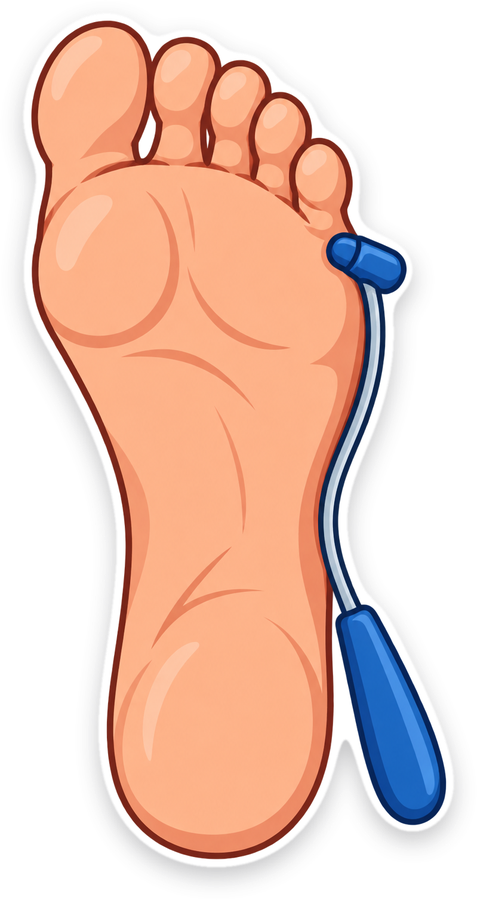
- Use a blunt object and stroke the lateral sole from heel toward the ball of the foot, then curve medially.
- Do not use a sharp object or break the skin.
- Compare both sides and document the exact toe response.
- Avoid overstating results when the patient withdraws from tickling or pain; withdrawal is not the same as a true Babinski response.
UMN vs LMN Pattern
| Finding | Upper motor neuron | Lower motor neuron |
|---|---|---|
| Tone | Spasticity | Flaccidity |
| Reflexes | Hyperreflexia, clonus | Hyporeflexia or absent reflexes |
| Plantar response | Positive Babinski possible | Usually absent or flexor |
| Muscle bulk | Mild disuse atrophy later | Marked atrophy and fasciculations |
NCLEX Connections
NCLEX tipPositive Babinski is expected in infants, but abnormal in adults.
It is not diagnostic alone; pair it with strength, sensation, reflexes, gait, and cranial nerve findings.
- Report new asymmetry or new positive findings in adults.
- Check for associated red flags: weakness, numbness, bowel or bladder dysfunction, back trauma, altered LOC, or speech changes.
- Do not confuse Babinski with Kernig or Brudzinski signs; those assess meningeal irritation.
Key nursing points
- Positive Babinski in adults (>2 years) = upper motor neuron (UMN) lesion.
- Positive Babinski is NORMAL in infants < 12–24 months — incomplete myelination.
- UMN lesions (brain/spinal cord): hyperreflexia, spasticity, positive Babinski.
- LMN lesions (peripheral nerves): hyporeflexia/areflexia, flaccid paralysis, atrophy.
- Deep tendon reflexes (DTRs): grade 0 (absent) to 4+ (clonus). Grade 2+ is normal.
- Clonus: rhythmic muscle contractions when ankle dorsiflexed — hyperreflexia sign.
EXAM TRAPCommon exam trapOn NCLEX: Babinski 'positive' in an adult = abnormal. Babinski 'positive' in an infant = normal. Kernig and Brudzinski both indicate MENINGEAL IRRITATION — not a specific diagnosis.
Test yourself

Pick your answer first, then open the rationale. Guessing teaches nothing.
In one line
Babinski positive in adults = upper motor neuron lesion. Normal in infants under 2.
— 9 —