Fibromyalgia
Chronic widespread musculoskeletal pain + fatigue + cognitive disturbance ('fibro fog').
- Lesson 10 of 11
- 5 min read
Overview
It affects ~2% of US adults, predominantly women in middle age.

Meaning and Pathophysiology
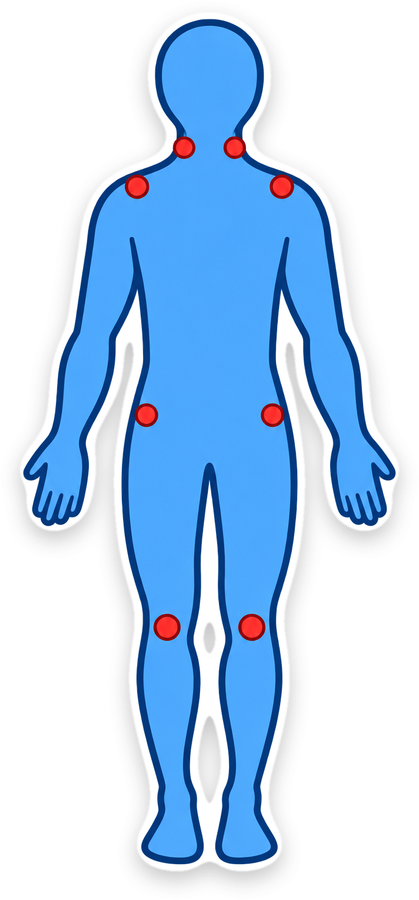
Fibromyalgia is a chronic widespread pain syndrome associated with central sensitization: the nervous system amplifies pain signals.
- Common pattern: widespread musculoskeletal pain for more than 3 months plus fatigue and sleep disturbance.
- Often overlaps with IBS, migraine, TMJ pain, anxiety, depression, and bladder symptoms.
- Routine inflammatory markers and imaging are usually normal unless another disorder is present.
Assessment and Rule-Outs
The nurse should assess function, sleep quality, mood, medication use, activity tolerance, and safety rather than focusing only on pain score.
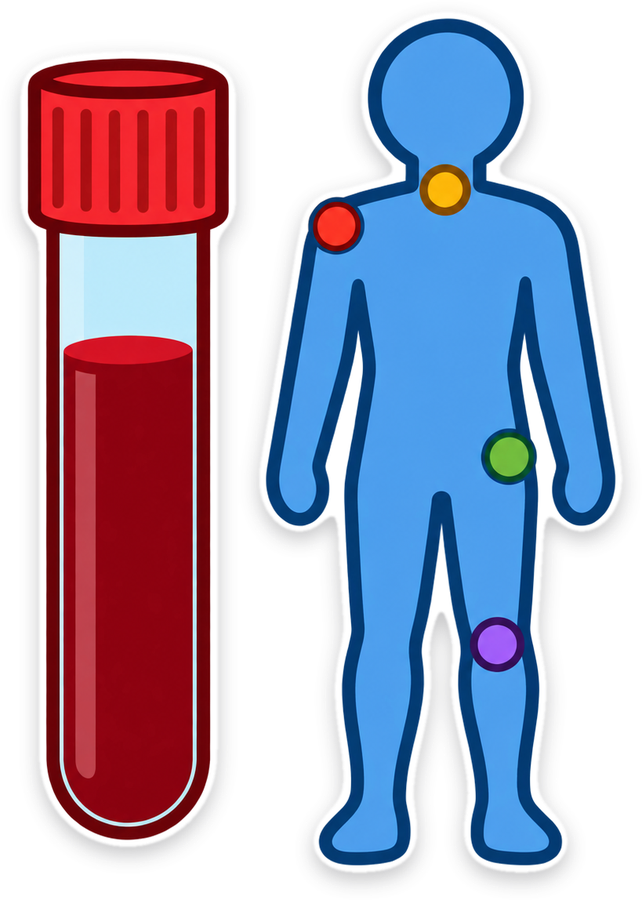
- Rule-outs include hypothyroidism, rheumatoid arthritis, lupus, polymyalgia rheumatica, anemia, vitamin deficiency, and medication effects.
- Cues: nonrestorative sleep, fibro fog, allodynia, headaches, fatigue, and symptom flares after stress or overexertion.
- Red flags such as fever, weight loss, joint swelling, neurologic deficit, or focal bone pain need further evaluation.
Treatment Plan
Medications can reduce symptoms but do not cure the condition.
- Low-impact aerobic exercise is high-yield: walking, swimming, cycling, tai chi, or water therapy.
- Medication options include duloxetine, milnacipran, pregabalin, and low-dose amitriptyline when prescribed.
- Teach pacing: avoid boom-and-bust cycles of overactivity followed by prolonged recovery.
- Treat sleep apnea, depression, anxiety, and migraine when present because they worsen symptoms.

Teaching and NCLEX Traps
NCLEX tipNCLEX trap: severe pain does not automatically mean opioids; fibromyalgia care emphasizes exercise, sleep, CBT, and selected non-opioid medications.
- Validate that symptoms are real while setting goals around sleep, stamina, mood, and daily function.
- Teach that flares can occur with stress, poor sleep, illness, and sudden activity increases.
- Avoid routine opioid use; it does not treat central sensitization and increases dependence and sedation risk.
- Encourage follow-up rather than repeated emergency visits for stable chronic flares without red flags.
Key nursing points
- Pain in ≥4 of 5 body regions for >3 months with no other explanation.
- 'Fibro fog': difficulty concentrating, memory problems.
- No lab test confirms diagnosis — rule out RA, lupus, hypothyroidism first.
- Pharmacology: duloxetine, milnacipran (SNRIs), pregabalin (Lyrica), amitriptyline.
- Non-pharmacological: aerobic exercise, CBT, sleep hygiene, heat therapy.
- Avoid narcotics — no evidence of benefit; risk of dependence.
EXAM TRAPCommon exam trapOpioids are NOT recommended for fibromyalgia despite severe pain. The best non-pharmacological treatment is low-impact aerobic exercise. Rule out hypothyroidism (similar fatigue + pain pattern) before diagnosing fibromyalgia.
Test yourself

Pick your answer first, then open the rationale. Guessing teaches nothing.
In one line
Chronic widespread musculoskeletal pain + fatigue + cognitive disturbance ('fibro fog').
— 10 —