Blood Types & Compatibility
ABO + Rh — who can donate to whom, and why a mismatched transfusion is fatal.
- Lesson 2 of 15
- 7 min read
Overview
Humans have one of four ABO groups (A, B, AB, O) plus an Rh factor (+ or −).
What makes a blood type
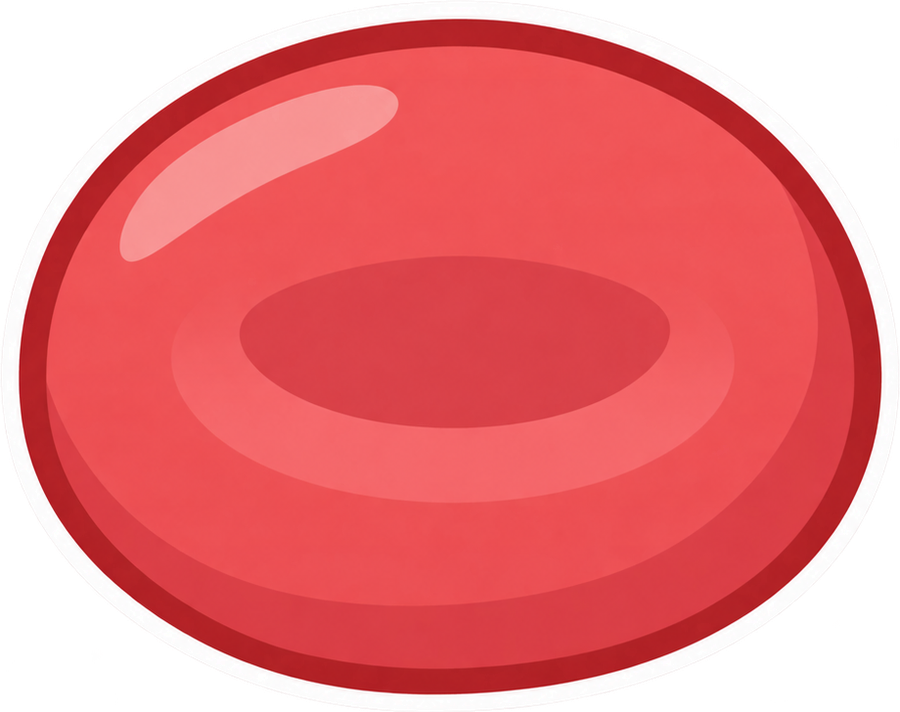
Blood is composed of red blood cells (carry O₂), white blood cells (immunity), plasma (yellow fluid with proteins/salts), and platelets (clotting).
The blood group depends on which antigens sit on the surface of the red blood cells.
This is why matching donor and recipient blood types is mandatory before any transfusion.
ABO groups
ABO compatibility is antibody logic.
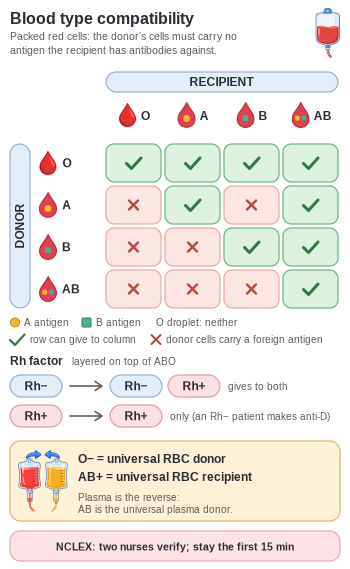
- Group A — A antigen on RBC; anti-B antibody in plasma.
- Group B — B antigen on RBC; anti-A antibody in plasma.
- Group AB — A and B antigens on RBC; NO anti-A or anti-B antibodies → can receive any ABO type.
- Group O — NO A or B antigens; anti-A AND anti-B antibodies in plasma → can give RBCs to any ABO type.
Rh factor
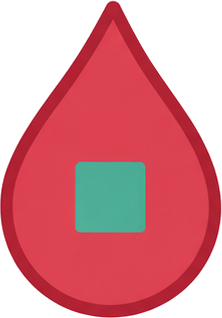
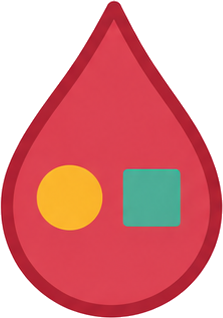
Some RBCs carry the RhD antigen.
Roughly 82% of people in the U.S. are Rh-positive. The rarest blood group is AB-negative (~1%).
An Rh-negative person who receives Rh-positive blood will form anti-Rh antibodies. A subsequent Rh-positive transfusion can then trigger hemolysis.

Universal donor & universal recipient
Universal labels are useful only when you know which blood component is being transfused.
- O-negative red cells contain no A, B, or RhD antigens → universal RBC donor.
- AB-positive has no anti-A or anti-B antibodies → universal RBC recipient.
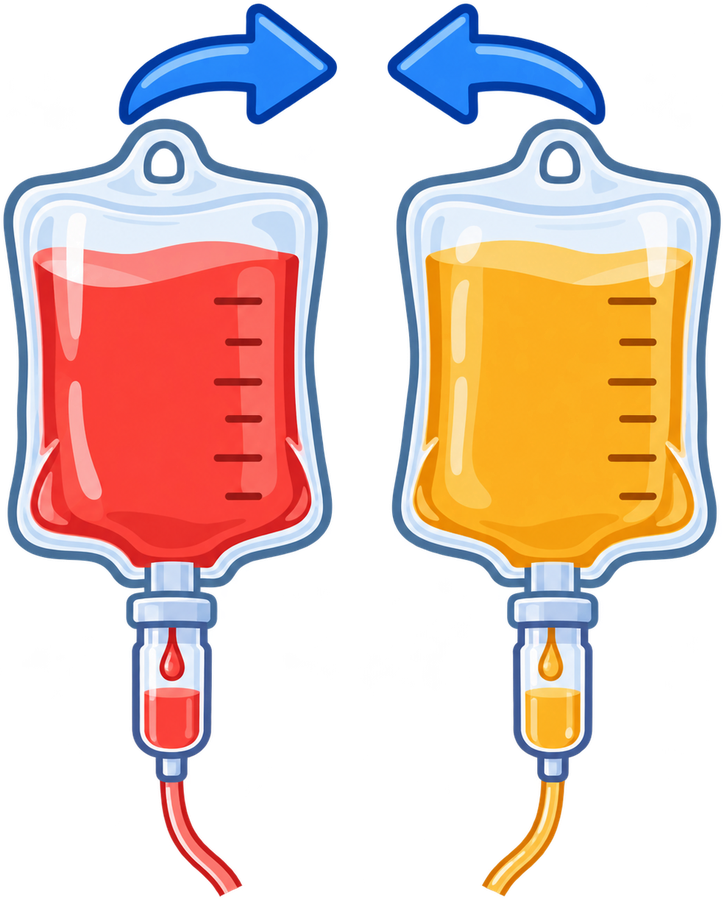
- For PLASMA, the rules invert: AB plasma is the universal plasma donor (no antibodies to attack recipient cells).
- Demand for O− blood is high (used in emergencies before crossmatch), even though < 10% of the population has it.
Transfusion safety — what the nurse must do
Transfusion safety is a high-alert workflow because wrong-patient or wrong-product errors can cause rapid hemolysis, shock, renal injury, and death.
If a reaction is suspected, stop the blood first.
- Verify type & crossmatch with two licensed staff at the bedside before hanging.
- Use a 18–20 gauge IV (large bore) with normal saline ONLY — never LR or D5W (cause hemolysis/clotting).
- Stay with the patient for the first 15 minutes; start slowly (~2 mL/min) and watch for reactions.
- Vitals: baseline, 15 min, then per protocol. Complete transfusion within 4 hours of leaving the blood bank.
- STOP immediately for fever, chills, low-back pain, hypotension, dyspnea, hives, or hemoglobinuria. Keep IV open with NS, notify provider and blood bank, send tubing + bag back.

Special situations
Special transfusion situations require the same safety principles plus patient-specific judgment.
- Rh-negative mother + Rh-positive fetus → RhoGAM at 28 weeks gestation AND within 72 hr of delivery to prevent maternal sensitization (hemolytic disease of the newborn).
- Religious objections (e.g., Jehovah's Witnesses): respect refusal; offer non-blood volume expanders, erythropoietin, iron.
- Massive transfusion (≥10 units in 24 hr) → watch for hypothermia, hypocalcemia (citrate binds Ca), hyperkalemia, and dilutional coagulopathy.
U.S. ABO/Rh distribution
| Blood type | % of U.S. population |
|---|---|
| O+ | 39% |
| A+ | 30% |
| B+ | 9% |
| O− | 9% |
| A− | 6% |
| AB+ | 4% |
| B− | 2% |
| AB− | 1% |
Compatibility — who gives to whom (red cells)
| Blood type | Can GIVE to | Can RECEIVE from |
|---|---|---|
| O− | Everyone (universal donor) | O− |
| O+ | O+, A+, B+, AB+ | O+, O− |
| A− | A+, A−, AB+, AB− | A−, O− |
| A+ | A+, AB+ | A+, A−, O+, O− |
| B− | B+, B−, AB+, AB− | B−, O− |
| B+ | B+, AB+ | B+, B−, O+, O− |
| AB− | AB+, AB− | AB−, A−, B−, O− |
| AB+ | AB+ | Everyone (universal recipient) |
Key nursing points
- O− = universal RED CELL donor (no A, B, or Rh antigens).
- AB+ = universal RED CELL recipient (no anti-A/B antibodies).
- AB plasma = universal PLASMA donor (rules invert for plasma).
- Two-nurse identifier + type & crossmatch verification before any transfusion.
- Stop transfusion immediately for fever, chills, back pain, hypotension, or hives.
- Only NORMAL SALINE may run with blood — never LR, D5W, or meds.
Nursing priorities checklist
- Verify identity + blood band with 2 nurses
- NS-primed Y-tubing, 18–20G IV
- Stay at bedside for first 15 min
- Stop + NS-only + notify if reaction
Test yourself

Pick your answer first, then open the rationale. Guessing teaches nothing.
ABO + Rh — who can donate to whom, and why a mismatched transfusion is fatal.
— 2 —