Fall Prevention & Safety
Falls are the most common hospital adverse event — nurses must assess risk on admission and implement prevention strategies consistently.
- Lesson 15 of 15
- 5 min read
Overview
Inpatient falls cause significant morbidity and are largely preventable.
Risk Factors
Risk changes quickly after new medications, surgery, pain, weakness, toileting urgency, delirium, orthostasis, IV lines, or unfamiliar surroundings.
- Common risks: prior fall, impaired gait, confusion, poor vision, incontinence, urgency, weakness, neuropathy, and orthostatic hypotension.
- Medication risks: opioids, benzodiazepines, sedatives, antihypertensives, diuretics, antiepileptics, and hypoglycemics.
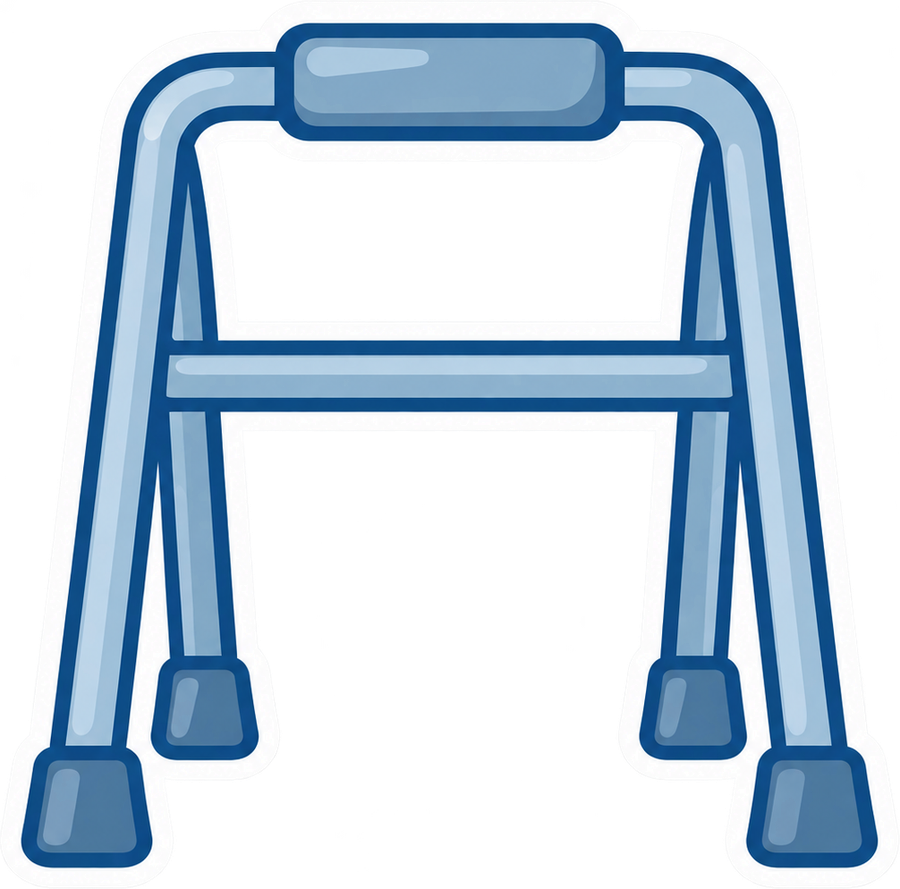
- Environmental risks: clutter, poor lighting, wet floors, bed height, missing assistive devices, and tangled tubing.
Assessment Tools and Cues
A score should trigger interventions and handoff communication rather than becoming a charting-only task.
- Assess on admission, after a fall, after condition changes, after medication changes, and during transfers of care.
- Watch gait, balance, footwear, cognition, toileting pattern, assistive-device use, and ability to follow instructions.
- Check orthostatic vital signs when dizziness, dehydration, blood loss, or antihypertensive changes are concerns.
- Ask what the patient normally uses at home and whether it is within reach.
Prevention Bundle
Fall prevention works best as a bundle.
- Keep bed low and locked, call light and belongings within reach, and clear the path to the bathroom.
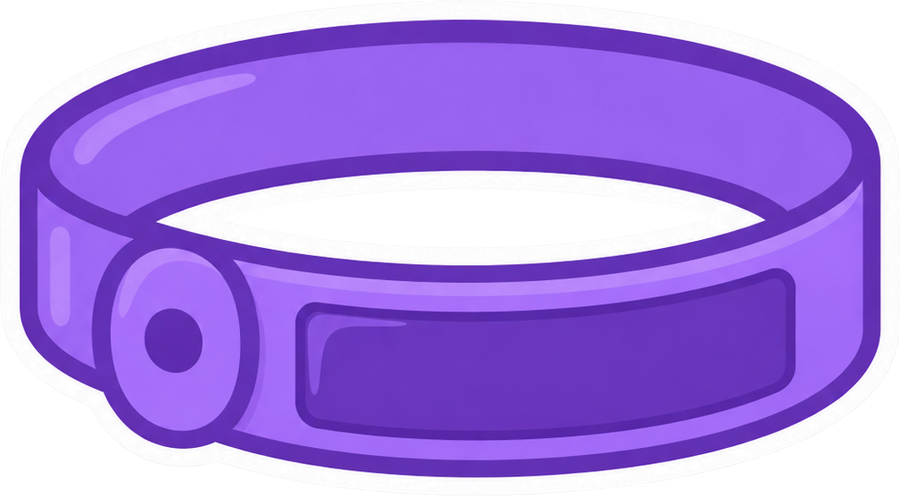
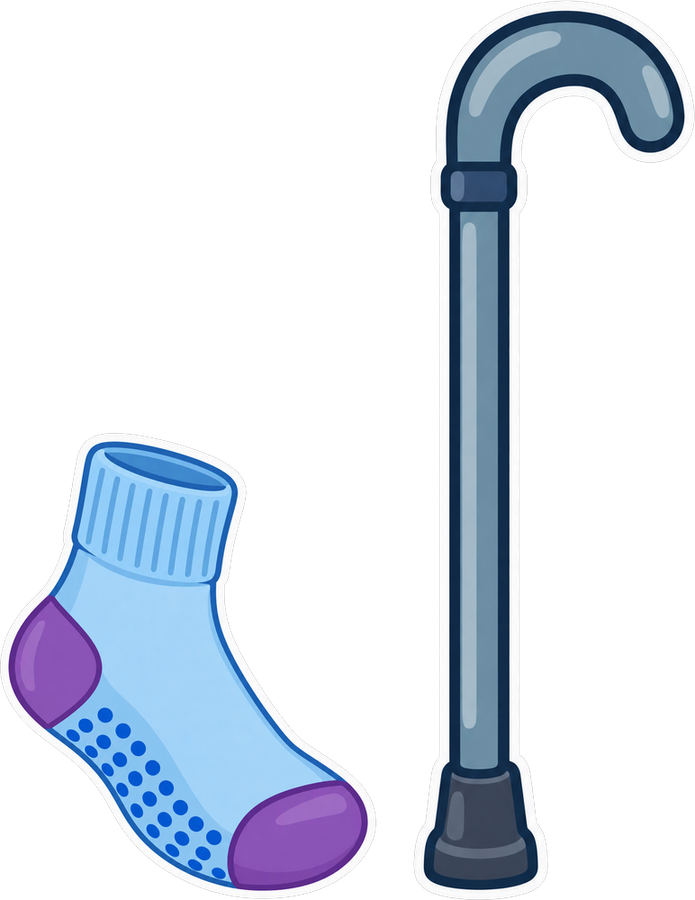
- Use non-skid footwear, adequate lighting, visible risk identifiers, and assistive devices.
- Schedule toileting and respond promptly to call lights.
- Use bed/chair alarms when indicated, but do not rely on alarms alone.
- Review high-risk medications and report dizziness, oversedation, or hypotension.



After a Fall and NCLEX Traps
After a fall, assess before moving the patient unless the environment is immediately unsafe.
- Assess airway, breathing, circulation, pain, deformity, bleeding, head strike, neurologic status, and vital signs.
- Notify provider and charge nurse per policy; complete incident report after patient care is addressed.
- Document objective findings and interventions; do not chart that an incident report was filed.
- NCLEX trap: raising all four side rails can be a restraint; use the least restrictive safety plan.
Key nursing points
- Most common time for inpatient falls: nighttime bathroom trips.
- High-risk medications for falls: opioids, benzodiazepines, antihypertensives, diuretics.
- All 4 side rails up = physical restraint (requires order and monitoring).
- After a fall: do NOT move patient until assessed; complete incident report (not in chart).
Test yourself

Pick your answer first, then open the rationale. Guessing teaches nothing.
Falls are the most common hospital adverse event — nurses must assess risk on admission and implement prevention strategies consistently.
— 15 —