Pressure Injuries (Ulcers)
Stages 1–4 + unstageable / deep tissue. Prevention beats treatment.
- Lesson 5 of 15
- 6 min read
5 terms
- Stage 1
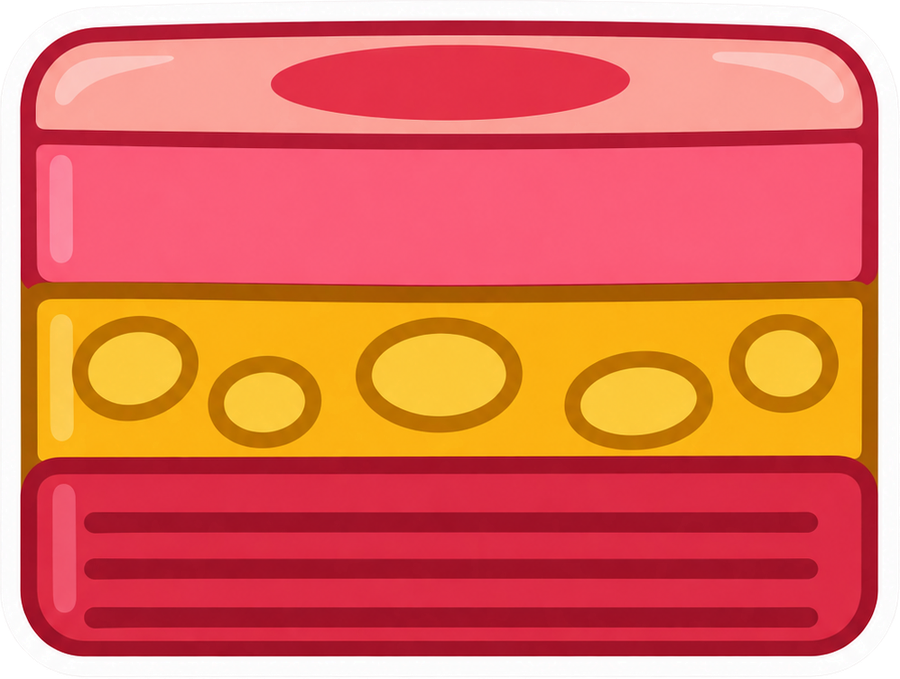
- intact skin with nonblanchable redness or color change.
- Stage 2
- partial-thickness skin loss with exposed dermis or blister; no slough.
- Stage 3
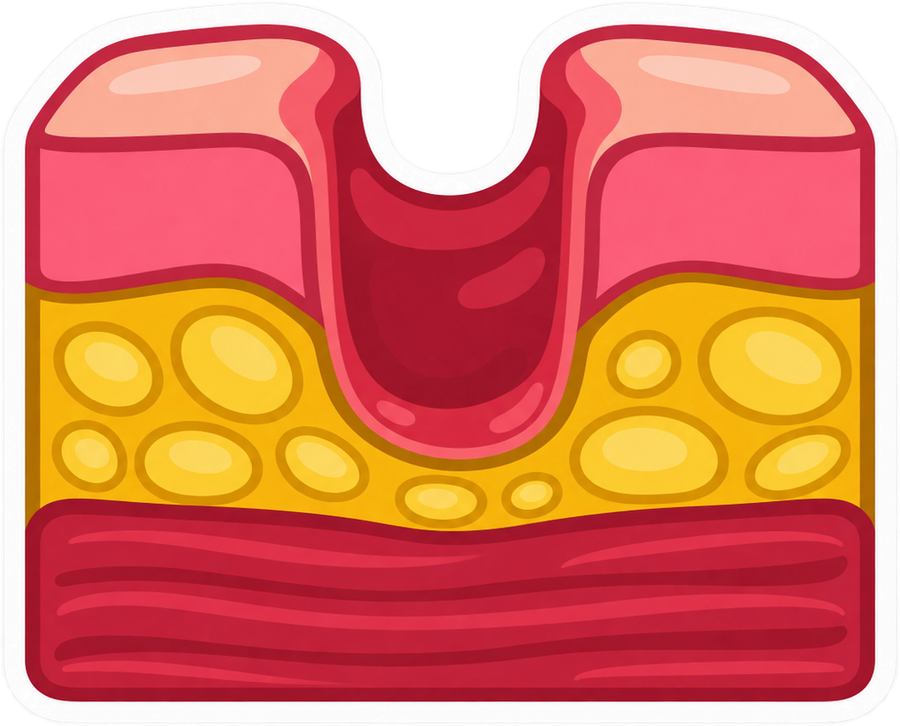
- full-thickness skin loss with visible subcutaneous fat; no exposed bone, tendon, or muscle.
- Stage 4
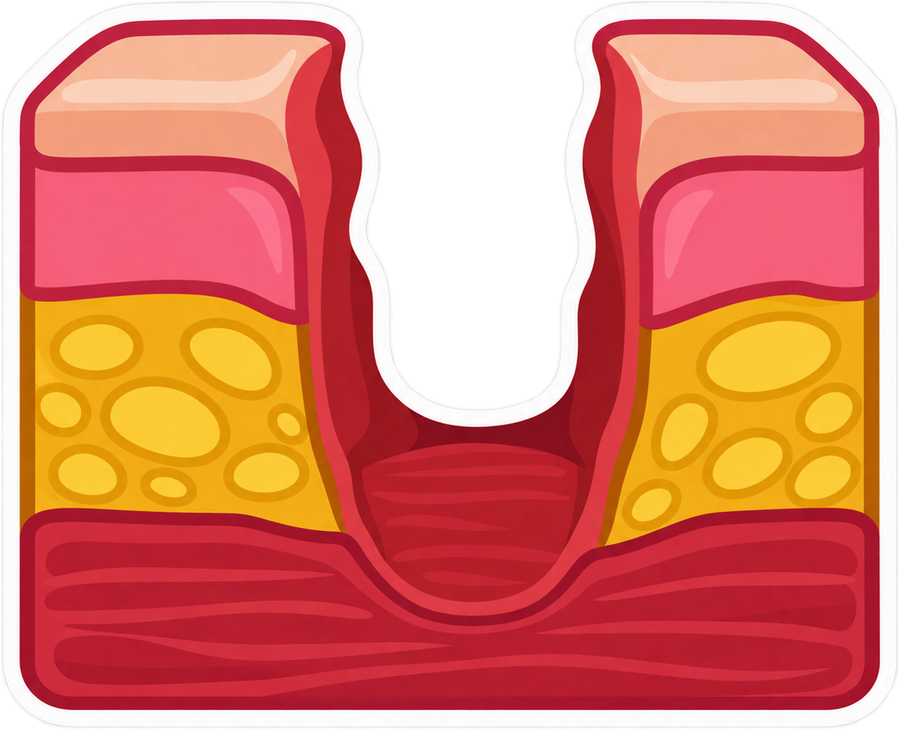
- full-thickness tissue loss with exposed or directly palpable bone, tendon, muscle, or supporting structure.
- Deep tissue injury
- persistent dark red, maroon, or purple discoloration or blood-filled blister from pressure/shear.
Overview
Use the Braden scale to assess risk.
Pathophysiology and Risk
Pressure injuries occur when pressure, shear, or friction reduces capillary blood flow long enough to cause ischemia.
Moisture, malnutrition, immobility, poor perfusion, diabetes, sedation, and decreased sensation lower tissue tolerance and make injury occur faster.
- Common sites: sacrum, heels, hips, ischial tuberosities, elbows, ankles, occiput, and ears.
- Use a validated risk tool such as the Braden Scale, but do not wait for a score to protect obvious high-risk skin.
- High-risk patients need repositioning, offloading, skin protection, nutrition support, and pressure redistribution.
Assessment and Staging
NCLEX tipDo not reverse-stage a healing pressure injury. A healing stage 4 remains a healing stage 4.
Stage pressure injuries by the deepest visible tissue damage.

Priority Interventions
The first treatment is pressure relief.
- Reposition on a schedule and document the position change and skin response.
- Float heels with support under the calves; avoid pressure directly behind the knees.
- Keep skin clean and dry; use barrier products for incontinence.
- Use lift sheets or assistive devices to reduce shear during transfers.
- Avoid massage over reddened bony prominences because it can worsen capillary injury.

Documentation and Teaching
Objective wound documentation lets the team detect improvement or deterioration across shifts.
- Measure length, width, depth, tunneling, undermining, drainage, odor, wound bed, edges, pain, and periwound skin.
- Teach patients and caregivers to inspect high-risk areas daily when sensation or mobility is impaired.
- Encourage protein, calories, hydration, and ordered supplements unless restricted.
- Report fever, spreading redness, foul drainage, increased pain, black tissue, or exposed bone/tendon.
- NCLEX trap: donut cushions concentrate pressure and are not the safest prevention strategy.
Key nursing points
- Stage 1: non-blanchable redness, skin intact.
- Stage 2: partial-thickness loss, open shallow ulcer.
- Stage 3: full-thickness loss, fat visible.
- Stage 4: full-thickness with exposed bone, tendon, or muscle.
- Reposition every 2 hours; keep skin dry; nutrition + hydration are essential.
EXAM TRAPCommon exam trapMassage of reddened bony prominences is contraindicated — it damages fragile capillaries and worsens tissue injury. Pressure injuries do NOT back-stage (a healing Stage 4 remains 'healing Stage 4'). Float heels — pillows under calves, not under the knee.
Test yourself

Pick your answer first, then open the rationale. Guessing teaches nothing.
In one line
Stages 1–4 + unstageable / deep tissue. Prevention beats treatment.
— 5 —