Module · 15 lessons
0 of 15 lessons done · 0% · 102 cards

Fundamentals for the NCLEX: ADPIE, blood types, infection control, IV therapy, pressure injuries, wound care. This module has 15 notebook lessons (about 102 minutes of reading), 58 practice questions with rationales inside the lessons, 102 flashcards and 15 NCLEX-style questions in the quiz bank.

Start here · Lesson 1 of 15
8 min read
ADPIE Nursing Process
The five-phase framework that defines safe, patient-centered nursing care.

Blood Types & Compatibility
ABO + Rh — who can donate to whom, and why a mismatched transfusion is fatal.

Medication Routes of Administration
Subcutaneous, sublingual, buccal, transmucosal — onset, bioavailability, safety.

Infection Control & Precautions
Standard, contact, droplet, airborne — match the bug to the PPE.

Pressure Injuries (Ulcers)
Stages 1–4 + unstageable / deep tissue. Prevention beats treatment.

Wound Care & Dressings
Clean wound care starts with assessment, pressure relief, infection prevention, and the right dressing for the wound bed.
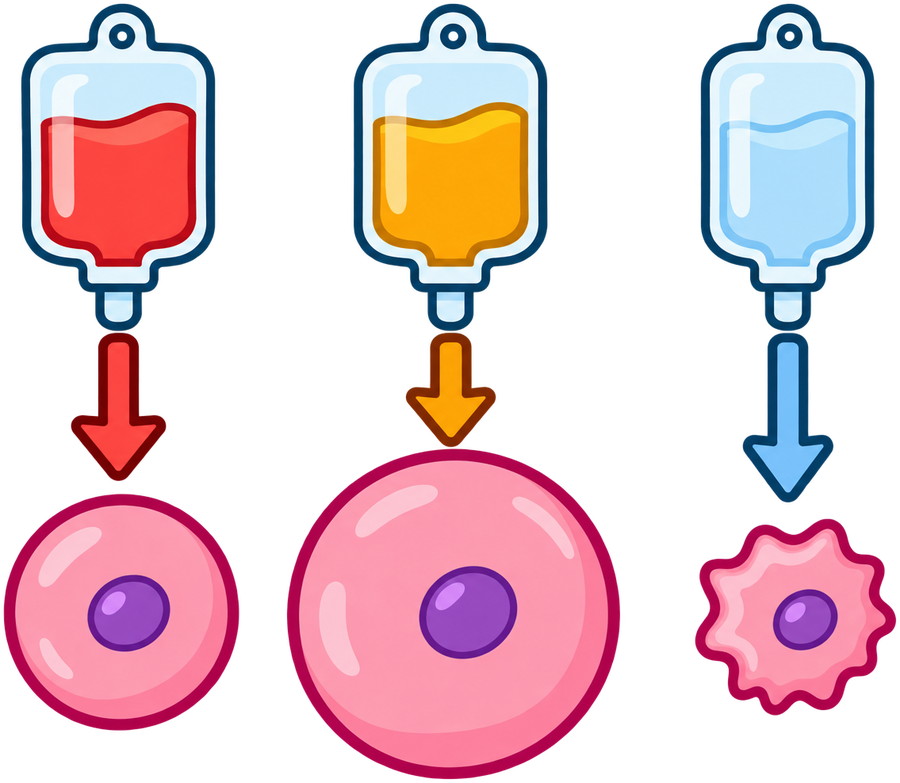
IV Therapy & Solutions
Isotonic, hypotonic, hypertonic — and the complications you must catch.
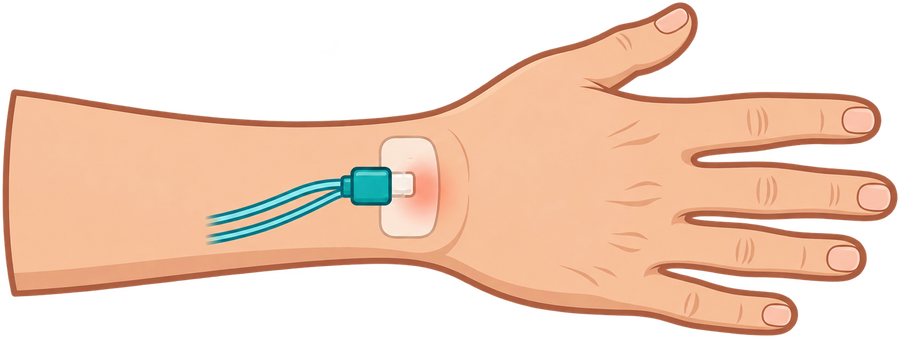
IV Therapy Complications
Infiltration, extravasation, phlebitis, air embolism, fluid overload, and CLABSI are preventable IV safety priorities.
Common Abbreviations & DO NOT Use List
Safe healthcare communication requires knowing which abbreviations are approved and which are banned to prevent medication errors.

Types of IV Solutions
Isotonic, hypotonic, and hypertonic IV solutions have different osmolarity effects on cells and are chosen based on the patient's fluid and electrolyte status.

Blood Transfusions
Blood transfusion procedure, compatibility requirements, transfusion reactions, and nursing responsibilities before, during, and after administration.
Pharmacokinetics
How the body processes drugs through absorption, distribution, metabolism, and excretion (ADME), and factors that alter drug response.
Vital Signs — Measurement & Normal Ranges
Vital signs are the baseline for every nursing assessment — know normal ranges, measurement technique, and when to report.

Pain Management Principles
Pain is the 5th vital sign and a subjective experience — the patient's self-report is always the most reliable indicator; nurses must advocate for adequate management.

Fall Prevention & Safety
Falls are the most common hospital adverse event — nurses must assess risk on admission and implement prevention strategies consistently.
Read the lessons, then test yourself.

This module's cards, on spaced repetition.

NCLEX-style questions from this module, with rationales.
12 of the module's 102 cards. Cover the answer and test yourself.