Infection Control & Precautions
Standard, contact, droplet, airborne — match the bug to the PPE.
- Lesson 4 of 15
- 8 min read
5 terms
- C. difficile
- contact precautions + SOAP AND WATER hand hygiene — spores resist alcohol. Bleach-based surface disinfection required. Private room.
- MRSA
- contact precautions. Decolonization (intranasal mupirocin, chlorhexidine bath) per protocol.
- TB
- airborne precautions until THREE negative sputum AFB smears on separate days.
- Neutropenic (immunocompromised) patients
- reverse/protective isolation — protect patient from others, not others from patient. Avoid fresh flowers, raw produce, visitors with illness.
- Stopping precautions
- always verify criteria before removing (e.g., 24 h effective abx for N. meningitidis droplet, 3 negative AFBs for TB airborne).
Overview
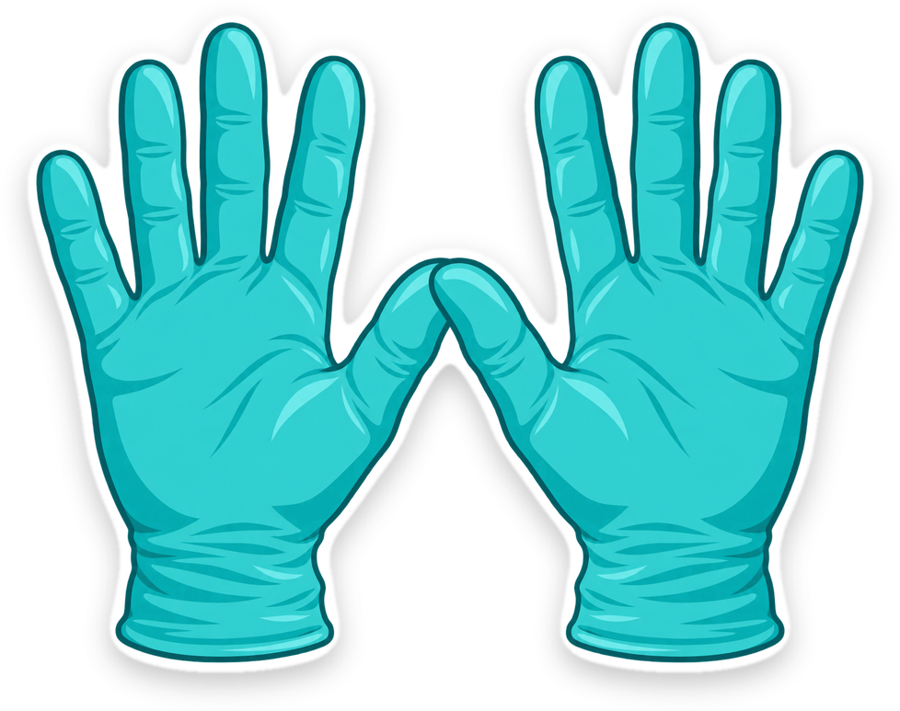
Standard precautions apply to every patient (hand hygiene, gloves for fluids).
Standard Precautions
Standard precautions are the baseline for every patient because infection status is not always known.
Gloves never replace hand hygiene before and after patient care.
- Apply to EVERY patient regardless of diagnosis — treats all blood, body fluids, non-intact skin, and mucous membranes as potentially infectious.
- Core elements: hand hygiene (before/after every contact, before aseptic tasks, after body fluid exposure), gloves for contact with body fluids, mask/eye protection for splash risk, gown for contamination risk, safe sharps disposal.
- Hand hygiene is the single most important measure to prevent healthcare-associated infections (HAIs).

Transmission-Based Precautions
Transmission-based precautions are added when the organism's route of spread creates extra risk.
Isolation logic is a safety skill: match the pathogen to the route, then match the route to the room and PPE.
- AIRBORNE (droplet nuclei <5 µm, stays suspended): TB, measles (rubeola), varicella (chickenpox), disseminated zoster. PPE: N95 respirator (fit-tested), negative-pressure isolation room (≥12 air exchanges/hr), door closed.
- DROPLET (large particles >5 µm, travel ≤3 ft): influenza, pertussis, meningitis (bacterial), mumps, rubella, RSV (pediatric), diphtheria. PPE: surgical mask within 3 feet, private room preferred.
- CONTACT (direct touch or contaminated surface): MRSA, VRE, C. diff, RSV, scabies, wound infections, norovirus. PPE: gown + gloves on entry, dedicate equipment (BP cuff, stethoscope).
- Some pathogens require multiple types (e.g., SARS-CoV-2: droplet + contact; varicella in immunocompromised: airborne + contact).


High-Yield Organisms
C. diff is the classic contact-spore exception: soap, water, gown, gloves, and environmental cleaning are required because alcohol gel is not enough.
Protective isolation reverses the usual goal.

PPE Sequence
Don before exposure, remove the dirtiest items first, and perform hand hygiene whenever hands may have been contaminated.
Slow down, avoid touching the front of the gown or mask, and leave the respirator or mask until after leaving the patient-care area when policy requires it.
- Donning order: hand hygiene → gown → mask/respirator → goggles/face shield → gloves.
- Doffing order (most contaminated first): gloves → goggles/face shield → gown → mask → hand hygiene.
- Gloves come off FIRST when doffing — they are the most contaminated item.

Key nursing points
- Airborne (TB, measles, varicella): N95 + negative-pressure room.
- Droplet (flu, pertussis, meningitis, mumps): surgical mask within 3 ft, private room.
- Contact (C. diff, MRSA, VRE, RSV): gown + gloves. Dedicated equipment.
- C. diff requires SOAP and WATER — alcohol gel does not kill spores.
Test yourself

Pick your answer first, then open the rationale. Guessing teaches nothing.
Standard, contact, droplet, airborne — match the bug to the PPE.
— 4 —